The Independent Uganda: You get the Truth we Pay the Price


A new Commonwealth study points to a US$900 million AI opportunity for the Pearl of Africa. With millions of ambitious young people, Uganda has something even more valuable – the drive to seize it.
Antigua and Barbuda | NEWS CORRESPONDENT | The next big Ugandan business might begin in a Kampala market, a university hostel in Mbarara or a workshop in Gulu. Its founder may have little capital, a second-hand laptop and an idea that refuses to go away. What artificial intelligence offers that entrepreneur is the chance to do more and reach further – and compete with businesses many times their size.
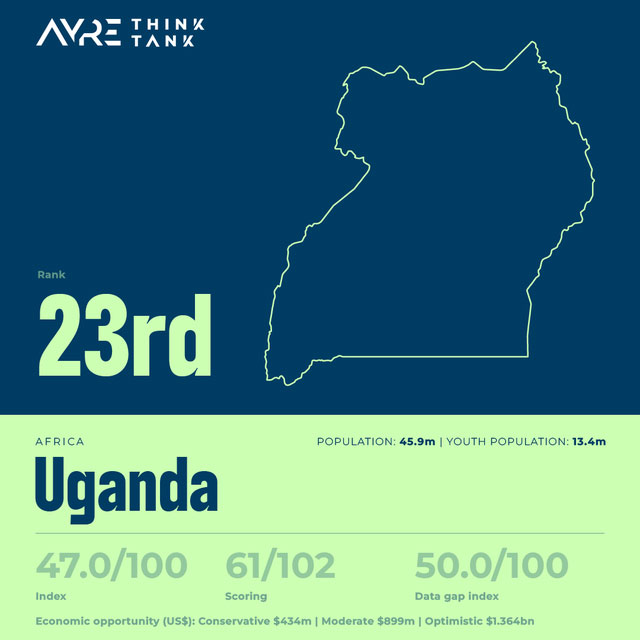
That is why a new study of artificial intelligence, unveiled at the Commonwealth Heads of Government Meeting in Antigua and Barbuda by the Antiguan-Canadian philanthropist Calvin Ayre, should excite Uganda. The Ayre Index identifies a US$899 million opportunity for Uganda’s economy over the next 10 years if the country can seize the opportunity of the AI revolution.
That is a significant economic boost. But the most exciting number may not be in dollars. It is what the study finds about the number of Ugandans who are already trying to make something of their own ideas and create their own opportunities.
Ugandans understand enterprise, the report finds. From traders and transport operators to food processors, designers, farmers and software developers, the instinct to find a market and build a livelihood runs deep, the report adds. The Index finds 41.9 per cent of Ugandans aged 18 to 29 are already starting or running a new business and a further 20 per cent are helping build a business that is already established. That paints a powerful picture of our determination to create opportunity.
“Imagine what happens when that determination meets tools that would once have been available only to large companies. A fashion business in Kampala can produce professional product descriptions and reach customers abroad or a young tour operator can serve travellers in several languages. A farmer’s cooperative can organise records and find better ways to market its produce, while a small manufacturer can plan stock, sharpen pricing and respond to customers faster,” states the report, unveiled at the Commonwealth Heads of Government Meeting.
“Today, these are not hopes for the future. They are existing practical ways Ugandan businesses can get a competitive edge. When a small enterprise sells more, wastes less and grows, it creates room for new jobs, better incomes and stronger local supply chains. Multiply that across thousands of businesses and the significance for the economy becomes obvious.”
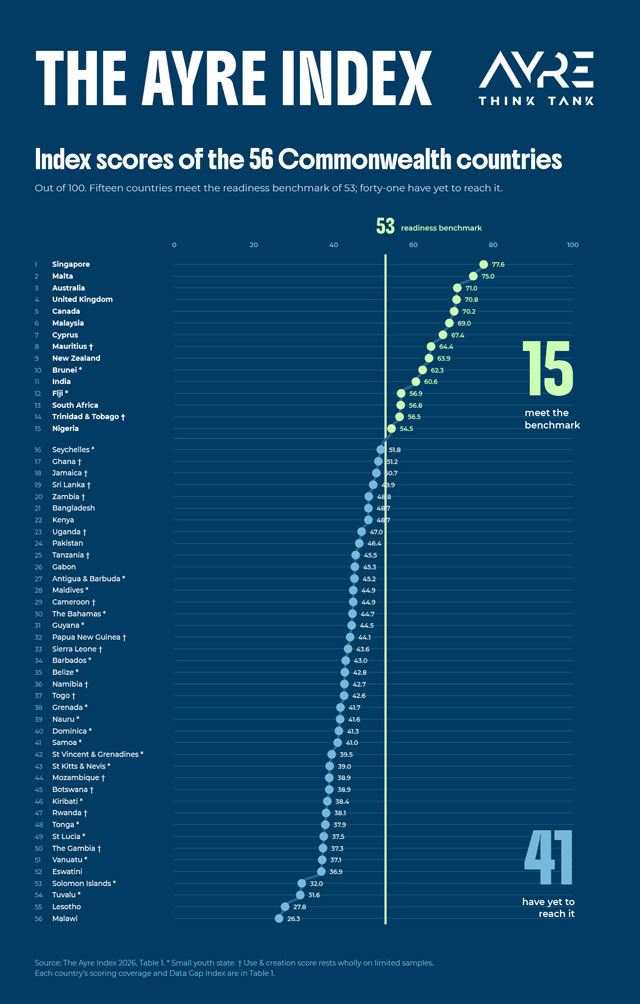
The Ayre Index ranks Uganda 23rd among 56 Commonwealth nations for youth AI readiness, just behind Kenya in 22nd place and ahead of Tanzania in 25th and Rwanda in 47th. Uganda scores 47 out of 100, against the study’s benchmark of 53. That is not a reason to be discouraged. It is a starting line – and a clear invitation to move faster.
The opportunity is here. Let us put it within reach
Uganda is home to approximately 13.4 million young people aged 15 to 29. Imagine making AI a useful business tool for even a fraction of them. What the newly released Ayre Index shows is that the challenge is not a shortage of ambition. It is in ensuring that this ambition now has reliable electricity, affordable internet, good training and access to customers and finance.
The new research records electricity access at 55.3 per cent and finds that many young Ugandans still do not properly use the internet. For a business owner trying to serve customers or take an online course, those gaps matter. Bringing down the cost of mobile data, making connections reliable and extending access beyond major towns are economic investments, not simply technology projects.

The good news, the report notes, is that Uganda is not standing still.
In July 2026, 83 young innovators joined a government-backed programme designed to turn technology ideas into businesses. Another 144 young Ugandans graduated from a UN-backed initiative teaching digital skills, including AI, software development and cybersecurity. These are the kinds of foundations on which bigger success can be built.
“The next step is to connect training directly to enterprise. We need to pair young developers with established companies, and let students solve real problems for farmers, clinics, tourism operators and manufacturers. The time has come for the government to step in and help promising teams find their first customers, secure investment and move on with taking exciting new products to market.”
Think beyond Uganda’s borders
Many of the challenges Ugandan innovators understand – whether making small businesses more efficient, improving agricultural information or helping customers use digital services – are shared across East Africa and well beyond it. A product that succeeds in Uganda can become an export. That means foreign earnings, skilled employment and a stronger place for Uganda in the digital economy.

Calvin Ayre, the entrepreneur and philanthropist who founded the Ayre Think Tank, sees the opportunity as a contest that emerging economies can win.
On launching his new Index, he told Commonwealth leaders: “I’ve spent my life in businesses where new technology changes everything, and I know you can’t stand still. AI is going to change how we work, how we do business and how wealth is created. But this is not a race that only the biggest or richest countries can win.
“What matters is giving young people the skills and the chance to get ahead – whether to start businesses, find jobs or build something for themselves. Some Commonwealth countries are ahead, others have catching up to do. Nobody can afford to be complacent. That’s why we created this Index. It shows countries where they stand, what they’re getting right and where they need to do better. Governments now have to decide what they’re going to do about it.”
That final challenge now deserves an answer, the report states.
“Uganda should be bold about what comes next. We need affordable access, practical AI education, innovation partnerships and support for young firms ready to grow. The public and private sectors have complementary roles. Government can remove barriers and back skills. Universities can help young people create and test solutions. Banks, investors and established businesses can provide capital, customers and a route to scale.”
The prize, the report notes, is bigger than an impressive new technology sector. It is a future in which the young Ugandan who starts with a good idea can build a company, employ neighbours, sell across borders and contribute to a more prosperous country.
“Uganda has never lacked people prepared to work hard and take a chance. AI gives us an opportunity to make that ambition go further. The next great African AI business does not have to be imported into Uganda. It can be built here – by Ugandans.”