The Independent Uganda: You get the Truth we Pay the Price


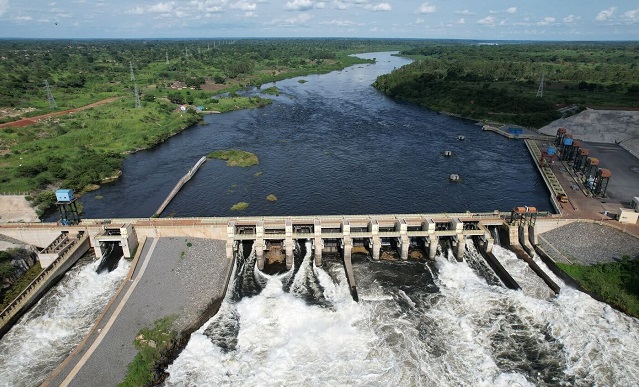
The company operates four power stations — Nalubaale–Kiira, Isimba, Namanve and Karuma — with a combined installed capacity of 1,213MW
Kampala, Uganda | JULIUS BUSINGE | Uganda Electricity Generation Company Limited (UEGCL), the state-owned power producer, reported a sharp fall in annual profit for the 2024/25 financial year, underscoring the financial strain facing the country’s expanding hydropower sector.
Profit after tax dropped to Shs25.02 billion, less than half the Shs54 billion recorded a year earlier, weighed down by rising operating costs, depreciation, and interest obligations tied to the 600MW Karuma Hydropower Plant.
Revenue for the year, however, surged 40 per cent to Shs492 billion, up from Shs350 billion in 2023/24, reflecting stronger dispatch from the company’s hydropower assets and the first full year of commercial operations at Karuma. The plant, Uganda’s largest hydropower facility, has expanded the national grid’s generating capacity significantly.
Despite the revenue gain, net earnings were constrained. Financing costs on the Karuma on-lent loan, alongside higher depreciation and general operational expenditure, curtailed the profits that would otherwise have accrued from the top-line growth. Return on assets improved slightly to 1.67 per cent from 1.25 per cent but remained below industry benchmarks, reflecting lower-than-expected dispatch from some energy-based plants.
UEGCL’s balance sheet received a major boost following the government’s conversion of Shs566 billion in accrued interest on the Karuma loan into equity. The move lifted the company’s equity position to Shs1.54 trillion, easing long-term financial pressure and strengthening solvency. Total assets stood at Shs8.368 trillion, highlighting the scale of investment required to expand Uganda’s electricity generation infrastructure.
Speaking during the company’s 15th Annual General Meeting at the Ministry of Finance, Planning and Economic Development headquarters in Kampala on Dec.4, the CEO Harrison Mutikanga described the year as “defining” for UEGCL, marked by the first full year of operations at Karuma.
He said the company remained focused on delivering reliable electricity and aligning its operations with national priorities under Vision 2040, the Energy Policy 2023, and the Fourth National Development Plan.
“The alignment of UEGCL’s strategic plan with the National Development Plan IV, which has been certified by the National Planning Authority, underscores the utility’s role as a driver of Uganda’s socio-economic transformation,” Mutikanga said.
He noted that the ongoing efforts to strengthen financial sustainability, including partial debt-to-equity conversion, were beginning to ease pressure on gearing levels, even as the company continued to engage with regulators to improve revenue recovery and maintain reasonable tariffs.
Modest improvement
Operational performance showed modest improvement. UEGCL generated 3.63 terawatt hours of electricity during the year, a 6.7 per cent increase from the previous financial year. Plant availability averaged 97.7 per cent, while reliability across its portfolio stood at 99.6 per cent. The company operates four power stations — Nalubaale–Kiira, Isimba, Namanve and Karuma — with a combined installed capacity of 1,213MW, accounting for over 59 per cent of Uganda’s grid-connected capacity.
Energy and Mineral Development minister, Ruth Nankabirwa ,described the company’s performance as solid but noted that dispatch from Karuma had been limited by weak industrial demand. Several industrial parks, she said, remain unfinished, suppressing electricity consumption. Their completion is expected to increase demand and enable fuller utilisation of Uganda’s generation capacity.
Isimba dam defects
The AGM also highlighted concerns over structural defects at the Isimba Hydropower Dam. Shareholders warned that the unresolved issues could compromise safety and long-term asset value. The contractor, China International Water and Electric Corporation, has reportedly been slow to undertake repairs. UEGCL was tasked with compiling a detailed status report to guide government intervention. Nankabirwa said the state would secure financing to complete the repairs and hold the contractor liable if responsible, with Cabinet set to review the report once ready.
UEGCL has also advanced efforts to diversify the energy mix. The 6.6MW Nyagak III Small Hydropower Plant in Zombo was commissioned to strengthen supply in the West Nile region. Feasibility studies for Uganda’s first floating solar project, a 10MW installation on the Isimba reservoir, were completed, while rehabilitation work at the Nalubaale–Kiira complex is expected to extend the plants’ operational life by more than three decades.
Looking ahead, the utility said it will prioritise boosting profitability through tighter cost control, increased dispatch, improved revenue collection, and continued investment in renewable energy.
While short-term pressures on net earnings persist, UEGCL remains optimistic that rising industrial electricity demand, operational efficiencies and sustained government support will gradually improve profitability. Management said the company’s strategic focus on both hydropower expansion and renewable diversification reinforces its central role in Uganda’s socio-economic development and energy security objectives.