The Independent Uganda: You get the Truth we Pay the Price


COMMENT | ANDREW PI BESI | For many years, citizens of our ancient continent and beyond have grappled with the question of national growth, or, as Adam Smith framed it, the “wealth of nations”.
It was Smith who, exactly 250 years ago this March, offered the first systematic account of this idea. His seminal work, An Inquiry into the Nature and Causes of the Wealth of Nations, argued that free trade and open markets are more conducive to prosperity than rigid state control.
Yet, at the time Smith was writing, national identity as we understand it today was still crude. Loyalty was owed less to a “nation” and more to monarchs, dynasties, and local allegiances, with the masses treated as subjects to be administered or assets to be contested.
And then, twelve years after Smith’s seminal work, stirrings and rumblings among the Estates General of 1789 culminated in what we now call the French Revolution in 1799. It dismantled the feudal absolutism of the Ancien Régime. It laid the foundations of the modern nation-state: introducing citizenship, centralised bureaucracy, and a redefined social contract between ruler and ruled. From this upheaval emerged the modern concept of nationalism: a unifying force, but also, as history would later reveal, a dangerous one when detached from its broader purpose.
As political scientist A.F.K. Organski observed, “there is a depressing similarity in the way nations are born: they are born by force.” Africa exemplifies this reality with particular clarity. All of its 54 nation-states are products of force and not, to the chagrin of colonial apologists, negotiation. They are not products of organic political evolution.
Since Ghana’s independence in 1957, African states have faced the formidable task of nation-building within these inherited boundaries. The first priority was not prosperity, but cohesion: forging unity among diverse peoples enclosed within artificial borders.
But even as this internal task unfolded, African states were drawn into external ideological contests. The Cold War imposed a binary choice between Smith-inspired capitalism and Marxist socialism, turning the continent into a theatre of proxy competition. Development paths were not merely chosen; they were shaped, incentivised, and, at times, imposed.
One of the most revealing illustrations of this dilemma lies in the contrasting trajectories of Kwame Nkrumah’s Ghana and Félix Houphouët-Boigny’s Côte d’Ivoire. Nkrumah pursued a state-led, socialist-oriented path grounded in Pan-African unity and economic independence. Houphouët-Boigny, by contrast, embraced a liberal, market-oriented model closely tied to France.
This divergence became, in effect, a wager between the two leaders: which system would deliver the “wealth of nations”?
In the short term, Côte d’Ivoire appeared to triumph, achieving steady growth through agricultural exports and privileged access to French markets. Ghana, burdened by ambitious industrialisation projects and external pressures, faltered.
Yet this was no neutral experiment. Côte d’Ivoire’s success was underwritten by continued French influence, structural advantages, and preferential treatment. The outcome, therefore, did not simply validate one model over another; it revealed the enduring hand of external power in shaping African realities.
This pattern persists.
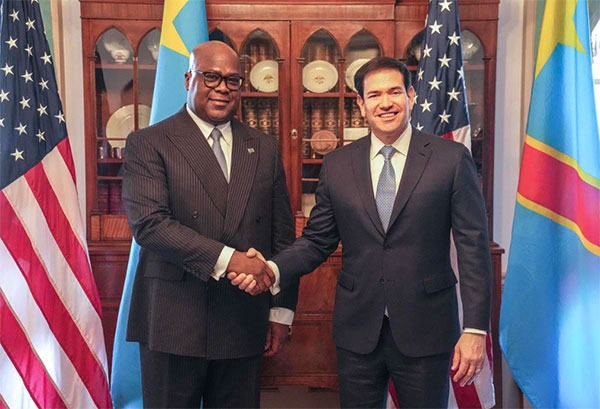
In contemporary Africa, we see echoes of the same dynamic. The Democratic Republic of Congo, under President Félix Tshisekedi, has entered into transactional mineral arrangements with external actors, including political forces aligned with Donald Trump. These deals, often justified as pragmatic, risk entrenching a familiar pattern: the exchange of long-term sovereignty for short-term gain.
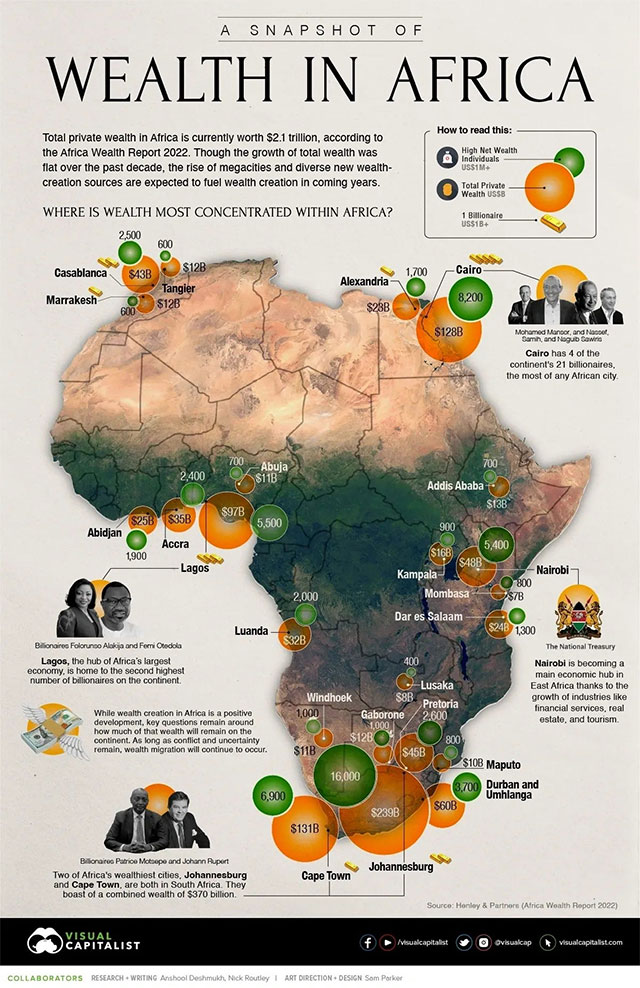
Congo’s vast mineral wealth (cobalt, coltan, copper, rare earths, etc.) remains central to the global economy. Yet the terms of engagement frequently mirror earlier eras of extraction, where value is exported and dependency reinforced. Once again, Africa is positioned not as the architect of its destiny, but as a site of contestation.
It is here that Organski’s warning about “primitive nationalism” becomes most instructive. Primitive nationalism, in his framing, is an inward-looking, defensive form of national consciousness that prioritises narrow sovereignty over collective advancement. It is a nationalism that resists integration, mistrusts cooperation, and ultimately weakens the very states it seeks to defend.
Across Africa, this form of nationalism continues to undermine efforts at regional integration. Institutions such as the East African Community (EAC) and the Southern African Development Community (SADC) hold immense potential for economic scale, political coordination, and strategic autonomy. Yet their progress is repeatedly stalled by suspicion, competing national interests, and the reluctance of states to cede even minimal sovereignty for collective gain.
The irony is stark. The same states that are willing to enter asymmetrical arrangements with distant global powers often resist deeper integration with their immediate neighbours. In doing so, they perpetuate fragmentation and make themselves more vulnerable to the very external influences they claim to guard against.
Thus, Africa finds itself trapped in a paradox. The project of nation-building remains incomplete, yet the path toward meaningful growth lies not in retreating further into narrow nationalism but in transcending it.
Today, as global power shifts toward a more contested, multipolar order (with a resurgent Russia, a dominant China, and a reactive West), the stakes are higher than ever. The patterns of the past are re-emerging, and once again, Africa risks becoming the arena rather than the actor.
The lesson, however, is clear. The “wealth of nations” cannot be realised within the confines of fragmented, inward-looking states. Nor can it emerge from externally dictated models of development. It requires a deliberate project: building cohesive societies, creating resilient institutions, and, crucially, advancing regional integration as a counterweight to global power asymmetries.
To move beyond the condition Organski described Africa as needing to outgrow primitive nationalism and embrace a more expansive vision, one in which sovereignty is not diminished by cooperation but strengthened through it.
Only then can the continent cease to be a battleground of competing systems and become, at last, the author of its own.
*****
By Andrew “Pi” Besi | On X: @BesiAndrew