The Independent Uganda: You get the Truth we Pay the Price



COMMENT | Charles Okello Ayai | This article is, in part, a response to Andrew Mwenda’s article titled “Time for Africa to wake up” in his column, The Last Word on February 14, 2025. In it, he makes what has become a popular exhortation by most who consider themselves Pan-African, namely, that Africa should dump the US dollar and develop her own currency for international trade.
Before dealing with the facts and figures and other technical details about what such a move would involve, I find that a little preamble is necessary. Mwenda claims that Africa’s only problem is ideological. As actions are driven by ideas, that statement may well be a tautology. If it’s not, then there’s something rather unique about the ideas held in Africa at the present moment. Of particular interest to me here is the set of ideas that I shall call “popular Pan-Africanism”. Over the next few weeks, I intend to use a number of different subjects to show that most ideas that fly under the banner of popular Pan-Africanism are, in fact, wrong and do not reflect the realism and maturity that is needed to tackle the challenges that Africa faces.
This week, I shall treat the subject of de-dollarization. I shall start with the claim Mwenda makes about BRICS and the US’s supposed efforts to undermine their effort to break free of the US Dollar. To assess this oft-repeated claim, let’s start at the beginning of BRICS. None other than Yanis Varoufakis, the former Minister of Finance of Greece and a Marxist by his own admission, sees the BRICS as a mere marketing gimmick, rather than the threat Mwenda portrays it to be. BRICS, you see, was initially BRIC. Varoufakis retold the anecdote of how he found out about how the S was introduced. The former Chief Economist of Goldman Sachs, Jim O’Neill, who coined the acronym, told Varoufakis that BRIC did not sound good, so to make it snazzy, he needed an S, which is how South Africa came to be included. Far from being a threat to the US, BRICS is, in fact, a creation of the US.
But perhaps its underwhelming origin story does not nullify the fact that it could, nonetheless, turn into a serious power bloc that challenges the US Dollar. Much has been made of the lending in local currency from the BRICS New Development Bank (NDB) to its member states. To understand the shortcomings of this reasoning, one would have to look at how lending from the NDB works.
Suppose India wishes to borrow from the BRICS bank. The NDB does not have Indian Rupees to give. What it has are US dollars (or Chinese yuan, to a lesser extent). Now, for that loan to be useful to India, the Government of India must be able to buy goods from America, Europe, or China. They will have to pay in US dollars. So essentially, they get US dollars from the NDB, but they must repay in the future, with interest, the US dollars that it cost initially to give the Indian rupees. What does this mean? It means that if the Indian rupee devalues 50 percent in the next 10 years, when the loan has to be repaid, this is, looked at one way, a good thing for India because India will have inflation. The same quantity of Indian rupees in 10 years’ time will be worth half as much. So effectively they will have to repay to the NDB half the money. That means negative interest rates for the NDB. Who is going to suffer for this? The Chinese. Because they are the only ones amongst the BRICS that have a big wad of dollars. So essentially the NDB current method of operation means that the Chinese are using their stock of dollars to lend the countries that take loans from the NDB. China assumes responsibility for the devaluation risk, which now when an African country borrows and must pay back in foreign currency, the devaluation risk is its own.
Why would China do that? Well, one reason is because they have too many dollars. They have a very large current account surplus, which is in mostly denominated in US Dollars. What do they do with these dollars? They have to take them to Wall Street. Now they’ve seen what happened after the Ukraine War that the Central Bank of the United States, the Fed, confiscated 350 billion dollars belonging to Russia. China thinks they might be next in line, and so they might as well use their stock of US dollars strategically to gain more influence over the BRICS countries such as South Africa and Saudi Arabia.
In June 2023, Chinese state media suggested that the IMF’s current structure advances U.S. “financial hegemony” and increases the debt burden of emerging market economies. Interestingly, shortly after that statement, the IMF allowed Argentina’s government to use renminbi credit made available by China’s central bank, the People’s Bank of China (PBOC), to facilitate the partial pay down of IMF loans, and an IMF official indicated that renminbi IMF debt repayments could become increasingly commonplace.
In October 2023, renminbi credit extended by the PBOC was reportedly again used to facilitate Argentina’s partial IMF debt repayment. Some BRICS policymakers seem to see greater local currency usage and non-dollar currency interventions as a remedy to dollar-related economic problems in emerging markets. Indeed, India’s commerce secretary branded an effort to facilitate an increase in rupee-settled transactions with emerging markets facing dollar shortages as a way to “disaster proof” these economies; in 2023, Indian officials reportedly engaged in negotiations related to this effort with Egyptian counterparts.
Indeed, some are not too pleased about China moving up the ladder in the global financial architecture, and it isn’t Western “liberal capitalists”. In fact, it is the Marxists in whose ideological frame, China’s growing influence in the global financial architecture could only mean that China is being co-opted by the “global capitalists”. Varoufakis goes as far as saying that the international Left “have been orphans since the collapse of the Soviet Union”. Ideological judgements aside, one thing is clear: China is swimming with the current instead of against it, and perhaps Africa could learn a thing or two from this.
De-dollarisation, if it is done right, that is to say, methodically, by developing the infrastructure necessary to eliminate the need for the US Dollar would undoubtedly be helpful for Africa’s economic prosperity. However, to do that, the populist “Pan-African” rhetoric of de-dollarisation must be dropped as this is precisely what it impedes. The fact is, Africa is nowhere close to coming up with an alternative to the US Dollar, which is why no African government has even remotely attempted to do so. I know that some might be thinking about the late Libyan leader, Col. Gaddafi’s rhetoric about a common African currency. It was just that – rhetoric. Those who know that the monetary function is one of the supreme prerogatives of a political authority, if not the most important one, would quickly recognise that his proposition was impractical, to put it mildly. Europe, for example, only got a common currency after two devastating world wars and a political reorganisation led by American-sponsored integration efforts. Monetary integration must necessarily come with political integration, and vice-versa.
I do not wish to be understood to mean that de-dollarisation, in its entirety, is a fool’s errand. No, reducing Africa’s dependence on the US Dollar is good and should be done wherever it makes practical sense to do so. One such example is the Pan-African Payments and Settlement System (PAPSS) initiative launched by the African Export-Import Bank which aims to create a continent-wide clearing house to promote trade. One thing worth noting is the difference in tone in the statement made at the launch of PAPSS in 2022, compared to that of our latter-day revolutionaries. The PAPSS CEO, Mike Ogbalu, emphasized that the payment system is not designed to compete with or replace existing payment systems, but to facilitate the connectivity level that brings all payments systems together into one network that is interoperable, efficient and affordable.
This is a statement of non-ideological pragmatism and should be the way forward for those seriously thinking about de-dollarisation in Africa. Take cross-border trade payments, for example. The usage of BRICS local currencies for cross-border trade payments is disincentivized by inadequate financial infrastructure, which impedes the ability or increases the relative cost of these currencies being used in cross-border transactions. One important type of financial infrastructure is a payment-versus-payment, or PvP, arrangement, which helps lower the cost and increase the confidence in exchanges of certain currency pairs. PvP arrangements help ensure that the final settlement of a payment in a currency occurs if and only if final settlement of a payment in another currency takes place; this mitigates settlement risk, which is when one party to a foreign currency transaction fails to deliver currency owed. The rand is the only BRICS currency eligible for settlement by the world’s dominant PvP arrangement, which is controlled by a Switzerland-incorporated company that counts major global banks as shareholders and through direct central bank relationships facilitates PvP transactions using central bank liabilities.This PvP arrangement reportedly accounted for over 40 percent of global spot foreign exchange trading volume in recent years, and it can be used to facilitate trading of the rand against seventeen currencies, including the dollar.
It is worth noting that the usage of the renminbi in cross-border payments has increased and largely stems from transactions involving a Chinese party on one side; between 2016 and 2022, its use in China’s cross-border transactions grew from around 20 percent to approximately 50 percent (with dollar payments largely accounting for the rest). Trade payments to and from Russia are also helping increase renminbi usage. Data indicated that in 2022, Russian exports invoiced in renminbi grew from near 0 to 16 percent,and although most of the related payments involved Chinese firms, some renminbi trade payments were between Russian entities and Indian, Japanese, or Southeast Asian businesses. Thus, like the dollar, the renminbi is in some instances being used to facilitate transactions between two entities from countries where it is not a local currency.
So, you see, far from some sinister plot by the US to preserve the position of the US Dollar, the reality is that the US Dollar’s widespread use is, in large part, self-reinforcing.
As is starting to be seen with the Chinese yuan, the US Dollar is used because it makes financial sense to use it. This, however, does not mean that Africa cannot work within the system for her own betterment. And this is the essential point that is missed by those who give primacy to half-baked ideology. As intra-African trade grows, Africa’s financial architecture must necessarily evolve to cope with the growing demands placed on it. But not before. Like China, Africa will have to approach this problem in a businesslike, non-ideological manner. Or put another way, Africa shall have to master this system before even conceiving of its replacement.
******
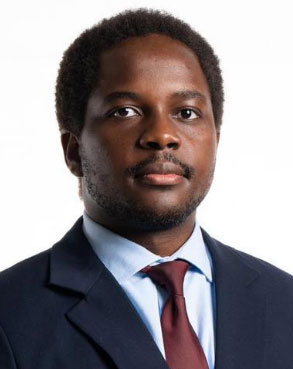 Charles Okello Ayai | African Export-Import Bank in Cairo |