The Independent Uganda: You get the Truth we Pay the Price


How the Saudi playbook of dynastic power and managed succession is unfolding in Uganda
NEWS ANALYSIS | IAN KATUSIIME | In the grand theaters of global power, absolute rulers have long faced the same ultimate anxiety: how to ensure the empire outlives the emperor. Today, from the sun-scorched palaces of Riyadh to the lakeside redoubts of Entebbe, an identical blueprint for survival is being executed with clinical precision.
Some analysts call it the Crown Prince Doctrine—a high-stakes game of political alchemy—where ageing autocrats slowly transfer the levers of hard power to their chosen sons before the throne can ever vanish from beneath them.
Just as King Salman systematically dismantled decades of Saudi consensus to position Mohammed bin Salman (MBS) as the Crown Prince and undisputed master of the Kingdom, President Yoweri Museveni has quietly engineered a parallel reality in Uganda, transforming the military hierarchy into a launchpad for his son, Gen. Muhoozi Kainerugaba, the Chief of Defence Forces.
The book Blood and Oil by American journalists Bradley Hope and Justin Scheck traces the meteoric, often ruthless, ascent of Saudi Arabia’s Crown Prince MBS and the intersection of global politics, Wall Street, and Western consultants. MBS detains rivals—real and perceived—through a wide-sweeping purge disguised as an anti-corruption drive in the oil-rich kingdom.
In his famous purge in 2017, MBS jailed hundreds, including members of the House of Saud, the royal family that has ruled Saudi Arabia since the country’s founding in 1932. The detainees included Prince Al-Waleed bin Talal bin Abdulaziz Al Saud, the richest Arab in the world, with an estimated net worth of $19bn.
Commentators have made comparisons of the Saudi Crown Prince MBS to Gen. Muhoozi, as the latter has emerged as his father’s true heir in the last few years. Over the last decade, Muhoozi has rapidly scaled army ranks and is now a force to reckon with politically.
The latest episode of this dynamic was the vicious crackdown on former Speaker of Parliament Anita Among, who was deemed too powerful and a potential threat. It all started with tweets from the First Son denouncing Among’s acquisition of a Rolls Royce, a British-made luxury car that is a rare sight on Uganda’s potholed roads and ended up with the anointment of a new Speaker of Parliament, Jacob Oboth Oboth.
Muhoozi’s endorsement of Among’s former deputy Thomas Tayebwa also appeared to give him the upper hand in securing his position. Muhoozi is the chairman of the Patriotic League of Uganda (PLU), a political movement he formed two years ago that has growing membership.
PLU has a fully fledged secretariat and has MPs who pledge allegiance to it. The organisation has emerged as an offshoot of NRM and is gaining influence through Muhoozi’s personality and power.
Godwin Toko, an activist and political commentator, in an interview with The Independent says one would not be wrong to call Uganda the Saudi Arabia of East Africa.
“When it comes to transition, the politics of Saudi Arabia is more predictable than Uganda’s. In fact, these two are not supposed to have a lot in common. Saudi Arabia is a monarchy; it has a king, and the House of Saud, the ruling family, is supposed to choose whoever becomes king,” he said.
He says Uganda is different since it is “supposed” to be a democracy. “Ideally, any of the millions of Ugandans above the age of 18 – as per the 2017 Constitutional Amendment that lowered the age from 35 – can be a president. It doesn’t matter if they are male or female, they can also be from any of Uganda’s 50+ tribes. Whatever their father was, president or peasant farmer like Museveni’s father, should not, ordinarily matter.”
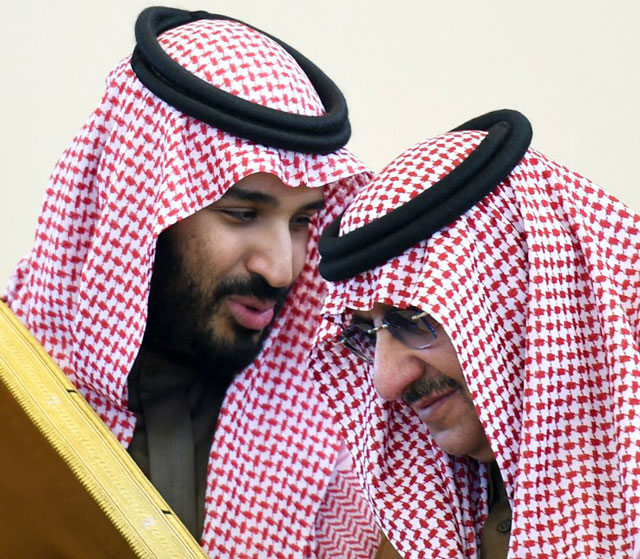
Toko argues that since MBS was not the first choice until his father King Salman ascended to the throne and placed him in key positions like Minister of Defence, the same situation applied to Muhoozi until recently.
“Similarly, Muhoozi was not expected to be president. Not many Ugandans predicted he would, back in 2005 when his father asked for an amendment to the constitution to extend his rule, or back in the 1990s when he [Muhoozi] joined the armed forces as an LDU,” he says.
Toko adds that the rise of Muhoozi, just like MBS, was gradual and less predictable. “Yet, the pattern is similar. Like MBS, Muhoozi cut his teeth in the armed forces, not as a minister, but as a soldier who rose through the ranks at an astronomical speed to become its overall commander.”
He argues that it was reasonable to expect one of Museveni’s bush war comrades like Mbabazi but all of them either fell aside or were neutralized.
“Today, Muhoozi Kainerugaba’s power grows with each passing day. In 2025, he tweeted that he would abduct Eddy Mutwe, it happened weeks later. This year, he tweeted his displeasure for the outgoing speaker of parliament, and it was followed by searches at her place, a tweet renouncing her bid for the speakership and MPs who had endorsed her withdrawing their endorsement.”
Cultivating Western allies
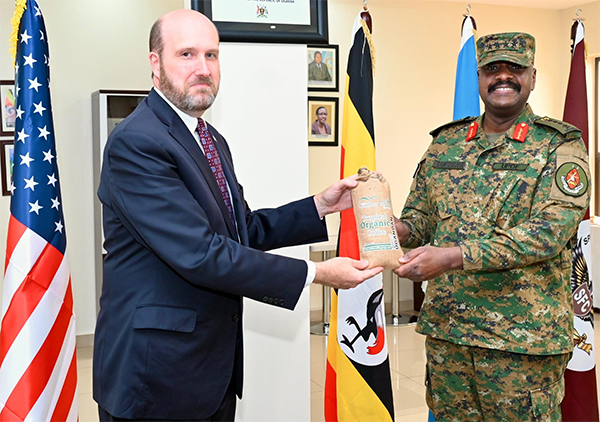
Toko says the other similarity between Muhoozi and MBS is how they seem to work around the clock to ensure that they are “in the good books” of their powerful Western allies, especially Washington.
“It is hard to come across photos of Muhoozi meeting the ambassador of DRC or Nigeria in Uganda, or say the military attaches of these nations. However, there are tens of photos of him meeting ambassadors and other diplomats from Germany, the UK, the US etc,” he says and adds that despite Muhoozi throwing mild criticism at some of the Western nations, he is generally full of praise for them, and has expressed interest to work with them.
“His [Muhoozi] entire leadership has been about currying favour with the West, including going as far as to normalise ties with Israel.”
During the US/Israel war with Iran, CDF Muhoozi set off a stream of tweets vowing that Uganda would fight on the side of Israel, which triggered a diplomatic backlash as Uganda has formal ties with Israel. The Iranian Embassy in Kampala reportedly filed a diplomatic note protesting Muhoozi’s statements.
Scholars note that across different civilizations and political systems, long-serving leaders have often sought continuity not merely through institutions, but through carefully cultivated familial networks, military influence, elite patronage, and succession engineering.
In recent years, observers of Ugandan politics have increasingly drawn parallels between the evolving political architecture of Uganda under Museveni and that of Saudi Arabia under Salman of Saudi Arabia and his son, MBS.
Both political systems reveal striking patterns of centralized authority anchored around a dominant patriarch who emerged during periods of national transformation and security consolidation.
Over time, these systems have evolved beyond conventional state institutions into highly personalized power structures in which family members, particularly sons viewed as political heirs, occupy increasingly strategic military, security, and political positions.
In Uganda, the growing prominence of Muhoozi within the military and national political discourse has fuelled debates about dynastic succession, elite continuity, and the future trajectory of the Ugandan state. Similar conversations have surrounded MBS’s rapid consolidation of influence within Saudi Arabia’s political, military, and economic institutions.
‘House of Museveni’
Some commentators say Uganda already looks like a monarchy in the mould of Saudi Arabia and therefore should prepare for the transition.
Yusuf Serunkuma, a political analyst and columnist, wrote in The Observer: “The reigning king, His Royal Highness Yoweri Museveni organises and wins his elections. Museveni appoints his judiciary. There will be no public protests. Museveni has more money and has mastered strangling opposition units of any revenue.”
Serunkuma argues that Museveni can be more violent when he chooses to and there aren’t any repercussions because he is bosom friends with “foreign power and foreign capital (who might proffer sanctions in the event of abuse).”
He adds that since the prince and heir apparent is already calling the shots, it is his time as his father slowly but steadily bows to the ruins of time.
“Thus, for me, I think as a country, it is about time we opened the discussion on Gen. Muhoozi Kainerugaba – not just the possibility of becoming president, but one who has already assumed co-presidency.”
Serunkuma reckons that unless there is a Black Swan like a revolution, few things can stop Muhoozi’s accession “except, of course, his father, who, despite subjecting him to a gruelling long wait, has no choice but to succumb to the vicissitudes of time.”