The Independent Uganda: You get the Truth we Pay the Price


Uganda is mobilizing its hard-earned Ebola expertise as eastern DRC’s outbreak threatens to overwhelm borders, and strain economies
NEWS ANALYSIS | RONALD MUSOKE | Uganda is once again finding itself standing at the centre of Africa’s battle against Ebola as a fast-moving outbreak spreading through eastern Democratic Republic of Congo is crossing borders, infecting healthcare workers, disrupting movement corridors and forcing governments across the region into an urgent race against time to prevent another devastating public health catastrophe.
From the densely populated neighbourhoods of Kampala, Uganda’s capital, to the conflict-scarred communities of Ituri Province in DR Congo, health officials are now confronting a crisis whose trajectory is becoming increasingly difficult to predict, particularly as insecurity, population displacement and misinformation continue complicating efforts to contain one of the world’s deadliest viruses.
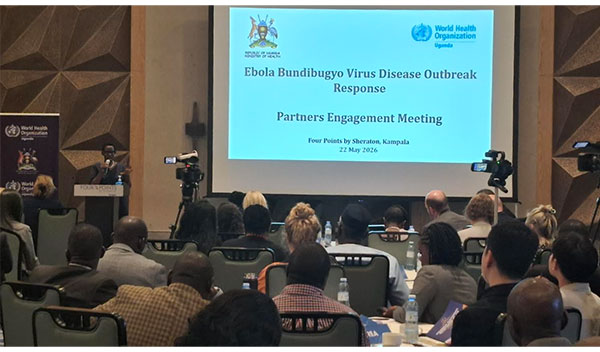
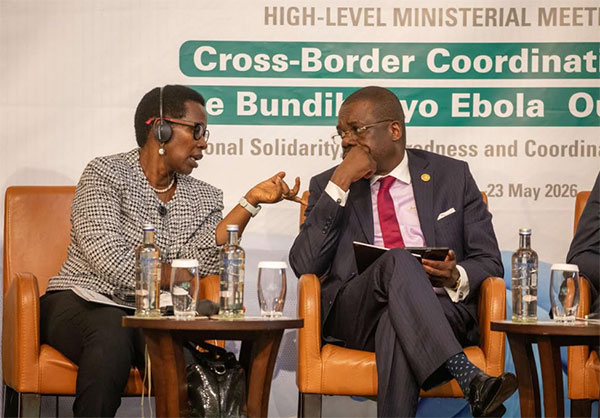
Inside emergency coordination meetings convened in Kampala over the weekend of May 22-24 by the Africa Centres for Disease Control and Prevention (Africa CDC), the atmosphere carried the unmistakable weight of a region that understands too well how quickly Ebola outbreaks can spiral beyond control.
Ministers of health, epidemiologists, humanitarian agencies and diplomats gathered under a shared sense of urgency as new infections continued emerging in eastern Congo while Uganda begun recording infections among people who had come into contact with imported cases from across the border. For many of the experts involved in the response, the memories of West Africa’s catastrophic Ebola epidemic and the global paralysis triggered by COVID-19 lingered heavily over every discussion.
The outbreak, which is being driven by the Bundibugyo strain of Ebola Virus Disease; a strain for which there is currently no approved vaccine or specific treatment, is already becoming one of the most serious Ebola emergencies the continent has faced in years. According to Africa CDC, health officials are now dealing with hundreds of suspected infections and scores of deaths concentrated largely in eastern Congo’s Ituri Province, where fragile health systems are colliding with armed conflict, mass displacement and deep public mistrust.
The outbreak has already spread through the health zones of Mongbwalu, Rwampara and Bunia, while epidemiologists are warning that healthcare-associated transmission and clustered family infections are accelerating the pace of spread. What is increasingly alarming regional authorities is not simply the number of infections being recorded but the manner in which the virus is moving across one of East Africa’s busiest and most porous frontiers.
Taming busy Uganda-DRC border
During normal times, the Uganda-DRC border functions as a vast corridor of daily human movement involving traders, refugees, miners, transporters, schoolchildren and patients seeking medical care, all travelling through routes that are often difficult to monitor comprehensively.
Ugandan authorities say the first confirmed Ebola cases announced on May 15 involved Congolese nationals who had crossed into Uganda for treatment after exposure to the virus in the DRC. But within days, the outbreak has begun to expose Ugandan drivers, healthcare workers and private medical facilities in Kampala itself.
The infection of frontline medical workers is especially worrying public health experts because Ebola outbreaks historically become far more dangerous once transmission begins occurring inside healthcare settings where doctors, nurses and caregivers become both victims and amplifiers of the disease.
Uganda’s Ministry of Health has already confirmed infections involving a Ugandan driver who transported one of the infected patients as well as healthcare workers who were exposed while providing care. In eastern Congo, officials are also reporting the deaths of healthcare workers in Ituri Province, reinforcing fears that exhausted frontline responders are once again carrying the heaviest burden of an outbreak unfolding inside fragile health systems already struggling under immense pressure.
Across the region, governments and humanitarian agencies are now mobilizing extraordinary levels of surveillance, logistics and emergency coordination in an effort to prevent the outbreak from mutating into a wider regional disaster capable of crippling economies, disrupting trade and overwhelming healthcare systems.
Uganda, which has spent the last two decades building some of Africa’s most experienced Ebola response mechanisms after battling repeated outbreaks over the years, is intensifying border screening, deploying rapid response teams, strengthening laboratory capacity and activating emergency preparedness systems across 29 high-risk districts, including the capital city.
But even as officials move aggressively to contain the virus, many privately acknowledge that the real battle may ultimately be won or lost inside eastern Congo itself, where insecurity, fear and delayed access continue threatening to undermine one of the most complex Ebola responses Africa has faced in recent memory.
‘We have never exported Ebola’
For Ugandan authorities, the current outbreak is reviving painful memories of earlier epidemics that repeatedly tested the country’s public health system and forced it to evolve into one of Africa’s most experienced Ebola response hubs. Over the years, Uganda has built specialised surveillance systems, laboratory networks, rapid response teams and treatment capacities capable of responding quickly to outbreaks before they spiral into wider national crises. Those investments are now becoming central to the regional response as neighbouring countries increasingly look toward Kampala for technical coordination, expertise and logistical support.
“We have never exported Ebola,” Dr Diana Atwine, Uganda’s Permanent Secretary at the Ministry of Health, told development partners and diplomats gathered in Kampala on May22. “For the nine epidemics we have had with Ebola, not even one. That is our commitment.”
But even Uganda’s experience is now being tested by the scale and complexity of the current outbreak unfolding inside eastern Congo, where conflict and insecurity are creating ideal conditions for the virus to spread beyond the reach of traditional containment systems. In many affected communities in Ituri Province, armed violence continues displacing populations while simultaneously restricting humanitarian access to areas where health teams are urgently trying to identify cases, trace contacts and isolate infections before transmission chains become unmanageable.
“We cannot properly deploy the response in areas that are not controlled, that are not secured,” said Dr Roger Samuel Kamba, the Democratic Republic of Congo’s Minister of Public Health, Hygiene and Social Welfare during a joint press briefing organized by the Africa CDC in Kampala on May 23. “Conflicts prevent us from having a global response.”
The challenges begin even before patients are identified. In the early stages of the outbreak, laboratory systems in Bunia struggled to detect the Bundibugyo strain because local testing facilities were initially configured to identify the more common Ebola Zaire strain. Samples had to be flown close to 3000km to Kinshasa for confirmation, creating delays that allowed transmission to continue inside communities and health facilities before authorities fully understand what they are confronting. “The laboratory in Bunia could not detect the Bundibugyo strain,” Dr Kamba explained. “It was necessary to send the samples to Kinshasa.”
By the time the outbreak was formally declared on May 15, health officials were already facing an expanding emergency. Uganda’s own national response planning brief issued on May 22 during the meeting with UN agencies and Western diplomats describes a deeply troubling epidemiological picture in DR Congo, involving rapid household transmission, healthcare-associated infections and geographic spread across multiple health zones.
In one household alone, officials report that 15 people died within two weeks, while the deaths of healthcare workers begun exposing the extraordinary vulnerability of frontline responders operating with limited protection inside overstretched facilities.
The outbreak is also unfolding along one of the most socially and economically interconnected regions in East Africa, where border communities have long functioned with little regard for colonial boundaries separating Uganda and the DRC. Every day, traders move agricultural produce, minerals and manufactured goods across both formal and informal crossing points. Refugees continue fleeing insecurity in eastern Congo into Uganda. Children cross borders to attend schools, and patients seek treatment in Ugandan health facilities while flights continue connecting Bunia to Entebbe International Airport and onward routes into South Sudan.
Health experts warn that this intense human mobility is now becoming one of the greatest risks facing the response. “The combination of high mobility and insecurity is what we are experiencing today with the spread of this outbreak beyond what we were expecting,” said Dr Kaseya, the Director-General of Africa CDC.
Worst case scenario for Uganda
What worries officials most is the possibility that repeated importations into Uganda may eventually trigger sustained local transmission capable of overwhelming health systems across multiple districts. Uganda’s Ministry of Health has already outlined several possible scenarios for the outbreak, including a worst-case projection involving amplified transmission driven by repeated importations, delayed case detection, surveillance gaps and unsafe burials. Under such a scenario, officials warn that the virus could spread beyond border districts into multiple regions of the country while simultaneously triggering cross-border transmission into neighbouring states.
The implications of such a scenario extend far beyond public health. Across the coordination meetings in Kampala, expert increasingly spoke out on Ebola not only as a medical emergency, but as a threat capable of destabilizing economies, disrupting trade corridors and undermining fragile recovery efforts across Africa at a time when many countries are still struggling with the long-term economic aftershocks of COVID-19.
“This outbreak is not a DRC issue,” Dr Kaseya said. “It is a regional issue.” He paused briefly before drawing a comparison that resonated deeply across the room. “Those who believe that it is a DRC issue will be surprised, as it was during COVID.”
The warning reflects growing concerns among African health leaders that the world may once again underestimate an outbreak unfolding in a fragile corner of the continent until its consequences begin rippling outward through interconnected global systems. Eastern Congo sits at the heart of important mineral supply chains, trade networks and humanitarian corridors stretching across Central and East Africa. Prolonged instability caused by Ebola could disrupt transport systems, refugee operations, border commerce and already strained healthcare infrastructures across the region.
Uganda’s balancing act
For Uganda, the balancing act is becoming extraordinarily delicate because authorities must simultaneously maintain essential economic activity while implementing aggressive containment measures designed to slow cross-border transmission. The government is intensifying screening operations along western border districts, suspending some public transport routes linking Uganda and the DRC, restricting mass gatherings in high-risk areas and increasing patrols along porous crossing points frequently used by informal traders and migrants.
“The Government is going to intensify mass risk awareness and sensitisation on infection prevention and control,” Dr Atwine said.. “We are going to enhance screening, testing and treatment capacities along the DRC borderline.”
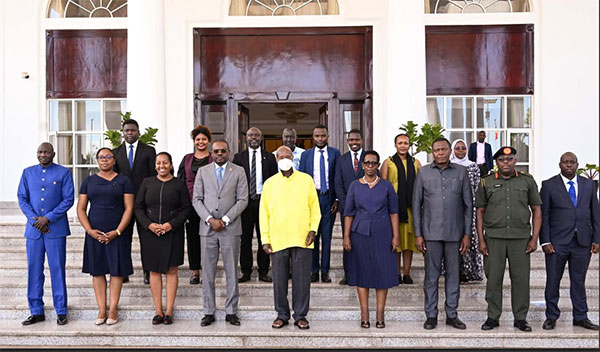
Authorities have also temporarily suspended some cultural celebrations expected to attract large crowds near border regions and Kampala (Uganda Martyrs Day celebrated every June 3), while health teams continue expanding surveillance systems in schools, markets, places of worship and refugee-hosting communities. Yet officials repeatedly acknowledge that no amount of preparedness inside Uganda can fully eliminate the threat while transmission continues accelerating inside eastern Congo. “The ultimate control of outbreak depends on interruption of transmission in DRC,” Dr Atwine said.
Africa CDC and WHO support
That reality is increasingly driving a broader continental response strategy coordinated jointly by Africa CDC and the World Health Organization (WHO) under what officials are describing as a “one team, one plan, one budget, one implementation model” framework intended to unify governments, humanitarian agencies and development partners behind a single operational structure.
For many public health experts, the success or failure of that coordination model may ultimately determine whether the outbreak remains containable. During previous epidemics across Africa, fragmented responses involving multiple agencies, overlapping mandates and delayed financing frequently weakened containment operations and generated confusion inside affected communities. This time, officials say they are trying to avoid repeating those mistakes by centralising coordination systems from the outset.
“We are really guided by the principle of one coordination, one plan, one budget, one monitoring and evaluation, and one report,” said Dr Marie Roseline Belizaire, the Emergency Director at the WHO Regional Office for Africa.
But even as governments and agencies coordinate at the highest levels, another battle is simultaneously unfolding inside communities increasingly consumed by fear, rumours and mistrust.
In Rwampara, eastern DR Congo, angry residents recently set fire to an Ebola treatment facility after health workers stopped families from taking the body of a deceased victim for burial according to local customs.
For response teams, the incident is a chilling reminder of how quickly public anger and misinformation can undermine containment efforts during outbreaks where communities already distrust state institutions.
In many affected communities, rumours are spreading that Ebola is fabricated for political control, profit or foreign interference. Some families hide sick relatives from health teams. Others resist safe burial procedures because they conflict with longstanding cultural practices surrounding death and mourning. Health officials say these tensions are becoming one of the greatest threats to the response because Ebola containment depends heavily on rapid reporting, contact tracing and community cooperation.
“We cannot work without our communities,” said Dr Belizaire. “All our responses should be community-centred.” As such, humanitarian agencies are now rapidly scaling up radio campaigns, psychosocial support programmes and local engagement operations aimed at rebuilding trust before resistance deepens further.
“We want to know who people are listening to, who the influencers are,” said the UNICEF Regional Director Etleva Kadilli. “And how we can make sure the right information is reaching all communities.”
The humanitarian dimensions of the outbreak are also becoming increasingly severe, particularly for women, children and frontline caregivers who are often carrying the greatest burden during Ebola epidemics. According to Lydia Zigomo, the Regional Director for UNFPA, women are accounting for more than 60% of infections during the current outbreak because they are traditionally responsible for caring for sick relatives inside homes and communities. “They’re the ones nursing sick people,” Zigomo said.
Women are also disproportionately exposed during funeral rituals involving the preparation of bodies for burial, one of the most dangerous moments during Ebola outbreaks because the bodies of victims remain highly infectious after death.
At the same time, healthcare workers continue facing extraordinary levels of exposure inside overcrowded treatment environments where infection prevention systems are struggling to keep pace with rising demand. “So far, we’ve registered four healthcare worker deaths in Ituri,” Zigomo said. For pregnant women, the risks are even more devastating.
“There’s a near 100% foetal death rate when Ebola is brought into play,” she warned. That is why humanitarian agencies are insisting that the Ebola response cannot focus solely on isolation centres and emergency treatment units while broader health systems collapse around them.
“We are talking about a complex humanitarian emergency context,” Kadilli said. “It’s not only responding to Ebola and containing Ebola, but also continuing health, nutrition, protection services for children, education and so on.”
Ebola response needs US$319 million
As the outbreak expands, the financial demands of the response are also growing rapidly. Africa CDC estimates that at least US$319 million is immediately needed to finance response and preparedness efforts across affected and high-risk countries, with Uganda and the DRC accounting for the overwhelming majority of operational costs. Yet officials fear that financing may not arrive quickly enough.
“We need to make sure pledges that we got today can be translated into concrete money very quickly,” Dr Kaseya said.
On May 22, Uganda unveiled a Shs90 billion (US$24.7 million) three-month (May-August) response plan covering surveillance systems, laboratory operations, logistics, quarantine, risk communication, military support and emergency coordination structures.
But Ebola responses are notoriously expensive, requiring continuous supplies of protective equipment, specialised treatment facilities, laboratory operations and thousands of trained personnel working around the clock.
“People say, ‘Oh my God, this is 90 billion,’ but they have no idea that Shs 90 billion for Ebola response is just a drop in the ocean,” Dr Atwine said during her engagement with UN agencies and Western diplomats.
Delays could prove costly
Throughout the Kampala meetings, one theme continued surfacing repeatedly above all others: time. Every delay in detecting cases, Every delay in releasing funds, every delay in building trust, every delay in securing conflict zones and every delay in tracing contacts would be costly. All of those delays would increase the risk of the outbreak eventually outrunning the systems trying to contain it.
For now, Uganda remains on high alert while neighbouring countries continue intensifying preparedness operations of their own. South Sudan, which shares long and highly porous borders with both Uganda and the DRC, is already activating emergency surveillance and response systems amid fears that the outbreak could easily spread northward. “We cannot just hold our hands until a case is suspected of having crossed over to us,” said South Sudan’s Minister of Health, Dr Luke Thompson Thoan.
In Kampala, however, officials know the real battle is still unfolding hundreds of kilometres away inside eastern Congo, where exhausted health workers, frightened communities and overstretched response teams are confronting an outbreak that is continuing to evolve faster than many had initially feared.
And for the ministers, scientists and emergency coordinators gathered around conference tables in Uganda’s capital, one conclusion became increasingly impossible to ignore: the fight against Ebola in eastern Congo is no longer simply a local outbreak confined to a distant conflict zone.
It is rapidly becoming one of the most important tests yet of whether Africa’s post-COVID public health architecture is truly capable of preventing the next great epidemic from spiralling into a far larger global crisis.