 The Independent Uganda: You get the Truth we Pay the Price


Freedom of speech, constitutional rights, electoral transparency and business loss
Kampala, Uganda | IAN KATUSIIME | On the evening of Jan 13, two days to a highly anticipated presidential election, Uganda went off grid as the government through the Uganda Communications Commission shut down the internet leaving millions of people stranded, frustrated and scrambling for how to navigate life without online business transactions, research and social media among others that support daily life.
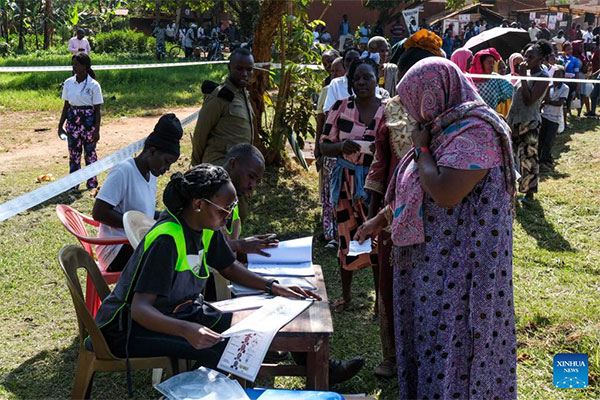
UCC said the decision was taken to curb misinformation, reduce electoral fraud risks and incitement for violence. The shutdown was cited as a reason the biometric voter verification kits (BVVKs)—meant to ease the voting process and curb voter fraud—- failed to work on election day. The machines were rendered useless as early as 9am, two hours into voting time.
As Electoral Commission officials fumbled to calm agitated voters, it signalled how rudimentary Uganda’s Digital Public Infrastructure (DPI) remains in spite of a fast growing digital economy. DPI refers to digital systems that form the backbone of modern societies to enhance communication, payment systems, and data exchange frameworks. DPI is essential for delivery of social services, innovation, improving governance and fostering economic growth.
The government spent over US$70m on the procurement of the BVVKs. The internet blackout lasted four days and internet access was only restored a day after the Electoral Commission declared President Yoweri Museveni winner with a 71% margin.
Now over a week since restoration of internet, social media remains blocked and can only be accessed using virtual private networks (VPNs).
UCC Executive Director, Nyombi Thembo, addressing the press said social media and messaging apps “remain restricted to safeguard against misuse that could threaten public order.”
Netblocks, a UK-based internet observatory that tracks cybersecurity and digital governance, noted that messaging platforms were generally slow. The site is also tracking the weeks-long internet shutdown in Iran where anti-government protests are underway.
Amid the 2026 blackout in Uganda, however, not everyone was cut off. State House, Parliament, Uganda Revenue Authority, security services, banks, hospitals, aviation and fuel distribution networks stayed online; the latter for being essential service providers.
But even as the government moved to block the internet, it fell victim to its own shenanigans. As the network engineers at MTN Uganda and Airtel Uganda implemented the shutdown, they cut off Uganda Police and were immediately summoned to the Force headquarters in Naguru. It was the typical crisis where a government decision backfires on even those supposed to enforce it.
Internet shutdown in elections now a routine
In 2021, the government also shut down the internet in what has now become routine in Uganda. Blocking internet access has become a feature of elections in African countries as paranoid incumbents try to counter online mobilisation.
In October 2025, the Tanzania government did the same in an election where President Samia Suluhu also blocked her opponent from contesting. Suluhu was declared winner with 98%.
For Uganda, the blackout was widely anticipated due to the galvanizing of opposition voices online towards a 40 year old government. Public anger has crystallised following years of unchecked corruption, impunity and incompetence by government officials.
Hardly a day goes by without news of a corruption scam, a nepotistic hire or an outrageous statement by a minister leading to intense condemnation from angry citizens.
When the UCC statement ordering telecom operators to freeze internet made rounds on Jan.13, it was the culmination of efforts to stymie public debate and scrutiny of a government that has also muzzled the media in general according to critics.
“It made it really hard for us to observe the elections,” says Godwin Toko, deputy team leader at Agora Discourse, a digital public square that advocates for government accountability.
“We hoped to do that via the internet, and had teams in different places who would share information on how the election was playing out, especially cases of human rights violations.”
Toko says the shutdown also hindered Agora from verifying information that was making the rounds on social media such as news of a police chopper landing at the home of opposition presidential candidate Robert Kyagulanyi and operatives arresting him.
Journalists could not report effectively on election activity across the designated 50,000 polling stations all over the country. The national tally centre at the EC headquarters in Lweza, Kampala became almost the only source of tracking the election which analysts said compromised the transparency of the electoral process.
The UCC move also crippled citizen journalism which has thrived using tools like Twitter where concerned citizens are able to upload photos and videos of election malpractice and actions of overzealous security officers in real time.
Law Society condemns UCC
As such, the Uganda Law Society condemned the internet shutdown saying UCC did not rely on any provision of the law for its actions.
ULS Vice President Anthony Asiimwe in a statement cited Section 87 of the UCC Act that empowers the body to suspend communication services upon declaration of a state of emergency as provided under Article 110 of the Constitution.
“No state of emergency has been declared in Uganda, therefore the order by UCC is illegal, null, void and unconstitutional,” he said.
In addition, two Ugandan lawyers, Michael Aboneka and Raymond Amumpaire, have filed a lawsuit against UCC, MTN, Airtel and Lyca Mobile, and the Attorney General for shutting down the internet. The lawyers argue that the shutdown was illegal, unconstitutional, lacked transparency, and was not backed by any formal legal instrument.
Aboneka told The Independent that the shutdown of the internet is an infringement of human rights since the internet enables many other rights such as education, health.
“We are looking at a human rights angle,” he said.
Aboneka added that there is no law in Uganda’s legal framework that UCC based its decision on to cut off internet access. He says there was no state of emergency declared for example that would warrant the action under that state, some rights are suspended. “For UCC to just take that action without any regard for the law is a violation of human rights. What do their actions mean? This is an application for human rights.” he said.
The petition states that the shutdown crippled businesses, disrupted mobile money services, and violated rights to freedom of expression, access to information, and education. The advocates are seeking compensation for the shutdown, a refund for lost data, and a court order to prevent future arbitrary shutdowns.
Another group of lawyers condemned UCC’s actions regarding them “a brazen violation of human rights and abuse of power” by the UCC executive director Nyombi Thembo.
The lawyers said the order offends similar rights under the Universal Declaration of Human Rights, the African Charter on Human and Peoples Rights, the African Commission Declaration of Principles on Freedom of Expression and Access to Information in Africa, and the International Convention on Civil and Political Rights.
The lawyers included Bruce Kyerere, Peter Walubiri, Ronald Wanda, Mike Okua, Sarah Kasande, Primah Kwagala and Philip Karugaba among others. “We also acknowledge the social and mental health impact that deprivation from social media can cause to some. The blocking also incentivizes widespread VPN use (including potentially unsafe services), raising additional public interest and cybersecurity concerns)”, the statement said.
In a letter written on Jan. 22 by the president of the Uganda Medical Association, Frank Asiimwe said that the disruptions to internet and mobile money services “have created significant obstacles for the medical community.”
Asiimwe added that families were not able to pay for emergency surgeries, medicines and ambulance services in real time. The leader of the medical umbrella body stressed that any circumstances that prevent a healthcare provider from meeting a patient, or a patient from accessing care, is a direct threat to the health of the nation.
Business loss
The internet cutoff had dire economic implications. According to industry sources, the four day blackout cost the industry an estimated US$15m (Shs57bn) for the main players MTN and Airtel. The smaller internet service providers like Savana, Simba, Lycamobile, Roke Telecom also suffered significant losses of revenue scuttling the growth projections of the most lucrative sector in Uganda.
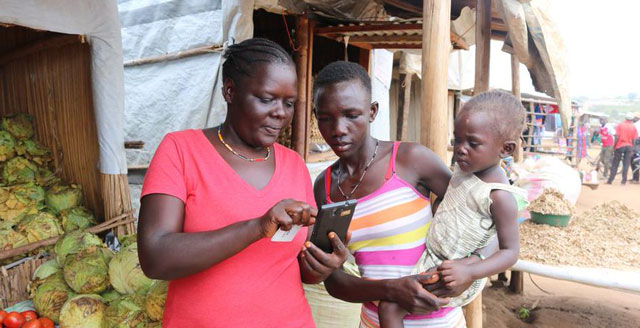
Multiple services were affected in Uganda’s longest internet shutdown. Mobile money payments were erratic as the platform could only facilitate sending but not cash withdrawals which left thousands of businesses and livelihoods at stake.
Uganda’s economy is often referred to as a “mobile money economy” because many people operate out of the formal banking system. The blockade cut off a key financial lifeline for Ugandans who are accustomed to an informal economy that caters to small businesses.
There are also online businesses selling a host of items like shoes, clothes, and other household items that advertise on Whatsapp, Twitter and Instagram that were left incapacitated due to the shutdown.
The blockade had far reaching ramifications. Media reports in Kenya indicated that there was a hold up at the Mombasa Port because internet connectivity is required for cargo trucking, invoicing and delivery.
The decision to cut off communications affected the Northern Corridor, a 1700km trade route stretching from Mombasa all the way to Uganda, Rwanda, Burundi and DRC. The trucks require GPS for effective coordination of trade logistics in the East African region.
This was the second time in four months that regional trade is being scuttled by internet shutdowns. When the Tanzanian government blocked the internet during the recent elections, there was congestion at the Dar es Salaam port forcing authorities to reroute cargo to the Mombasa Port which caused disarray.


I was personally PISSED OFF!! A law-abiding, prudent user of internet resources being unilaterally lumped with “unknowns”. You guys can do better.