The Independent Uganda: You get the Truth we Pay the Price


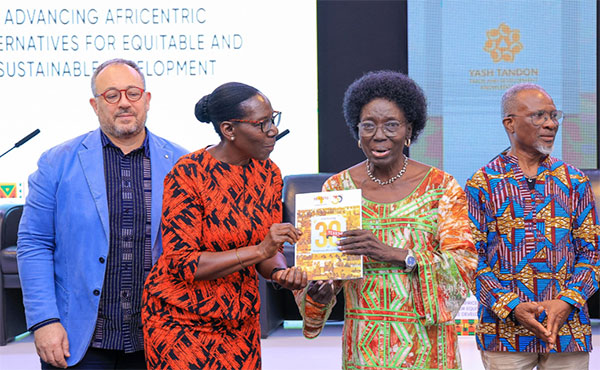
Geopolitical tensions, climate change, technological disruption and shifting trade relationships are reshaping how countries engage with each other economically
Kampala, Uganda | ISAAC KHISA | For three decades, the Southern and Eastern Africa Trade Information and Negotiations Institute (SEATINI) has worked behind the scenes to give African countries a stronger voice in global trade negotiations.
Now, as the institution marks 30 years of advocacy and policy work, it is looking ahead to a new era — one it says will require Africa to move from simply responding to global economic rules to actively shaping them.
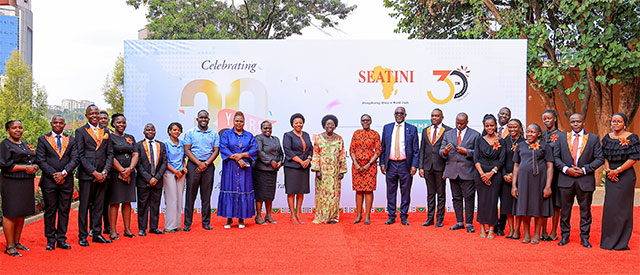
The anniversary celebration in Kampala on July 29 brought together government officials, regional bodies, development partners, academics, civil society organisations and private sector leaders to reflect on Africa’s changing role in international trade and the challenges ahead.
SEATINI used the occasion to launch a series of initiatives aimed at strengthening African research, building policy leadership and creating platforms to support homegrown solutions to economic challenges.
Founded in 1996 by Professor Yash Tandon, SEATINI emerged at a time when many African countries were entering a rapidly changing global trading system but lacked the technical capacity and resources to effectively influence international trade rules.
Over the years, the organisation has grown into one of Africa’s leading independent policy institutions, providing research, training and advocacy on issues ranging from trade and investment to taxation, regional integration, agriculture and climate justice.
But as the global economy becomes increasingly uncertain, SEATINI says Africa faces a new set of challenges.
Geopolitical tensions, climate change, technological disruption and shifting trade relationships are reshaping how countries engage with each other economically.
Dr David Luke, Professor in Practice and Strategic Director of the Firoz Lalji Institute for Africa at the London School of Economics and Political Science, said institutions like SEATINI are becoming even more important as countries seek to navigate these changes.
“For SEATINI to reach three decades of impactful operation is a powerful testament to the dedication of its founders and leaders,” he said.
Paying tribute to Professor Yash Tandon, Ambassador Nathan Irumba and SEATINI Executive Director Jane Nalunga, Dr Luke said their leadership had helped build an institution capable of influencing Africa’s trade debates.
“Knowledge sharing and capacity building are SEATINI’s DNA,” he added, stressing that stronger African knowledge systems would be critical in shaping the continent’s future.
A push for African-led solutions
SEATINI’s Executive Director Jane Nalunga said the anniversary is not only a celebration of the past but a launchpad for the future.
“For thirty years, SEATINI has worked alongside governments, regional institutions, civil society and development partners to strengthen Africa’s voice in global trade,” she said.
“Our next chapter is about building stronger African knowledge systems and advancing Africentric alternatives that respond to today’s development challenges.”
Among the new initiatives unveiled is the SEATINI Strategic Plan (2026–2030), which will guide the organisation’s work over the next five years.
The organisation also launched the Yash Tandon Trade and Development Knowledge Hub, a continental platform aimed at supporting research, knowledge exchange and policy engagement.
Another initiative, the Africentric Trade and Development Policy Academy, will focus on developing future African leaders in trade, investment and fiscal policy.
SEATINI also introduced a new digital platform, the SEATINI Africa website, designed to make research and policy resources more accessible across the continent.
Trade must deliver for ordinary Africans
Speaking at the anniversary event, Uganda’s First Deputy Prime Minister and Minister for East African Community Affairs, Rebecca Alitwala Kadaga, said Africa’s trade agenda must go beyond agreements and focus on improving livelihoods.
She said trade should support industrialisation, create jobs, strengthen regional value chains and deliver practical benefits for citizens.
She also called for greater support for women and youth entrepreneurs to participate in economic opportunities created by regional and global trade.
Representatives of government and experts attending the event highlighted the importance of stronger institutions and greater investment in Africa’s productive capacity.
A panel discussion on Africa’s Positioning in Global Trade, Finance and Investment Policy Governance emphasised the need for the continent to play a more active role in shaping global economic decisions.
Participants argued that Africa must strengthen regional integration, invest in domestic industries and develop policies based on its own priorities.
Looking ahead
As SEATINI enters its fourth decade, the organisation says its focus will be on turning knowledge into action.
It plans to work more closely with governments, regional economic communities, universities, civil society and businesses to influence policies that promote inclusive and sustainable development.
The challenge ahead is significant. Africa remains a major participant in global trade, but many countries continue to face barriers including limited industrial capacity, unequal trading relationships and vulnerability to external shocks.
SEATINI believes stronger African institutions and locally generated knowledge can help change that equation.
After 30 years of helping Africa find its voice in global trade discussions, the organisation is now seeking to ensure that voice carries greater weight in shaping the rules of tomorrow.