The Independent Uganda: You get the Truth we Pay the Price


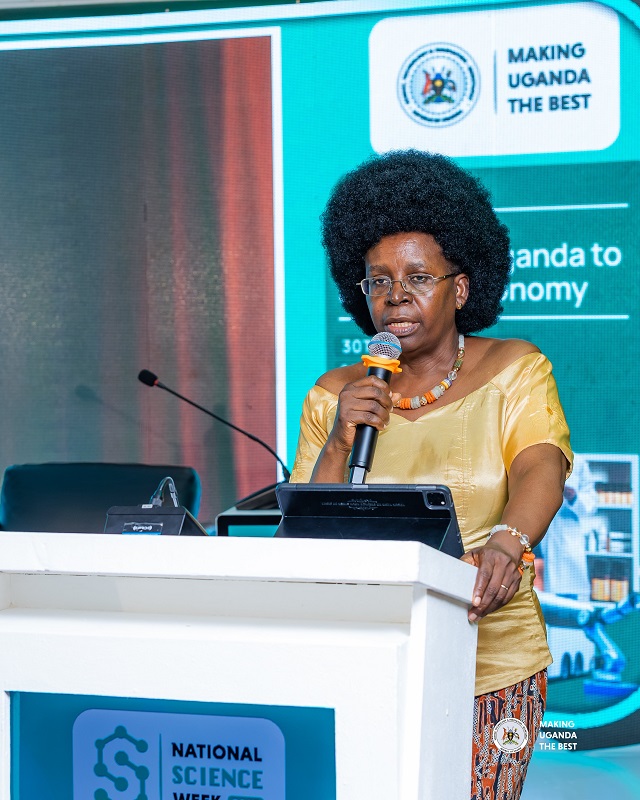
Kampala, Uganda | JULIUS BUSINGE | The Minister of Science, Technology, and Innovation, Monica Musenero Masanza, has officially launched National Science Week (NSW) 2026, positioning science, technology and innovation (STI) as a key driver in Uganda’s ambition to build a USD 500 billion economy.
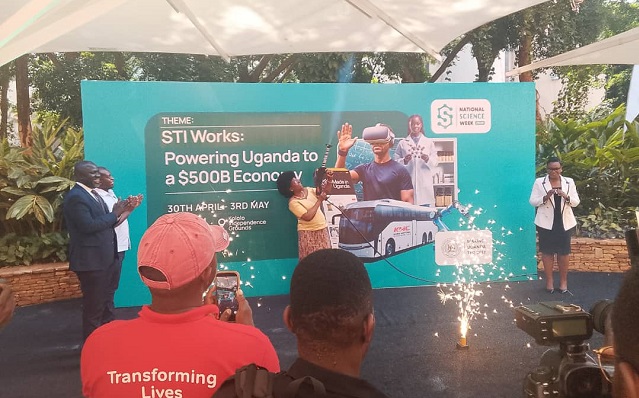
The launch event took place on April 9 at Serena Hotel in Kampala, setting the stage for the national celebrations scheduled to run from April 30 to May 3, 2026, at Kololo Independence Grounds under the theme: “STI Works: Powering Uganda to a USD 500 Billion Economy.”
Musenero said the ministry deliberately opened the week’s activities ahead of the official date to allow for adequate mobilisation.
She added that the lead-up period will include a range of activities such as a national hackathon, investor engagements, media outreach and more.
“The days ahead will see the opening of a hackathon to allow innovators hand in their innovations. STI staff will also carry out domestic investor engagements through dinners and lunches,” Musenero said.
“We will also be having media engagements and meeting innovators as the days run towards the real opening day of April 30,” she added.
STI driving economic transformation
Musenero said Uganda is entering a results-driven phase, noting that investments in STI over the past five years are already yielding tangible outcomes.
“We are demonstrating results across mobility, manufacturing, and now the digital economy. From electric vehicles crossing the continent, to locally made products entering new markets, to young developers building solutions for real-world challenges,” she said.
A key highlight is the Kayoola Electric Bus, which recently completed a 13,000-kilometre journey from Kampala to Cape Town, showcasing the country’s engineering capabilities and the potential of locally made products on international markets.
In the digital space, she pointed to initiatives such as the Game Jam hackathon, which brought together young developers to build interactive solutions, including concepts addressing conservation challenges.
Showcasing ‘Made in Uganda’ innovation
The National Science Week will focus on demonstrating innovations that are already working, with emphasis on market-ready Ugandan products.
Among the key attractions will be the Made in Uganda experiential platform, designed to connect innovation to markets and scale. Visitors will also witness live demonstrations in sectors such as mobility, artificial intelligence, biosciences, electronics, and consumer product innovation.
The event will further feature investor roundtables, deal rooms, policy dialogues, and global pitch sessions aimed at linking innovators to capital and international markets.
Additional activities will include vendor onboarding, promotion of locally made products, and packaging support services under a centre of excellence to help Ugandan products compete globally.
Meanwhile, Peter Ourien, the Undersecretary at STI, said the placement of the STI Secretariat under the Office of the President underscores its national importance.
“In the last four years, we have focused on accountability, promise and vision. We have moved a great deal and will continue to show what is happening,” he said. Ourien added that STI presents significant opportunities for job creation and economic growth.
“We need to come together to create the necessary demand and the multiplier effect of STI,” he said.
He also called for greater confidence in local products. “We want Ugandans to have trust in the products that are made in Uganda. These products should be spoken about to build confidence and benefit the rest of the country,” he said.
Ourien noted that there remains an investment gap, with many investors still prioritising traditional sectors like real estate instead of innovation-driven enterprises.
A knowledge economy
In her remarks, Musenero described the past five years as a “pathfinding phase” in which Uganda has clarified how science contributes to economic growth.
She said the country has moved from what was previously described as a “black box” — where the link between research and economic value was unclear — to a structured system that connects ideas to markets.
“We now understand clearly and practically how science builds an economy. We understand the journey from idea to market,” she said.
According to the minister, the next phase will focus on scaling innovation, strengthening industrial capacity, and expanding Uganda’s position in the global knowledge economy.
Musenero outlined four strategic pillars that will guide NSW 2026: demonstrating results, attracting investment, building trust through transparency, and positioning Ugandan innovators on the global stage.
She said the week will not just showcase isolated success stories but demonstrate a functioning national innovation system.
“This is not a showcase of isolated success stories. It is a national demonstration of a system that is now understood, structured, and moving,” she said.
Call to participate
The government has invited the public, private sector, investors, and global partners to take part in the four-day event, which has been streamlined from the usual seven days to focus on impact.
Other partners present at the launch included Kiira Motors Corporation, the Uganda National Council for Science and Technology, and representatives from various innovation institutions.
Musenero said the event marks a turning point for Uganda’s development trajectory.
“Let this Science Week mark the moment when the country moves from understanding to execution, from pathfinding to takeoff,” she said.