The Independent Uganda: You get the Truth we Pay the Price


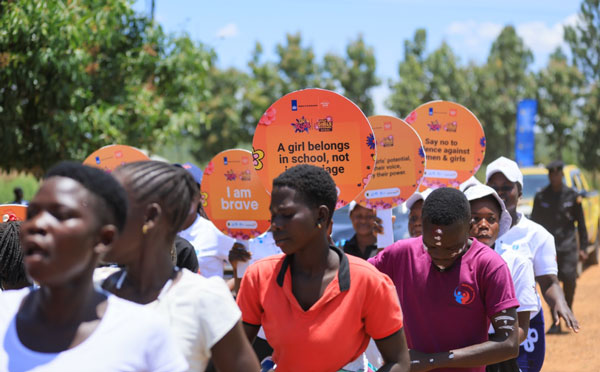
Kampala, Uganda | NEWS CORRESPONDENT | Regional sexual and reproductive health experts have called for a closer examination of age-of-consent laws and how they affect adolescents’ access to healthcare, arguing that legal and administrative barriers can prevent young people from obtaining the information and services they need to avoid unintended pregnancies.
The call was made during the fourth webinar in the LINK. LEARN. ACT. series convened by Reach A Hand Africa (RAHA), in partnership with the Uganda Ministry of Health, Ministry of Gender, Labour and Social Development, and Ministry of Education and Sports.
The webinar, held on August 25 under the theme “Health Systems and Youth-Friendly Services: Age of Consent and Access to Care,” brought together experts from Uganda, Kenya, Zambia and Rwanda to compare experiences and examine what Uganda can learn from neighbouring countries.
The discussion comes against the backdrop of Uganda’s stubbornly high teenage pregnancy rate.
According to the 2022 Uganda Demographic and Health Survey, 23.5% of girls aged 15–19 had already begun childbearing, with 18.4% having had a live birth and 5.1% pregnant with their first child.
Even more concerning, the proportion has remained largely unchanged for more than 15 years, fluctuating between 24% and 25% between 2006 and 2022. The survey also found that by age 16, one in every 10 girls aged 15–19 had begun childbearing, rising to almost four in 10 by age 18.
For participants, the age-of-consent question was therefore not simply a legal debate. It is closely connected to whether adolescents can obtain contraception, HIV testing and prevention services, information and other sexual and reproductive health services early enough to prevent unintended pregnancies.
They argued that when a young person is afraid of being judged, reported to their family or turned away from a health facility, they may delay seeking care altogether.
A live poll reinforced this concern: 48% of participants identified fear of being judged or reported to family as the biggest barrier to accessing health services, while 42% cited lack of information on where and how to obtain help.
The discussion also highlighted the distinction between the age at which a person can legally consent to sex or marriage and the age at which they can independently seek healthcare.
Participants argued that these issues should not be conflated. Making healthcare accessible to adolescents, they said, does not mean endorsing early sexual activity; rather, it recognises that some adolescents are already sexually active and need accurate information and timely services to prevent HIV, unintended pregnancy and other health consequences.
Rwanda offers Uganda a policy lesson
Denise Teta, Policy and Advocacy Advisor at Rwanda’s Health Development Initiative, shared Rwanda’s recent experience, where Parliament reduced the age of medical consent for reproductive health services from 18 to 15 in August 2025.

The reform was not achieved overnight. Rwanda had previously attempted to address the issue, including an earlier legal provision that allowed adolescents as young as 12 to independently access HIV testing.
According to Teta, that provision was later narrowed during a 2018 revision of child protection legislation before reform efforts returned to the issue and eventually succeeded.
For the Ugandan participants, Rwanda’s experience demonstrated that policy reform is rarely a straight line.
The lesson, participants argued, is not necessarily that Uganda should simply copy Rwanda’s age limit, but that it should examine how its own laws, health policies and frontline practices interact, and whether those arrangements are helping or hindering adolescents who need care.
Kenya: Go beyond the law
Fidelis Ndung’u, Deputy Director for Advocacy at Kenya’s National Council for Population and Development, brought another perspective, stressing that changing a legal framework is only one part of addressing teenage pregnancy.
Kenya’s experience with the “triple threat” of HIV, teenage pregnancy and gender-based violence was highlighted as an example of why adolescent challenges should be addressed together rather than through separate programmes.
Participants also pointed to Kenya’s school re-entry guidelines for adolescent mothers and free basic education as complementary interventions. The message was clear: access to healthcare must be accompanied by measures that keep girls in school and allow adolescent mothers to return and complete their education.
Zambia: Teenage pregnancy has more than one cause
Perrykent Nkole, an SRHR Policy Strategist from Zambia, encouraged participants to look beyond age of consent alone. The discussion framed teenage pregnancy through what was described as a “Triangle of Harm” — poverty, early marriage or unions, and barriers to sexual and reproductive health services.
The argument was that removing one barrier while leaving the others untouched is unlikely to produce lasting change.
This is consistent with evidence from the World Health Organisation, which identifies lack of access to contraception and comprehensive sexuality education, child marriage, sexual abuse, poverty and limited educational and employment opportunities among the factors driving adolescent pregnancy. Globally, about 21 million girls aged 15–19 in low- and middle-income countries become pregnant each year, with approximately half of these pregnancies unintended.
Uganda must close the gap between policy and practice
Ugandan experts and frontline practitioners brought the discussion back to what happens at health facilities.
Joanna Atukunda, Founder and Team Leader of Uplift Slum Africa, described situations where adolescents encounter practical barriers when seeking services, including requirements for additional documentation that can discourage them from seeking time-sensitive care. She also raised the reality of adolescents living without parents or in circumstances where approaching a parent for consent may expose them to further harm.
A participant from Pakwach, meanwhile, shared that two teenagers aged 14 and 17 had undergone caesarean deliveries at Pakwach Health Centre IV that same day, bringing the national statistics into sharp focus.
For the webinar participants, these experiences demonstrate why the age-of-consent debate cannot be separated from Uganda’s teenage pregnancy crisis.
With nearly one in four girls aged 15–19 already having begun childbearing, and with the national figure barely shifting since 2006, participants argued that Uganda needs to examine every point at which an adolescent can fall out of the health system.
The webinar concluded with a call for clearer guidance for health workers, stronger youth-friendly services, improved access to contraceptive information and commodities, sexuality education, positive parenting, and stronger school re-entry systems for adolescent mothers.
The participants also stressed that age-of-consent reform on its own will not end teenage pregnancy. Rather, it should be considered as part of a wider package of interventions that enables adolescents to access accurate information and appropriate healthcare while addressing poverty, child marriage, gender-based violence, education and social norms.
For Reach A Hand Africa, the conversation forms part of a wider regional effort to move beyond asking why teenage pregnancy persists and instead identify practical solutions that can be adapted across countries.
As the series moves forward, the experiences of Rwanda, Kenya and Zambia offer Uganda an opportunity to reconsider not only what its policies say, but what happens when a young person actually reaches the clinic door.