The Independent Uganda: You get the Truth we Pay the Price


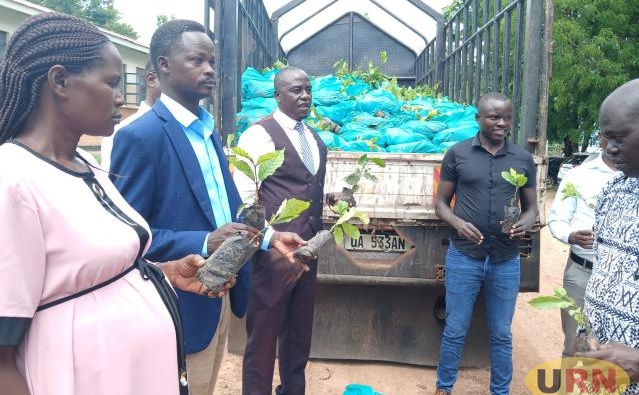
Agago, Uganda | URN | More than 800 farmers in Agago and Pader districts are undergoing training in coffee growing under a government-supported initiative aimed at fighting poverty and improving household incomes in northern Uganda.
Nicolas Okino, the Regional Agricultural Officer overseeing Agago, Pader and Abim districts, said the Ministry of Agriculture, Animal Industry and Fisheries (MAAIF) has completed the registration of people interested in coffee growing in the region.
He said training programmes are currently underway to equip farmers with skills that will improve the survival rates of coffee seedlings and boost productivity. According to Okino, more than 300 coffee farmers have already been trained in Agago District, while over 500 others are undergoing similar training in neighbouring Pader District.
Okino said research has shown that households that adopted coffee growing earlier are already experiencing improved financial stability, noting that coffee farming can serve as an effective tool in fighting poverty and increasing household incomes in northern Uganda.
Jackline Akidi, a farmer from Kuywee Sub-county, said the training is equipping farmers with knowledge on proper coffee nursery management, planting methods, spacing, pest control and maintenance practices aimed at improving plant survival and productivity.
Akidi said many residents had previously believed coffee could not thrive in northern Uganda because of the region’s climate. However, after seeing demonstration gardens and receiving technical guidance from agricultural officers, farmers have changed their perception. She said the programme has opened opportunities for farmers to diversify from traditional crops and venture into commercial agriculture.
“We have been depending mostly on simsim and other seasonal crops, but coffee gives us hope for long-term income,” Akidi said. Joyce Laker, another farmer from the same sub-county, welcomed the government’s decision to distribute seedlings and provide practical training, saying many farmers had previously lacked the technical knowledge needed to manage coffee plantations.
Laker appealed for continued extension services, access to quality seedlings and reliable markets once production increases. Agago District NRM Chairperson Walter Ogwang Oketta urged newly elected leaders to champion wealth creation initiatives and mobilise communities to invest in commercial agriculture.
Oketta encouraged leaders to lead by example by investing in enterprises such as coffee and cocoa growing, saying leaders who rely entirely on salaries risk failing both themselves and the communities they serve. He said economic empowerment strengthens leadership credibility and challenged councillors and local leaders to put available land to productive use.
According to Oketta, even small-scale investments in coffee farming can significantly improve household incomes and transform livelihoods in the district. He revealed that he had already planted four acres of coffee and two acres of cocoa this year, and encouraged every leader to start with at least half an acre of coffee to inspire communities to follow suit.
Oketta also urged residents to embrace borrowing for productive investments where necessary, describing coffee growing as a promising economic venture for Agago District. Alexander Charles Okidi, the councillor for Lira Kato Sub-county, echoed the call, saying leaders must become role models in agricultural production.
Okidi said he had already started preparing one acre of land for coffee growing after securing seedlings distributed through a partnership involving Agago District local government and development partners.
He, however, cautioned farmers against abandoning traditional food crops, encouraging integrated farming that combines coffee, bananas and other crops to ensure food security. Okidi attributed persistent poverty in the Acholi sub-region to poor spending habits despite people working hard.
Leaders and agricultural officials in northern Uganda have intensified campaigns encouraging communities to embrace coffee growing as part of wider efforts to improve household incomes and fight poverty across the sub-region.
The campaign, spearheaded by MAAIF in partnership with district local governments, is targeting thousands of farmers as part of efforts to diversify agriculture in northern Uganda, where many households have traditionally depended on crops such as simsim, millet, maize and beans.