The Independent Uganda: You get the Truth we Pay the Price


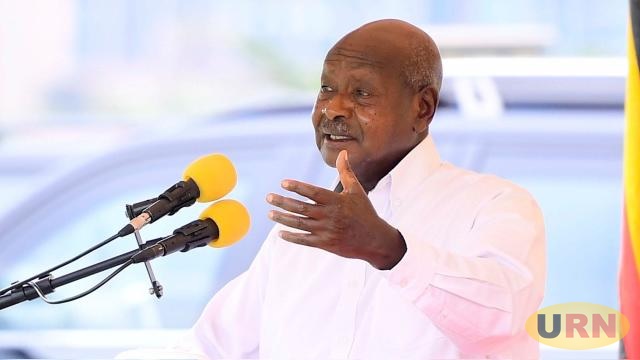
Kampala, Uganda | THE INDEPENDENT | President Yoweri Kaguta Museveni has broken his silence on the ongoing crisis in the Middle East, calling for restraint, mutual recognition, and diplomacy among all actors in the region. Responding to concerns raised by the Iranian Ambassador to Uganda regarding Uganda’s perceived silence on the matter, Museveni acknowledged the delay in publicly expressing his long-held views but affirmed the National Resistance Movement’s consistent position rooted in opposing the chauvinism of identity and promoting legitimate interests for all stakeholders.
“We have good relations with both Israel and Iran—not forgetting the United States and other countries of the world,” Museveni stated. “Our stance has always been to oppose racism, religious extremism, and gender chauvinism. We believe in the politics of legitimate interests, not identity-based confrontation.”
In a candid address, Museveni, who also doubles as the Chairman of the Non-Aligned Movement (NAM), identified four key groups of what he termed “mistake makers” in the Middle East conflict, beginning with Iranian Islamists. Recalling past engagements with Iranian leaders, including former President Mahmoud Ahmadinejad, Museveni criticized Iran’s refusal to acknowledge Israel’s legitimacy in the region.
“I told them that denying Israel’s right to exist is a mistake. According to the Bible and history, the Jews were part of that area before being dispersed by the Romans. They returned through the Zionist movement and rightly rejected a British offer to settle in Uganda. The 1947 UN decision to partition Palestine was a just and historical solution,” Museveni noted.
He also criticized elements within the Arab world and among Iranian Islamists for rejecting this solution, asserting that both peoples—Palestinians and Israelis—have legitimate claims to the land. Museveni then turned his criticism to Israel itself, challenging its refusal to implement the two-state solution.
“It is wrong for Israel to say Palestinians do not belong there. When I met Netanyahu’s father, Mzee Benzion, I would ask him about the original tribes of Canaan,” he said, urging Israeli leaders to acknowledge Palestinian rights as part of a path to peace.
The third group of mistake makers, according to Museveni, are fundamentalists—both Islamic and Christian. He warned that extremism of any form is a danger to humanity, citing historical examples such as the Christian Inquisition and the collapse of Sudan under Islamic fundamentalist rule. Fourthly, Museveni condemned the use of foreign military force as a solution to internal or regional conflicts. He cited multiple historical interventions—including in the Soviet Union and by the Papacy in Europe—as failures that only worsened situations. “Force should only be used in legitimate defence, not aggression,” he stressed.
The Ugandan leader urged all Middle Eastern actors to return to principled diplomacy and dialogue. “Iran and the Islamists should listen to our advice to recognize Israel. Israel should, in turn, implement the two-state solution.” In his closing remarks, Museveni made a spiritual appeal to global leaders: “We are all praying people. Perhaps it is time to pray together and consult the Creator who cares for all of us without preference. May we humble ourselves and ask for God’s wisdom to do what is right in His eyes.”
****
URN