 The Independent Uganda: You get the Truth we Pay the Price


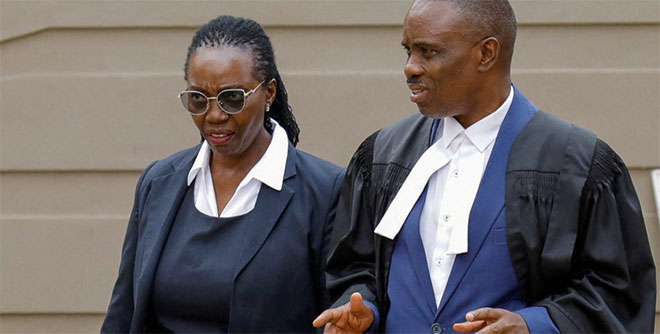
Kenyan constitutional lawyer and veteran politician Martha Karua embraced the brief to defend Ugandan opposition leader Kizza Besigye after his abduction from Nairobi in November 2024. Nearly two years later, she finds herself barred from entering Uganda, in a legal and political saga that is testing the boundaries of justice, sovereignty and regional integration, reports Ronald Musoke
For regular flyers around East Africa, especially lawyers, the Nairobi-Entebbe route is almost routine. The morning flight is usually filled with business executives, government officials, aid workers and advocates shuttling between two capitals separated by barely an hour in the air. On most days, passengers disembark, clear immigration, collect their luggage and disappear into Kampala before the memory of the flight has had time to settle.
June 22, 2026, began no differently for veteran Kenyan constitutional lawyer Martha Karua. Kenya Airways Flight KQ420 touched down at Entebbe International Airport shortly before nine o’clock that morning.
Among its passengers was Karua, who was travelling along with Charles Kanjama, the president of the Law Society of Kenya, advocate John Gicheru and another colleague. They were coming to Kampala on legal business. For Karua, it was another familiar commute across one of East Africa’s busiest borders. For more than a year, she has travelled repeatedly between Nairobi and Kampala, sometimes returning home the same evening after court, at other times spending the night before flying back the following day.
Nothing about this journey suggested it would be different. Like every arriving passenger, Karua completed Uganda’s current Ebola surveillance declaration before joining the immigration queue. Her passport was examined, stamped and returned. With clearance granted, she walked into the arrivals hall and waited beside the baggage carousel for her suitcase.
In her mind, she thought the formalities were over. But, a few moments later, an immigration officer approached her. “She told me she had made a mistake to clear me, and there was a note on me,” Karua would later recall.
The explanation was as brief as it was bewildering. What note? Who had written it? Why had it surfaced only after she had already been admitted into Uganda? No answers were forthcoming. Instead, Karua was escorted away from the baggage carousel to the office of the Principal Immigration Officer. Before anyone explained why she had been stopped, two junior immigration officers confiscated her mobile phones. Her travelling companions continued into Uganda. She did not.
Officials informed her that she would not be permitted to enter the country for what they described only as “security reasons”. Later, she was handed a document declaring her persona non grata and instructed to return to Nairobi on the next available Kenya Airways flight.
“I was not going as a lawyer,” Karua explained the following morning during an interview with NTV Kenya. “I was actually going as an observer.” She had travelled, she said, to attend a court appearance involving her colleague Erias Lukwago, the former Lord Mayor of Kampala and one of Uganda’s leading constitutional lawyers, who had himself been arrested only days earlier and charged with “misprision of treason”.
Instead, Karua never left the airport. For many travellers, a denied entry stamp marks the beginning and end of an unfortunate journey. For Karua, it marked the culmination of another journey altogether. One that had begun 19 months earlier. Not at an airport. Not inside a courtroom. But at the launch of her autobiography.
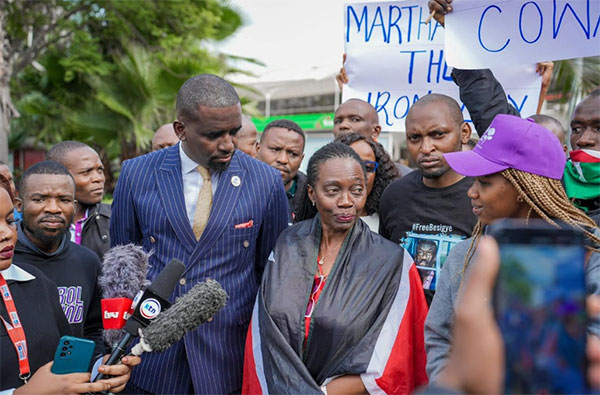
The book launch invitation
On the afternoon of November 17, 2024, Nairobi’s Serena Hotel was preparing for an event that promised to be equal parts literary celebration and political reunion. Guests were expected from across East Africa. Diplomats, lawyers, judges, politicians and civil society leaders would gather to celebrate the publication of Martha Karua’s autobiography titled “Against the Tide: My Journey on a Less Trodden Path”. Few public figures in the region embodied the book’s title more convincingly than its author. For nearly four decades, Karua has built a career resisting political expediency in favour of constitutional principle, earning admiration from supporters and opponents alike for her tenacity in public life.
Among those expected to speak was Uganda’s opposition leader, Dr Kizza Besigye. The invitation carried more than ceremonial significance. Besigye and Karua belong to a generation of East African politicians whose careers have become intertwined with the unfinished democratic ambitions of their respective countries. If Karua has become one of Kenya’s most recognised constitutional reformers, Besigye has spent nearly a quarter of a century as Uganda’s most persistent opposition figure. Ironically, the man who would become President Yoweri Museveni’s fiercest political rival had once been one of his closest allies.
A medical doctor by training, Besigye served as Museveni’s personal doctor during the National Resistance Army’s bush war before the rebels captured power at the beginning of 1986. Their political paths would eventually diverge dramatically. Besigye accused Museveni’s government of abandoning the democratic ideals for which the war had ostensibly been fought. Museveni’s supporters, in turn, accused Besigye of seeking power through confrontation rather than dialogue.
Over the next two decades, Besigye challenged Museveni in four presidential elections—2001, 2006, 2011 and 2016—losing each contest while rejecting the official results. Arrests, court appearances, police barricades and confrontations with security agencies became familiar episodes in a political career defined as much by resistance as by electoral politics.
To millions of his supporters, Besigye became the enduring face of Uganda’s democratic opposition. To the state, he remained one of its most uncompromising critics. When Besigye accepted Karua’s invitation to speak at the launch of her autobiography, few could have imagined that he would never reach the podium.
According to his lawyers, Besigye disappeared from an apartment complex in Nairobi on November 16. Alongside his political aide, Haji Obeid Lutale, he vanished without trace. For four days, neither family members nor lawyers knew where the two men were.
Rumours spread rapidly across Nairobi and Kampala. Had he gone underground? Had he been arrested? Had he crossed another border? No one seemed to know. Then, on November 20, the mystery ended as abruptly as it had begun. Besigye resurfaced; not in Kenya, but before the General Court Martial in Makindye, in Kampala. The courtroom appearance stunned colleagues who had spent days searching for him.
Standing in the dock beside Lutale, Besigye faced charges relating to national security and the unlawful possession of firearms and ammunition. He challenged both the accusations and the jurisdiction of the military court to try a civilian.
Outside the courtroom, another question lingered. How had one of East Africa’s best-known opposition leaders travelled from Nairobi to military custody in Kampala without anyone—including his own lawyers—knowing where he was? The answers would become the subject of legal arguments, diplomatic denials and international scrutiny. For Martha Karua, however, the immediate question was more straightforward.
Karua, a lawyer, had watched a prominent political leader disappear, and now that leader was in prison. Whatever political storm lay ahead, one principle remained unchanged. Every accused person is entitled to a lawyer. Karua accepted the brief, which perhaps has become one of the most consequential decisions of her legal career.
The brief
For Karua, taking Kizza Besigye’s case was never simply about representing another politician. It was about defending a principle. Across four decades in public life, Karua has built her reputation on the belief that constitutional democracy lives or dies on whether the law protects those who need it least as much as those who need it most. Governments, she has often argued, are judged not by how they treat the popular or the powerful, but by how faithfully they uphold the rights of those standing in the dock.
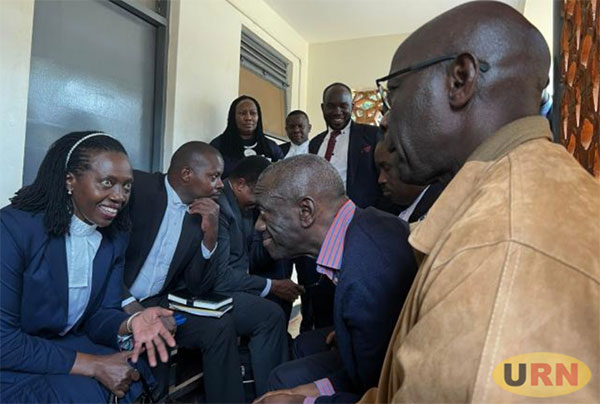
Besigye’s case has put that conviction to its sternest test. When Karua joined the defence team, the controversy surrounding Besigye’s abduction had already spread beyond Uganda’s borders. Human rights organisations questioned the circumstances under which one of East Africa’s best-known opposition politicians had disappeared from Nairobi before reappearing in military custody in Kampala. Kenyan officials denied any involvement in his removal from the country. Ugandan authorities insisted that Besigye faced grave criminal allegations that warranted prosecution.
The legal battle had begun long before the trial itself. Besigye and his political aide, Haji Obeid Lutale, first appeared before the General Court Martial in Makindye on charges relating to national security and the unlawful possession of firearms and ammunition. They challenged the military court’s jurisdiction, arguing that, as civilians, they could not lawfully be tried before a military tribunal.
The jurisdictional question would become almost as significant as the charges themselves. For years, Uganda’s military courts had attracted criticism from constitutional lawyers and human rights organisations over the prosecution of civilians. Besigye’s appearance before the General Court Martial revived a debate that had simmered for years over the limits of military justice and the constitutional guarantees of a fair trial.
Karua arrived in Kampala determined to fight that battle in court rather than in the court of public opinion. Her role, she repeatedly maintained, was not to pronounce on Besigye’s innocence or guilt. That responsibility belonged to the courts. Her task was to insist that whatever allegations the state wished to pursue, they had to be tested before a competent court through a process that respected the Constitution.
It was a deceptively simple proposition. Yet in Uganda’s highly polarized political environment, little about Besigye’s prosecution was simple. Every court appearance attracted journalists, diplomats and activists. Television cameras gathered outside the courthouse long before proceedings began. International observers watched developments closely, while rights organisations issued statements questioning the legality of both Besigye’s alleged removal from Kenya and his continued prosecution before a military court.
The Ugandan government rejected suggestions that the proceedings were politically motivated. Prosecutors argued that they possessed substantial evidence linking Besigye, Lutale and others to a sophisticated conspiracy aimed at overthrowing the government through violent means. According to the Office of the Director of Public Prosecutions, investigators intended to present evidence alleging meetings in Switzerland, Greece and Kenya during which plans were discussed to recruit fighters, obtain weapons, train operatives and destabilise the Ugandan state. The prosecution further alleged that the conspiracy extended to requests for ricin poison, drone technology and attacks on strategic military installations.
Besigye rejected the accusations. His lawyers described the prosecution as politically driven and insisted that the state’s case had been irredeemably tainted by what they characterised as his unlawful cross-border abduction from Nairobi. The courtroom thus became the meeting point of two fundamentally different narratives.
To prosecutors, the case concerned an alleged conspiracy against the state. To the defence, it concerned the state’s obligation to obey its own laws even while prosecuting its fiercest critics. Karua understood that the distinction mattered. In constitutional democracies, she believed, the legitimacy of a criminal trial depends not only on the evidence presented but also on the fairness of the process itself. If due process could be suspended for political opponents, then constitutional protections risked becoming privileges extended at the discretion of the state rather than rights guaranteed to every citizen.
That argument appeared to gain traction in January 2025. In a landmark ruling (Michael Kabaziguruka v Attorney General), Uganda’s Supreme Court declared that civilians could not be tried before military courts and directed that such cases be transferred to civilian courts. For Besigye’s legal team, the judgement represented a significant constitutional victory. It vindicated an argument they had advanced from the moment their client first appeared before military judges.
Yet the decision did not bring Besigye’s detention to an end. His prosecution simply changed venues. The military case gave way to proceedings before the civilian courts, where prosecutors reformulated the allegations and pursued treason-related charges. Besigye remained in custody as the legal contest entered a new phase.
For Karua, the flights between Nairobi and Kampala became almost routine. At times, she remained in Kampala to consult with Besigye and prepare legal strategy alongside her Ugandan colleagues. Among those colleagues was Erias Lukwago. The former Lord Mayor of Kampala is more than a celebrated opposition politician. He is one of Uganda’s most accomplished constitutional lawyers, respected even by those who disagree with his politics. Calm, meticulous and deeply experienced in public interest litigation, Lukwago became an indispensable member of Besigye’s defence team.
So too did the youthful advocate, Eron Kiiza, a fearless courtroom lawyer whose willingness to challenge authority has earned him admiration within Uganda’s legal fraternity. Together, Karua, Lukwago and Kiiza represented something larger than a defence team. They embodied a cross-border legal collaboration that the East African Community has long sought to encourage; lawyers from different jurisdictions working together in pursuit of justice under a shared regional vision. None of them realised that before long, the story would no longer be confined to their client. It would begin reaching across the defence table itself.
When the lawyers became the story
Every politically charged prosecution has its defining moment. Sometimes it is an arrest. Sometimes it is a court ruling. Sometimes it is the testimony of a witness that alters the direction of a trial. In Kizza Besigye’s case, the turning point came more gradually. It unfolded through a series of events that increasingly shifted public attention away from the man in the dock and towards the lawyers standing beside him.
By the middle of 2025, it was becoming difficult to ignore a troubling pattern. The first sign came on January 7. As proceedings resumed before the General Court Martial in Makindye, Advocate Eron Kiiza arrived expecting another day defending his client. Instead, he found himself blocked by soldiers from entering the section of the courtroom reserved for defence lawyers. Witnesses would later recount how Kiiza protested. He shouted. He banged against the courtroom barricade demanding access to his client.
Within moments, soldiers descended on him. He was physically removed from the courtroom, arrested and, in a remarkable twist, placed in the dock alongside the very people he had come to defend. By the close of proceedings that same day, the military court had convicted him of contempt of court and sentenced him to nine months’ imprisonment at Kitalya Maximum Security Prison, about 55km to the west of Kampala.
The images reverberated across Uganda’s legal fraternity. One minute, Kiiza had been arguing points of law. The next, he was being led away as a convicted prisoner. For many lawyers, the incident represented something profoundly unsettling. The line separating advocate from accused had suddenly become alarmingly thin. If Kiiza’s imprisonment raised concern, events over the following months deepened it.
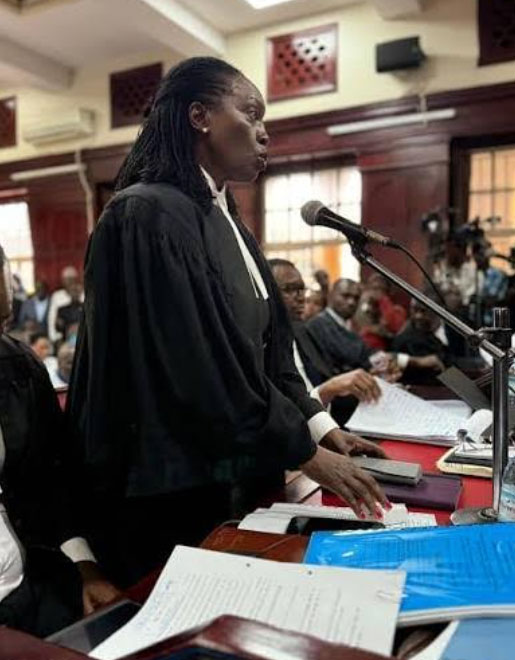
Although Uganda’s Supreme Court ruled in January 2025 that civilians could no longer be tried before military courts, the ruling did not end the controversy surrounding Besigye’s prosecution. His case moved to the civilian justice system, but the legal and political tensions surrounding it remained.
Court appearances continued. So did Karua’s flights between Nairobi and Kampala. Yet beyond the courtroom, the state appeared to be widening its focus. On June 15, 2026, Erias Lukwago, the former Kampala Lord Mayor and one of Besigye’s lead advocates, was arrested by Uganda’s elite military personnel. Lukwago was detained for days before eventually appearing in court charged with misprision of treason.
To lawyers following the case, the charge was extraordinary. Misprision of treason concerns the concealment of knowledge relating to treason. Karua immediately questioned both the legal basis and the timing of the prosecution. Speaking to NTV Kenya after her own deportation from Uganda, she returned repeatedly to one principle that every lawyer instinctively understands: client confidentiality.
“Let’s assume that you have useful information,” she told her TV hosts. “You are covered by lawyer-client privilege.” Her argument went beyond Lukwago himself. If defence lawyers could face criminal prosecution over matters arising from their professional representation of clients, what message would that send to every advocate willing to take politically sensitive cases?
Karua also questioned why investigators had waited so long. “If indeed they had reasons to charge him,” she asked, “why didn’t they charge him almost two years? The case has been pending.” To her, the timing was impossible to ignore. She revealed that members of Besigye’s legal team had previously received informal warnings. “We had been warned two months ago,” she said, “that the authorities in Uganda do not want Martha Karua and Erias Lukwago. They want us out of the Besigye case.” She paused before delivering the conclusion she had gradually come to accept. “They want to choose lawyers for Besigye.”
Ugandan authorities have not publicly responded to Karua’s account. Their position has consistently been that criminal prosecutions are founded on evidence gathered during lawful investigations and pursued through the judicial process. Yet the perception that defence lawyers themselves are increasingly coming under pressure has spread quickly through legal circles across East Africa.
Professional bodies have begun speaking out. The Law Society of Kenya has expressed concern. The East Africa Law Society is following developments closely. The Uganda Law Society has continued questioning aspects of the proceedings.
Beyond the region, international organisations have reached similar conclusions. Amnesty International has described what it views as a “long and disturbing pattern” affecting members of Besigye’s legal team. The human rights agency argues that the arrest of Lukwago, followed days later by the denial of entry to Karua, reflects an escalating challenge to the right of accused persons to legal representation.
The Africa Judges and Jurists Forum has approached the matter from a different angle. It deliberately avoided commenting on Uganda’s domestic politics or questioning the state’s sovereign authority over its borders. Instead, it focused on a narrower but equally significant concern: what happens when administrative decisions prevent lawyers from representing clients or observing proceedings in cases of profound public importance?
Former Kenyan Chief Justice, Willy Mutunga, speaking in his capacity as President of the Forum, described the denial of entry to Karua as “a regrettable affront to the legal profession and to the rights of litigants to be represented by counsel of their choice.”
For Karua, however, these statements merely confirmed what she had already begun to suspect. The case was no longer confined to Besigye. It was expanding. First, the accused. Then the lawyers. Next, the institutions defending the independence of those lawyers. The legal battle has been escaping the courtroom. And in just a few days’ time, it reached the immigration desks at Entebbe International Airport.
The diplomatic Note
Interestingly, the Ugandan government offered no detailed public explanation. Instead, Karua was handed a formal notification declaring her persona non grata. The phrase carries unusual diplomatic significance. Ordinarily, it is associated with ambassadors or foreign envoys whose continued presence a state no longer considers acceptable. Karua is neither. She is a practising lawyer from a fellow member of the East African Community who, until that morning, had crossed the Kenya-Uganda border repeatedly under temporary admission to represent clients before Ugandan courts.
“What right does any country have within the East African Community to deny entry to an East African citizen?” she was asked by her NTV Kenya hosts. “I would have to have committed an offence,” she said.
She argued that her exclusion violated not only Uganda’s own legal obligations but also the principles underpinning the East African Community’s commitment to the free movement of people and professional services. “I’m offering a service for which I’m licensed,” she said. Then she made an allegation that dramatically widened the scope of the story.
“We had been warned two months ago that the authorities in Uganda do not want Martha Karua and Erias Lukwago.” She continued. “They want us out of the Besigye case. Besigye should hire other lawyers. They want to choose lawyers for Besigye.” The allegation went to the heart of an increasingly uncomfortable question.
Can a state, while prosecuting an accused person, effectively determine who is permitted to defend that person? Ugandan authorities have not publicly accepted Karua’s characterization of events, nor have they publicly linked the immigration decision to Besigye’s prosecution. Yet the chronology has inevitably invited scrutiny.
Against the tide
There is a temptation to see the story of Martha Karua and Kizza Besigye simply as another episode in the troubled relationship between governments and opposition politicians in East Africa. It is certainly that. But it is also something more.
For nearly two years, the case has steadily expanded beyond the criminal charges that first brought Besigye before Uganda’s courts. It has grown into a wider conversation about constitutionalism, cross-border justice and the place of lawyers in increasingly contested political spaces.

In many respects, the journey of Martha Karua mirrors that evolution. She did not set out to become a protagonist in Uganda’s politics. She did not travel to Kampala as a politician seeking influence or as a diplomat carrying the authority of a foreign government. She travelled carrying a lawyer’s brief.
Her role, as she understood it, was straightforward: to ensure that a man facing the gravest charges known to law receives the representation guaranteed to him by the Constitution. Yet somewhere along that journey, the boundaries between advocate and participant have begun to blur.
Lawyers often describe themselves as officers of the court. Their professional obligation is to stand between the individual and the immense power of the state, insisting that every prosecution, however popular or unpopular its target, must be tested against the law. That responsibility is rarely easy.
In politically charged cases, it can become profoundly uncomfortable. History offers many examples of lawyers who became almost as controversial as the clients they represented. From apartheid South Africa to military dictatorships in Latin America and authoritarian regimes elsewhere, advocates defending political detainees frequently discovered that legal representation itself could become a political act. East Africa has largely been spared that tradition. Until now.
Whether intentionally or otherwise, the Besigye prosecution has prompted uncomfortable questions about the shrinking distance between the courtroom and politics. The imprisonment of Eron Kiiza, the prosecution of Erias Lukwago and the denial of entry to Martha Karua have together created a perception—rightly or wrongly—that the legal profession itself has become entangled in one of Uganda’s most politically sensitive criminal trials.
That perception matters. Justice depends not only on judicial independence but also on public confidence that lawyers can represent clients fearlessly, without intimidation and without becoming litigants in their own right. It is perhaps for that reason that the response to Karua’s deportation extended far beyond partisan politics.
The Law Society of Kenya has condemned the decision. The East Africa Law Society has raised concerns. The Africa Judges and Jurists Forum has framed the matter as one touching the integrity of legal representation across the continent rather than merely the politics of one country. Amnesty International described the sequence of events affecting Besigye’s legal team as deeply troubling. None of those organisations presumed to determine Besigye’s guilt or innocence. Instead, they focused on a narrower but no less fundamental question.
Can justice truly be seen to have been done if lawyers themselves encounter obstacles while representing their clients? Uganda’s government approaches the matter differently. Officials maintain that criminal prosecutions must be allowed to proceed wherever evidence discloses serious offences against the state. Prosecutors insist they possess evidence linking Besigye and his co-accused to an elaborate conspiracy involving weapons procurement, covert meetings across several countries and plans to violently overthrow the government. Those allegations remain before the courts, where they will ultimately be tested through the judicial process.
The tension between those two positions—the state’s duty to protect national security and the citizen’s right to due process—is hardly unique to Uganda. Democracies around the world continue to wrestle with the same dilemma. The challenge has always been finding the point at which legitimate security concerns cease to strengthen the rule of law and begin to weaken it.
That debate is unlikely to end with the Besigye trial. Nor is it likely to end at Uganda’s borders. The East African Community was built upon the promise that goods, services and people would move more freely across national frontiers. Lawyers, judges and legal scholars have increasingly embraced that vision, seeing cross-border legal practice as one of the quiet successes of regional integration.
Karua herself became part of that experiment. Licensed to appear before Ugandan courts for the purposes of defending Besigye and Haji Obeid Lutale, she embodied the idea that justice need not stop at national boundaries. Her journey to Entebbe on June 22, 2026, therefore became about more than one lawyer being denied entry. It became a moment that forced the region to ask how far the promise of East African integration truly extends when legal advocacy collides with state sovereignty.
Perhaps the greatest irony lies elsewhere. Nineteen months before immigration officers stopped Martha Karua at Entebbe Airport, she had stood before friends, colleagues and admirers in Nairobi celebrating the publication of her autobiography. She titled it, “Against the Tide.” At the time, the title reflected the convictions that had shaped her public life in Kenya; a willingness to pursue principle even when political currents flowed in the opposite direction.
She could not have known that the title would soon describe another chapter altogether. A chapter that began with an invited guest who never arrived. A lawyer who accepted an unexpected brief. A courtroom that became a battleground over constitutional principle. A defence team that gradually became part of the litigation it sought to contest. And finally, an immigration officer who quietly returned to say there had been a mistake. “There was a note on you.”
Those six words transformed what should have been another routine legal trip into one of the defining moments in a story that has already crossed courts, borders and political systems. The criminal case against Dr Kizza Besigye will eventually reach its own legal conclusion. Judges will write their decisions. Appeals may follow.
History, however, often remembers more than verdicts. It remembers the moments that reveal something larger about an age. For this story, that moment may not be found inside a courtroom at all. It may instead be found in the arrivals hall at Entebbe International Airport, where one of East Africa’s most distinguished lawyers discovered that the case she had crossed a border to argue had, in the end, crossed into her own life.


And also a case that birthed a new breed of Ug journalists who are deep and authoritative on topics. For a moment I thought I was reading an article from the guardian!..Good job The Independent