The Independent Uganda: You get the Truth we Pay the Price


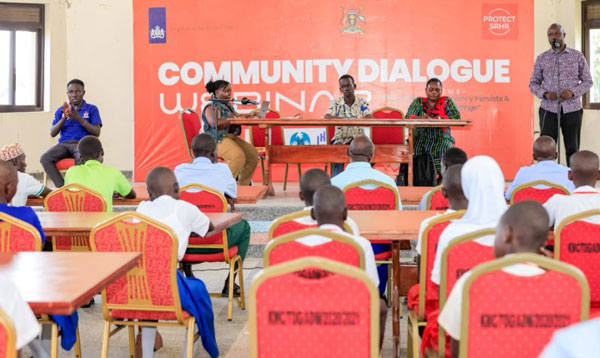
Koboko, Uganda | NEWS CORRESPONDENT | Learners in Koboko District have called on the government and development partners to prioritise access to free sanitary pads for girls, saying menstrual hygiene support is critical in keeping girls in school and reducing vulnerabilities that contribute to teenage pregnancies.
The learners argued that access to free sanitary pads addresses an everyday challenge faced by girls, noting that menstruation is a biological process that girls cannot choose, while sexual decisions require informed choices.
They made the call during a community dialogue webinar organised under the Protect SRHR Project by a consortium of organisations including International Rescue Committee, World Vision, Reach A Hand Africa and Humanity & Inclusion, with support from the Embassy of the Kingdom of the Netherlands.
Held on 29 September 2026 under the theme “Why Teenage Pregnancies Persist and What Must Change,” the dialogue brought together learners, teachers, community stakeholders and partners to discuss the drivers of teenage pregnancies and identify solutions to improve adolescent sexual and reproductive health outcomes.
The engagement was part of the “Link. Learn. Act” monthly webinar series, which brings together stakeholders from different African countries to share experiences and learn approaches being used to address teenage pregnancies.
“Every month, we hold online webinars on teenage pregnancy with our counterparts in different African countries to benchmark how they are addressing the challenge. But today, we decided to combine the online conversation with a physical dialogue in one of the districts affected by teenage pregnancy so that we could hear directly from young people and communities about the realities on the ground,” said Benson Muhindo, Director of Programmes at Reach A Hand Africa.
For many girls, menstrual hygiene remains closely linked to education, confidence and vulnerability. Lack of access to sanitary products can affect school attendance, participation and self-esteem, while some girls may be pushed into risky situations in an attempt to meet basic needs.
Patience Fatima, a senior three student from Nyarilo Secondary School in Koboko, said providing free sanitary pads would reduce the pressure that forces some girls into situations where they may engage in risky relationships to access necessities.
“As girls, we are asking the government and NGOs to support us by providing sanitary pads,” she said.
“Providing sanitary pads will reduce the pressure that pushes some girls into situations where they may engage in risky relationships just to get basic needs,” she added.
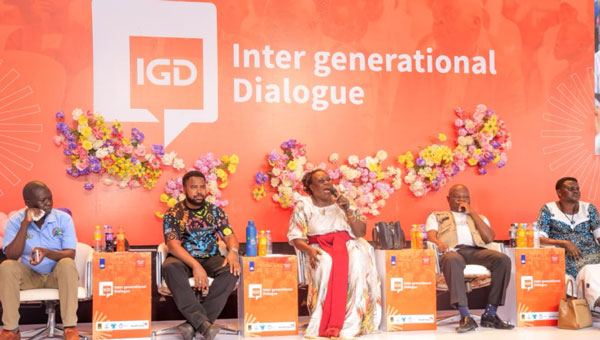
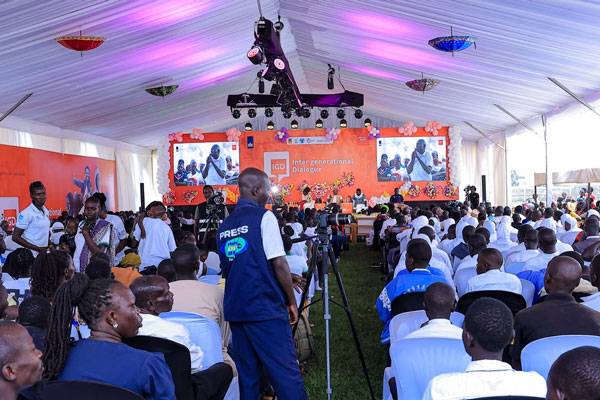
The learners also commended the Protect SRHR consortium for creating spaces where young people can openly discuss challenges affecting their lives and receive guidance on making informed decisions.
Ayikoru Sumaya, a student from Nyarilo Secondary School, said the dialogue helped young people understand the importance of making decisions that protect their future.
“I encourage young girls and boys to make decisions that support their future. We should focus on education and planning for our future rather than engaging in things that may destroy our lives later,” she said.
She added that young people should be intentional about the company they keep.
“We should avoid groups that influence us negatively and instead be part of groups where we can gain knowledge, support and guidance. Patience is one of the most important things in life. If you want to achieve something, you have to be patient.”
Senior Woman Teacher Ayikoru Gladys from Ombachi Self Help Primary School said addressing teenage pregnancy requires collective responsibility from parents, teachers, communities and leaders.
“What we are currently doing for these girls is not enough. We need a combined effort to ensure that girls remain in school and complete their education,” she said.
She noted that lack of support at home, especially when girls need sanitary pads, can contribute to school dropout.
“Some parents do not support girls, especially when it comes to providing sanitary pads. Some girls are forced to use old pieces of cloth, which makes it difficult for them to manage their periods properly. This affects their confidence and ability to remain in school,” she said.
The teacher also called for continued support for girls who become pregnant while still in school, saying they should not be abandoned.
“A girl who becomes pregnant should not be considered finished. When she returns to school, she can also become an example and share her experience with other girls about the dangers of early pregnancy,” she said.
Meanwhile, Muhindo said Uganda’s teenage pregnancy challenge requires continuous reflection and learning from different stakeholders.
“In Uganda, we have seen teenage pregnancy rates remain around 24 to 25 per cent for many years, and we continue asking ourselves why. Through these conversations, we are engaging partners and communities to understand what has worked elsewhere and what lessons Uganda can learn,” he said.
He appreciated the role of government institutions, including the Ministry of Health, Ministry of Education and Ministry of Gender, in supporting conversations around teenage pregnancy prevention and response.
Through platforms such as the Link. Learn. Act. series, Mr Muhindo said stakeholders will continue exploring practical solutions to address the social, economic and health factors that contribute to teenage pregnancies.