The Independent Uganda: You get the Truth we Pay the Price


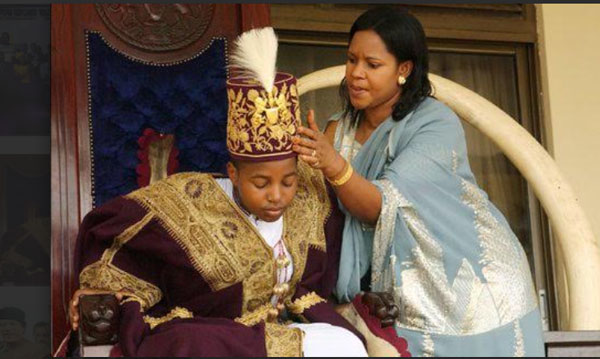
The boy who inherited a crown and made it his own
COVER STORY | ISAAC KHISA | There are easier ways to become an adult than by becoming a king first. King Oyo Nyimba Kabamba Iguru Rukidi IV had little choice in the matter.
At three, he inherited the throne of Tooro. For much of his childhood, he was the world’s youngest reigning monarch, a distinction that made him irresistible to newspapers, television cameras and visiting dignitaries. By the time he died, aged 34, on August 27, 2026, he had been king for almost his entire life.
The statistic is extraordinary. It is also, in the end, rather inadequate. Three is an excellent age for being carried around in somebody else’s arms. It is a less obvious age at which to acquire a kingdom, a court, a national profile and the expectation that, somehow, one should represent a people.
That was Oyo’s childhood. He learned to wave before he learned what the waving meant. He wore a crown before he could properly understand sovereignty. People knelt before him while, somewhere nearby, a schoolteacher was probably reminding him to finish his homework.
The paradox became the story of his life.
A king before he was a child
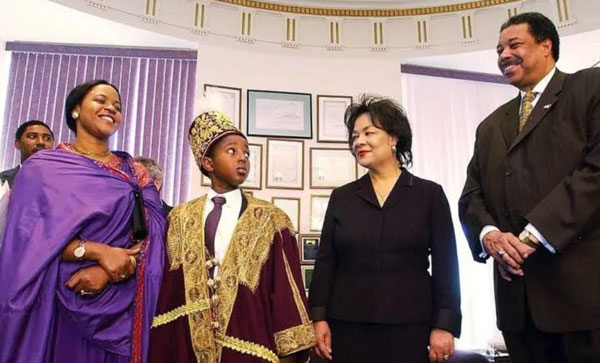
Oyo was born on April 16, 1992, to Omukama Patrick David Matthew Kaboyo Olimi II and Queen Mother Best Kemigisa. His father died suddenly on August 26, 1995. Less than three weeks later, on September 12, the three-year-old prince was enthroned as the 13th king of Toro, earning him a place in the Guinness Book of World Records as a toddler king.
A child had inherited an institution that itself had only recently been restored. Because Oyo was too young to rule, senior members of the royal family and regents guided the kingdom. His mother, Princess Elizabeth Bagaaya, President Yoweri Museveni and the Kabaka of Buganda, Ronald Muwenda Mutebi II, were among those around him.
The most difficult role may have belonged to his mother. She had to raise a son who was also an institution.
“Bringing up a king is a serious responsibility,” she once said. The sentence sounds almost comically understated now.
The world soon discovered the boy king. Foreign dignitaries visited. Photographers followed him. He appeared at ceremonies in royal robes. The image was irresistible: a toddler in a crown presiding over one of Uganda’s oldest cultural institutions.
Yet the child beneath the crown had much the same interests as other children. In a 2004 interview with The New York Times, Oyo spoke about school, football, video games and his dogs. He played with a rubber band around his wrist. He acknowledged that being king had advantages—people liked him—but also restrictions. He could not simply leave the palace and mingle with other children.
The contradiction was difficult to miss. People knelt before him and kissed his feet. Goats and sheep arrived as gifts. Palace officials ensured that his feet touched straw mats rather than bare earth. When the ceremony ended, however, there was still schoolwork to do.
The crown had given him authority without giving him adulthood. That distinction would remain with him.
The making of a modern monarch
The history of Tooro made Oyo’s childhood stranger still.
The kingdom emerged in the 19th century when Prince Kaboyo Olimi I, eldest son of the Omukama of Bunyoro Nyamutukura Kyebambe III, broke away from Bunyoro-Kitara and established a separate kingdom around the Rwenzori Mountains. Its history was shaped by rivalry, alliances, exile and restoration.
Then came abolition. In 1967, Milton Obote’s government abolished Uganda’s traditional monarchies, forcing Oyo’s father into exile reportedly in the neighbouring Kenya, where he lived for years.
For roughly a quarter of a century, the royal institutions existed without official recognition. When Tooro, Buganda, Ankole and Bunyoro, among others, returned in 1993, they returned without political authority.
Oyo inherited the throne under this new arrangement. His task was therefore not to govern Tooro but to represent it. That required a different kind of power: persuasion rather than command, cultural legitimacy rather than legal authority, example rather than decree.
Oyo increasingly understood the distinction. President Museveni, who had known him from childhood, praised his ability to work with the central government and local authorities.
In a condolence message after Oyo’s death, Museveni said the king had worked well with the central government and had avoided using cultural institutions to promote sectarianism.
“It would be good if all the cultural leaders understood the importance of this,” President Museveni said in his condolence message posted on X. He directed that Oyo, who ruled over more than two million people in western Uganda, receive an official burial and that national flags fly at half-mast for three days.
The relationship between the president and the young king was, therefore, itself an unusual feature of Uganda’s political and cultural landscape: the elected head of a republic and a hereditary monarch whose lives had become intertwined through the restoration of the kingdoms.
This relationship illustrates something important about the monarchy Oyo inherited. It could not compete with the Ugandan state. Nor did it need to. Its survival depended partly on finding a useful place beside the state.
Oyo’s version of kingship was therefore less about ruling than about relevance. He became associated with youth empowerment, education, environmental conservation, climate awareness, agriculture, tourism, HIV/AIDS awareness and sport.
These were hardly the subjects one might expect from a ceremonial monarchy rooted in the 19th century. They were, however, precisely the sort of causes that could give a traditional institution a purpose in the 21st century.
The old kingdom could not offer its subjects a government. It could offer them a sense of belonging. Oyo increasingly tried to make that belonging useful.
The strange friendship with Gaddafi
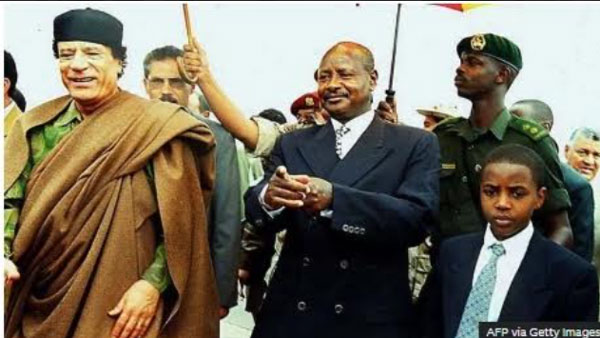
One of the more extraordinary chapters of his childhood involved Libya’s former president, Muammar Gaddafi.
The late Libyan leader took an interest in the young king and developed close ties with the Tooro royal family. In early 2001, he invited Oyo to Libya. Later that year, he visited Tooro for celebrations marking the sixth anniversary of Oyo’s coronation.
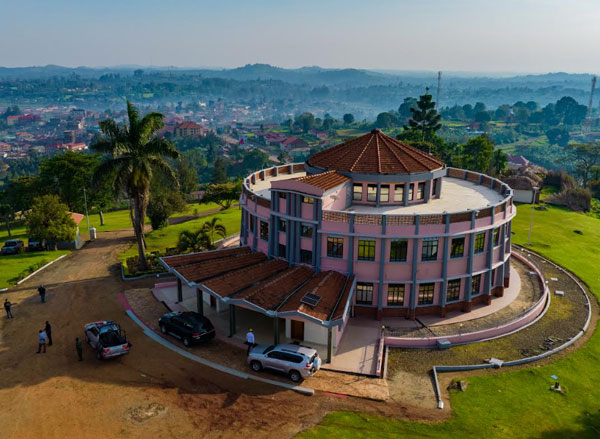
The relationship was useful as well as theatrical. Tooro was still rebuilding an institution that had been abolished in 1967 and restored in 1993. Its principal palace, Karuziika, had fallen into disrepair and had been used as a barracks by Idi Amin’s soldiers in the 1970s. Gaddafi offered to finance its renovation.
In 2001, he was given the title Omujwarakondo, or “Defender of the Kingdom”, described by Tooro officials as its highest honour. Museveni received the same title.
Interestingly, Gaddafi’s fall and death in 2011 did not erase his relationship with the Tooro Kingdom. His portrait remained in the receiving room at Karuziika Palace, opposite the king’s chair. According to Uganda Radio Network, he had also planned to contribute to the construction of the King Oyo Foundation Hospital in Kyenjojo.
For Gaddafi, cultivating African royal and political relationships was part of a broader strategy of influence. For Tooro, the relationship brought money, attention and an international connection at a time when the kingdom was still finding its place in modern Uganda.
For Oyo, it was stranger still: a childhood acquaintance with one of Africa’s most powerful and controversial rulers.
At school he was a boy. At the palace he was the Omukama. In Gaddafi’s company, he was treated almost like a head of state. It was an unusually complicated education in power.
From curiosity to institution
Eventually, the novelty wore off. The toddler became a teenager, then a young man. The international press became less interested in the spectacle of a child king and more interested in the person who had grown up beneath the crown.
That was when Oyo’s reign acquired a different character.
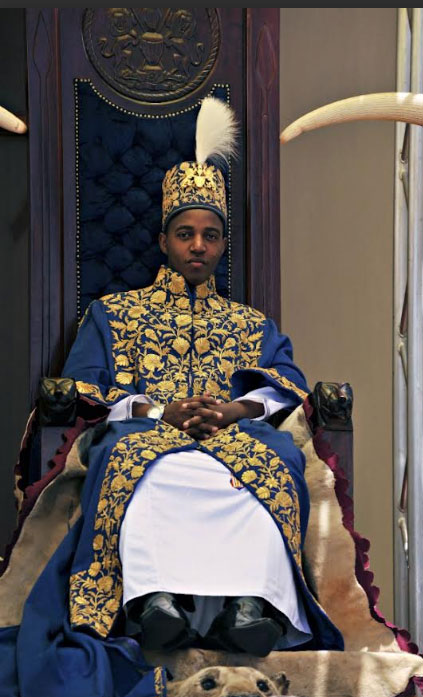
At 18, in April 2010, he assumed personal responsibility for the kingdom after the regents and board of advisers stepped aside. He was no longer simply the boy being prepared for kingship. He was the king.
The transformation was symbolically important. For 15 years, Uganda had watched a child grow up inside an institution. Now the institution had to discover what its adult monarch would make of it.
Oyo did not turn Tooro into a political movement. He did something more subtle. He made the monarchy contemporary.
He spoke to young people. He promoted education. He championed conservation and tourism. He supported agriculture and youth development. He embraced sport. He participated in programmes intended to give the kingdom a developmental as well as cultural identity.
The kingdom’s Vision 2045 later reflected that broader ambition, positioning Tooro as an institution concerned with the long-term development of its people as well as the preservation of its traditions. This was not revolutionary kingship. It was adaptive kingship.
Oyo’s great achievement, if one can call it political, was recognising that a ceremonial monarch in a republic has to earn relevance afresh in every generation.
The king between worlds
This balancing act became the defining feature of his reign. He had to reconcile tradition with modernity, the expectations of elders with the ambitions of young people, royal dignity with personal privacy and cultural authority with the sovereignty of the Ugandan state.
He did not choose the crown. He inherited it before he could understand what inheritance meant. But he gradually learned how to inhabit it. That may explain the particular affection with which people spoke of him after his death.
The Kyabazinga of Busoga, William Wilberforce Gabula Nadiope IV, described Oyo as one of the visionary traditional leaders of his generation. He praised his humility, commitment to preserving culture and ability to inspire a new generation.
The Katikkiro of Buganda, Charles Peter Mayiga, described Oyo’s death as a great loss to Tooro and Uganda. He said he immediately conveyed the news to the Kabaka, Ronald Muwenda Mutebi II, who was deeply saddened by the death of his younger brother.
The Jopadhola cultural institution TACI remembered him for championing Tooro’s culture and heritage and serving vulnerable people. The Omukama of Bunyoro-Kitara, Dr. Solomon Gafabusa Rukirabasaija Agutamba Iguru, described him as a pillar of development and pointed to his interest in conservation, youth empowerment, tourism, agriculture and sport.
The people mourning him were therefore describing not simply a hereditary ruler but a public servant of culture. That was a significant evolution from the image with which his reign began.
The football fan
For all the ritual, Oyo retained one reliably ordinary interest: football. He supported Arsenal and admired Thierry Henry. He followed the Uganda Cranes. He supported the MTN Uganda-sponsored Tooro Kingdom Amasaza Cup and the FUFA Drum, a competition intended to use football to celebrate Uganda’s cultural diversity.
Football gave him something the palace could not. It gave him ordinary company. On a football pitch, titles are largely irrelevant. The ball does not care who is king.
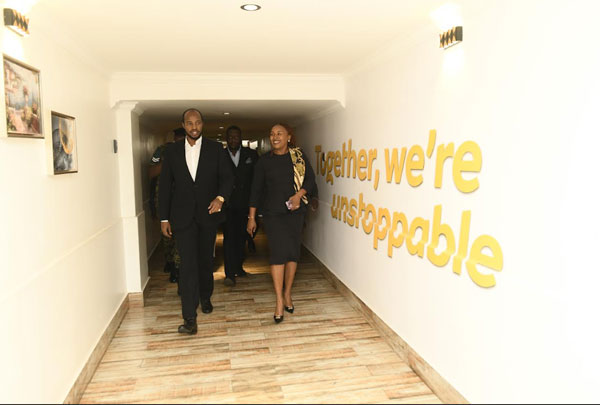
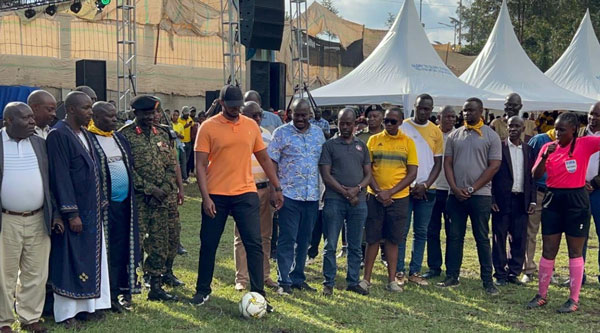
The Federation of Uganda Football Associations said Oyo had been a “true friend” of the game and ordered a moment of silence before football competitions around the country in his honour. FUFA noted his support for the Uganda Cranes, the MTN Uganda-sponsored Amasaza games and football development in Tooro.
Its president, Moses Magogo, described him as a humble king who loved the Uganda Cranes and supported football “with passion and pride”. He said Oyo’s contribution to the growth of the game, particularly in Tooro, would be remembered with appreciation.
King Oyo understood something that many politicians have discovered rather late: sport is one of the few institutions capable of making strangers feel that they belong to the same place.
He treated it as a vehicle for unity, development and youth opportunity. That fitted neatly with the wider direction of his public life.
The boy who once wanted to play with other children became a king who wanted other young people to have somewhere to play.
A private king
But there was another side to Oyo’s adulthood. He was much quieter than the child whose life had once been followed by newspapers and television cameras.
He remained unmarried. His bachelorhood became a subject of public curiosity, sometimes with a distinctly Ugandan sense of humour.
While still speaker of Parliament, Anita Among joked during the 30th coronation last year that she would pay the bride price when the king eventually married.
“Your majesty, you know I’m a cattle keeper. Just get a partner, and I will pay all the dowry,” Among said.
Oyo responded with a smile. The joke was revealing because it captured his peculiar relationship with the public. He was a monarch, but not an untouchable one. People admired him, teased him and followed his life.
The public had effectively watched him grow up. Perhaps that was why he guarded adulthood more carefully.
He had spent his childhood being observed. Privacy, for him, was not an abstract luxury. It was something he had had to learn.
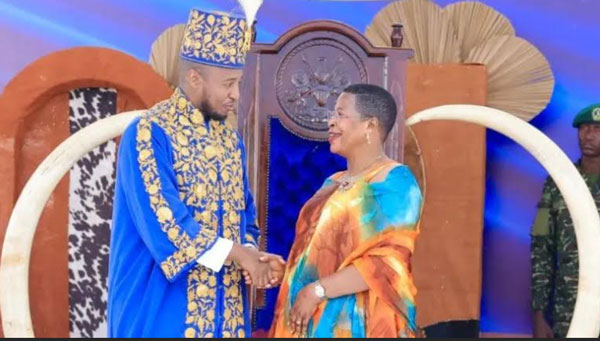
But he remained accessible enough to be recognised as a person rather than merely a symbol. That may be part of the reason the shock of his death was so great.
Ugandans had not merely known Oyo as a king. Many had known him for almost their entire lives, particularly through educational institutions. For a generation of Batooro, he was the only monarch they had ever known.
Interestingly, there was something quietly ingenious about Oyo’s position.
Traditional monarchy in a modern republic is an arrangement full of potential contradictions. The republic says sovereignty belongs to the people. The monarchy says identity can be inherited. The constitution recognises cultural institutions while denying them political power.
The compromise works only when everyone understands the boundaries. Oyo largely did. He did not attempt to turn the kingdom into a rival government. Nor did he treat tradition as an excuse for political confrontation. Instead, he cultivated the space between culture and politics.
Oyo seemed to understand that influence was more valuable than formal power. His was a soft monarchy.
King Oyo died at about 10pm on August 27 while receiving medical treatment in the United States. The Tooro Kingdom initially did not disclose the cause of death. But President Museveni later said he had died from aggressive cancer and that the government had supported his treatment in Germany and later in the United States.
The timing was cruel. Oyo was only weeks away from marking the 31st anniversary of his enthronement on September 12. His father had died on August 26, 1995. Oyo died 31 years and a day after him.
His legacy was still being made. That perhaps explains why the tributes have repeatedly returned to the same words: young, humble, visionary, cultural, developmental.
When the lion stops roaring
Following Oyo’s death, the rituals of Tooro made the loss visible. The kingdom entered a nine-day mourning period. The royal drum was turned upside down. The regalia was removed. The kingdom’s flag was lowered. The anthem was suspended.
And the lion sculptures were covered in bark cloth. The Omukama is traditionally known as the Entale ya Tooro—the Lion of Tooro. Covering the lions signalled that the lion no longer reigned.
For three decades, the symbols of Tooro had been associated with one particular face.
Oyo’s.
Now the symbols were being put away.
The kingdom’s Prime Minister, Calvin Armstrong Rwomiire Akiiki, described Oyo’s death as an “immeasurable loss” to the royal family, Tooro and Uganda. He called on the people of Tooro to remain united, calm and prayerful.
He also assured them that the continuity of the crown was secure because Oyo had left a prince as heir, whose identity would be formally revealed according to Tooro traditions.
Once the nine days of mourning and all the rituals are complete, the anthem will return. The regalia will come out again. The lions will be uncovered, and the drums will resume their familiar sound.
Abakama ba Tooro (Kings of Tooro) since 1800
- Olimi I — 1822–1865
- Ruhaga of Tooro — 1865–1866
- Nyaika Kyebambe I — 1866–1871 and 1871–1872
- Rukidi I — 1871
- Olimi II — 1872–1875
- Rukidi II — 1875
- Rububi Kyebambe II — 1875 and 1877–1879
- Kakende Nyamuyonjo — 1875–1876 and 1879–1880
- Katera — 1876–1877
Interregnum — Tooro reverted to Bunyoro: 1880–1891
- Kyebambe III — 1891–1928
- Rukidi III — 1929–1965
- Olimi III — 1965–1967 and 1993–1995
Monarchy abolished: 1967–1993
- Oyo Rukidi IV — 1995–2026, following the restoration of the monarchy in 1993.