The Independent Uganda: You get the Truth we Pay the Price


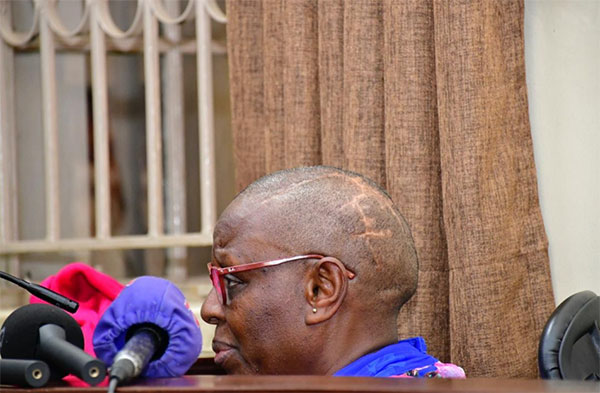
COMMENT | DANIEL KABULETA | The Katanga trial has been going on since 2024, and few cases in recent memory have gripped the country in the same way. From the moment businessman Henry Katanga died in his home in Kampala, the case has drawn intense public interest, speculation and scrutiny. The combination of wealth, mystery and conflicting accounts turned it into a national conversation almost overnight.
Over the weekend, I watched Molly Katanga’s testimony online. It was long awaited. For years, the public had only heard the prosecution’s case, including forensic evidence, state witnesses and theories about what happened inside the Katanga home. Her turn to speak was expected to bring clarity, or at the very least, her side of the story.
After watching her testimony, the YouTube algorithm led me straight to a popular vlog, The Investigator, and their latest commentary on the case. What followed was telling. Across their YouTube channel and social media, selective clips, half-formed claims and outright inaccuracies by journalist Stanley Ndawula and others were packaged into a bold narrative that declares guilt without evidence and without restraint.
Some of Ndawula’s commentary does not just question the testimony; it replaces it. It presents his version of events with striking confidence, as though he were in the room, and insinuates that the case has already been decided outside the courtroom.
The misogyny and ignorance on display are alarming and, at times, appear deliberate. There are claims of multiple gunshots when the evidence before court points to a single fatal shot. There are even suggestions by a male panellist on the show that Molly should remain silent about the violence she says she suffered that morning or, as he put it, that she should “shut up”. Add to that the casual dragging of co-accused persons who have not yet had their day in court, and the pattern becomes clear.
It is not investigative journalism. It is spin, driven by an agenda and presented as fact.
To be clear, for over a year, the prosecution presented forensic evidence, including DNA findings, gunshot residue and blood pattern analysis. The defence has challenged aspects of that evidence, raising questions about transfer DNA, proximity effects and scene interpretation. That is how trials work. Competing explanations are tested, not assumed.
What is happening on The Investigator ignores that process entirely. Bits of information are taken out of context and arranged to suggest guilt. The timeline is compressed, the location is misrepresented, and key parts of the testimony are either ignored or replaced.
As anyone who has followed the livestreams of the case will tell you, how Molly’s blood ended up on the ceiling was not a mystery. It was explained in court by the state’s blood pattern analyst, PW25.
The court heard detailed forensic and medical evidence about the injuries sustained.
The state’s blood pattern analyst testified that the cast-off pattern of blood on the floor, walls and ceiling, all attributed to Mrs Katanga, was consistent with repeated swinging of an object during a beating. The description aligns with a motion where an object is lifted, strikes, and is drawn back again.
Separately, the police director of medical services, PW22, told the court that Mrs Katanga had been repeatedly beaten with a blunt object. He detailed serious injuries, including fractures to the skull and hands; extensive bleeding, including beneath the skin, and noted that she could have died without timely medical intervention.
Physical exhibits, including sticks locally known as enkoni, one of them metallic, and a baton, were presented in court. Some bore visible blood traces.
These are not minor details. They form part of the evidentiary record that the court must weigh.
Molly Katanga’s testimony itself was detailed and personal. She told the court that the incident began in the bathroom, where she was attacked as she brushed her teeth. She described being struck repeatedly, the sink breaking during the struggle, and being dragged into the bedroom area where the assault continued. She said she was left severely injured, unable to stand and bleeding heavily.
She further testified that after a period of time, her husband called her name and asked her to stand, which she was unable to do. She then heard him say that he would kill himself. After another lapse of time, she heard a loud bang. She did not see the shooting. She crawled out of the room.
That sequence matters. Bathroom, then bedroom. Assault, then intervals of time. A statement, then a gunshot. It is not the rearranged version being circulated by The Investigator.
Molly’s testimony must also be understood in the context of a 32-year marriage. On oath before Justice Rosette Comfort Kania, she described the marriage as “normal”, with no history of separation or major conflict, and said they raised four children together. It is from within that long and, by her account, stable marriage that she says she noticed changes in her husband. She described financial pressure arising from his money-lending business, including unpaid debts, and testified that he became increasingly anxious, withdrawn and unsettled in his last days.
These are the kinds of changes a spouse of three decades is uniquely placed to notice. Whether the court ultimately accepts that explanation is a matter for evidence, not online ridicule.
Where her account describes the suddenness of violence is not a side issue. It is central. Dismissing or mocking that aspect of her testimony risks normalising domestic violence and sending a dangerous message that such mental breakdowns are normal.
There also seems to be a basic misunderstanding of the “case to answer” stage. Molly Katanga’s role is to give her account. The court will test that account against forensic evidence, expert testimony and cross-examination.
Circumstantial evidence is not a shortcut to certainty. It must form a complete and coherent chain that excludes reasonable doubt. That chain is still being tested.
In the past, the public experienced trials almost entirely through the lens of crime reporters like Stanley Ndawula, whose accounts in newspapers were often the primary filter through which court proceedings were understood, without any way to independently verify what was reported. That carried a real risk: when coverage became selective or distorted, it did not just misinform; it threatened the fairness of the process by shaping public perception and blurring the line between allegation and proof. What makes the Katanga trial different, even revolutionary, is that it is being streamed unedited, in real time, on platforms like YouTube.
For the first time, Ugandans are no longer confined to a single storyteller. They can watch the proceedings themselves as they unfold and measure that reality against the interpretations circulating online. In the interest of objective facts, I will continue watching the live streams of the case on YouTube.
For many Ugandans who do not have access to the level of legal representation available in this case, watching how a defence is mounted, how evidence is challenged, and how the system operates in real time is instructive. If nothing else, it demystifies the process and raises important questions about access to justice.
And when the noise fades, it is that process, not the commentary, which will determine the truth.
*****
Daniel Kabuleta is a legal associate with an interest in criminal justice and media law.