The Independent Uganda: You get the Truth we Pay the Price


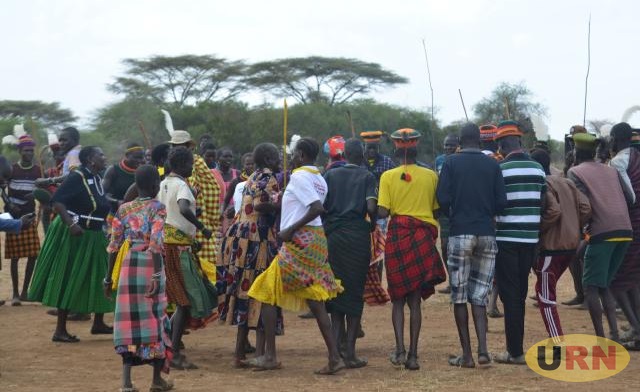
Moroto, Uganda | URN | Women in Karamoja say peace is slowly returning after years of violence that once defined daily life. Many remember 2019 as the darkest period, when killings happened in broad daylight, and fear gripped entire communities. Today, the situation is improving. While isolated cases of cattle theft and road ambushes still occur—especially in North Karamoja—security has strengthened. According to recent police statistics, cattle rustling dropped by 12.9% in 2025, with joint security forces recovering 2,197 out of 2,375 stolen animals.
In Lotome Sub-County, women shared their lived experiences—stories of loss, survival, and gradual healing. Betty Longok, a resident of Longaroi village in Lotome Sub-County, Napak District, says the calm has brought a sense of normalcy back into their lives. Women can now care for their families without constant fear. “The warriors could attack homes at any time because the community was totally vulnerable without security interventions,” Longok said. “Now the situation has calmed down, except for a few isolated cases of theft, but not raids.” She explains that women are once again engaging in production and development activities—something that was nearly impossible during the height of insecurity.
Longok even links the improved peace to personal milestones, revealing that she conceived her fourth child in 2024 after security conditions stabilized. “There was no peace at all. The warriors were looking for our husbands to kill, but again, when security forces carried out cordon and search operations to collect illegal guns, our husbands were still the target. Women really suffered,” she said. “Many of us are now able to conceive because we have enough time to stay with our husbands without disruptions.”
Leah Akol, a resident of Lotome Trading Centre, recalls how 2019 marked a turning point for the worse. Armed warriors specifically targeted men, often using deceptive tactics. “They would come into houses and ask for the whereabouts of our husbands, but used a password, the National Identity Card,” Akol said.
“They would ask for an ID, but actually, they wanted to see your husband. If he showed up, they killed him on the spot and took everything of interest from the house.” Akol says women were not spared either. Many were attacked while carrying out daily chores like fetching water, cultivating, or collecting firewood.
She adds that families lost property, while many men went into hiding to survive. At the time, even speaking about insecurity was dangerous, as warriors had established informant networks. “Now the security situation has improved, and women are free to speak about it,” Akol said.She credits development partners such as Forum for Women in Democracy (FOWODE) for helping women rebuild their voices through the Women’s Amplified Voice for Accountability (WAVA) project, which has supported them with training in economic empowerment and civic engagement.
Brenda Ilukol, another resident, says the violence left deep scars. Many families lost loved ones, and entire communities were forced to flee their homes, seeking refuge in schools and health centres as gunfire echoed across villages. “The elderly and persons with disabilities were the most affected because we would leave them alone in houses as energetic people fled,” Ilukol said.
She recalls how vulnerable groups were often left behind—and sometimes killed—during raids. Ilukol says women also faced grave risks while working in gardens, with many attacked during routine activities. Despite the pain, she says the community is slowly healing.Women have since formed groups like Ajore ke Ekisil to promote peace dialogue, working alongside initiatives such as the Women’s Amplified Voice for Accountability (WAVA) project.
In Kotido District, Cecilia Dodoi, chairperson of the Women Peace Forum in Rengen Sub-County, knows the cost of peace advocacy all too well. “I have greatly suffered in the efforts of advocating for peace in Kotido district,” Dodoi said. “I received threats and survived various attacks until my husband advised me to leave peace advocacy due to the risks.”She fled her home for eight months after being targeted by armed warriors for working with security forces. Despite being separated from her family, Dodoi refused to give up. “Despite the hardships, I continued to ensure the region gets back its peace,” she said.