The Independent Uganda: You get the Truth we Pay the Price



SPECIAL FEATURE | OWEN NYAKA | Titus Virinyu was diagnosed HIV+, and health experts recommended him to take anti-retrovirals (ARVs) for life on a daily basis to prolong his life. Virinyu (pseudonym), who also has a mental problem, does not take the medication as per the doctors’ prescription. Sometimes he does not take it, and this has a possibility of increasing the body’s viral load, which can lead to acquired immune deficiency syndrome (AIDS), let alone death. This is the unfortunate reality of what most mentally ill patients who are also HIV-positive usually go through.
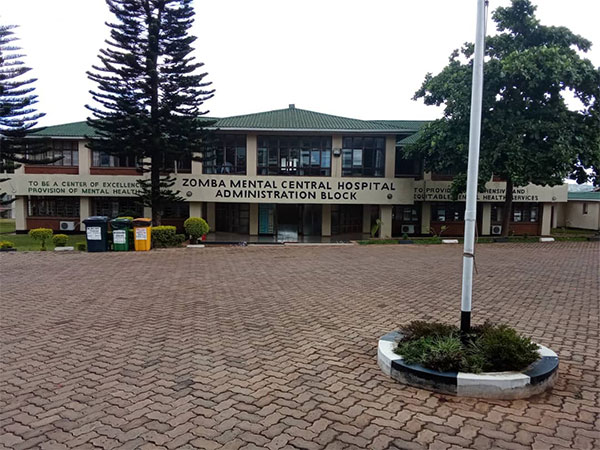
Constructed in 1951 but starting its operations in 1953, Zomba Mental Hospital (ZMH) is one of the largest clinics for mental disorders in Malawi and it has some patients like Virinyu who are mentally ill but also have HIV and tuberculosis (TB). The facility is the only public referral hospital offering specialised mental health services in Malawi. District hospitals such as Mulanje, Phalombe, Mwanza, Nsanje, Chikwawa, Mchinji and Chitipa which are on the borders, receive mental patients from neighbouring countries such as Mozambique, Zambia and Tanzania.
These district hospitals dispatch cross-border psychiatric patients using Malawi government ambulance vehicles to ZMH to access free-of-charge medical services. This contributes to congestion at ZMH.
For instance, the number of patients admitted to the facility in the year 2020 was 1,927; in 2021, it was 2,734; in 2022, it was 619. In 2023 the number was at 2,400, and in 2024 the number of admissions hit 2,182. Out of these, some were on ARVs and psychotropic medications.
ZMH clinical officer Harry Kawiya said in response to a questionnaire that the facility has clients who already know their status and are on ARVs. For these ones, he said they just continue receiving ARVs, but for those who have known their HIV status while at the facility through provider-initiated testing (PIT), they wait for them to gain insight into their mental health problems.
Once they have insight, they undergo counselling before being enrolled on ART. In both scenarios, clients combine psychotropic medications and ARVs. Kawiya said, Usually, mental disorder clients are supposed to show signs of improvement between six and eight weeks after starting treatment. And if a client does not start to show signs of improvement within the expected period, their condition is reviewed to find out why.
When asked if there are any drug contraindications between ARVs and psychiatric medications, Kawiya admitted it but was quick to point out that it is not with all psychiatric medications. The contraindication is common between the 13A regimen and anti-epileptics, especially carbamazepine and sodium valproate. These antiepileptics tend to reduce ARV levels in the blood by increasing activities of the liver.”
Drug information literature indicates that certain ARVs, for instance, Efavirenz, increase the breakdown of psychiatric medications as well. This may in turn lead to the emergence of psychiatric symptoms even though the patient is receiving treatment.
Conversely, these drugs may reduce each other’s breakdown, leading to increased levels in the body. This might lead to the individual suffering from side effects even though they are taking the recommended dose of medication.
Commenting on TB amongst the psychiatric, Kawiya confirmed that ZMH has some cases of tuberculosis. He said while he can’t be able to provide statistics for the past five years, he said in 2024, they had one confirmed TB sputum-positive case in one of their referral hospitals.
He, however, says the catchment area for ZMH is the entire Malawi; as such, it does not receive funds from the Global Fund to fight TB. Yet, said Kawiya, they do periodic mass TB screening for our clients using a mobile diagnostic unit which is under the Zomba District Health Office.
“Bed capacity for Zomba Mental Hospital is 400. The hospital had 414 clients as of this morning. Some hospitals rush to refer clients to our hospital before doing a full physical examination, including investigation to rule out physical diseases,” he said.
He said the hospital is, therefore, asking referring hospitals to screen all physical diseases before referring the clients to Zomba Mental Hospital regardless of the physical appearance of mental health clients to avoid missing obvious physical diseases.
Kawiya said physical diseases like TB kill; mental illness doesn’t kill. “I think the hospital is doing better in managing both mental illness and TB and not forgetting HIV. We have HIV clinic which is doing well. It always does well during national supervision.
“The hospital environment is very clean. We are feeding our clients five times a day. Porridge in the morning, before medication time, tea, lunch, afternoon tea, then supper,” he said.
On drug interaction, he said there are several ways of dealing with drug interactions, which Zomba Mental Hospital already does.
“First, we look for an alternative drug; second, we increase the dose of a particular drug which likely has reduced blood drug levels. Third, we consult our friends who are experts in TB management,” says Kawiya adding that issues of skipping medication are dealt with by writing the names of clients who are taking special drugs on a notice board within the ward to avoid clients missing dosages.
Saint John of God Hospital service mental health nurse in Lilongwe, Zelipher Chimlala said some clients use two separate health profile books, one for ART and the other for mental healthcare, which she said may lead to disjointed care.
She said cognitive impairment and other psychiatric conditions such as dementia are more commonly seen among HIV-positive individuals compared to HIV-negative individuals with psychosis, especially when ART medication is not taken regularly. HIV infection increased the risk of mental illness due to opportunistic infection or the impact of knowing their HIV status; hence, it is important to emphasize client support and adherence to both ART and psychotropic drugs.
Chimlala advises, “A need for integrated services is vital to people like Virinyu if we are serious about curbing the difficulty that patients with both conditions face.”
National Tuberculosis (TB) and Leprosy Elimination Programme (NTLEP) Manager Dr. Kuzani Mbendera says the question concerning a phenomenon referred to as Drug-Drug Interactions (DDI) is a fairly common hazard in medicine. DDIs fall into two categories: those that affect how the body processes the drug, and this includes absorption, metabolism, and excretion. For instance, these are known as pharmacokinetic changes, while there are another set of changes that may affect how the drug reacts at its site of action, known as pharmacodynamic effects.

Dr. Mbendera concurs with Kawiya, saying drugs in the first-line regimen, especially rifampicin, generally lead to lower circulating levels of psychiatric drugs. This means one must take this into account and make the appropriate dose adjustment to the psychiatric agents. Rifampicin has a similar effect on the circulating levels of ARVs, namely, it reduces them, and this requires dose adjustment or consideration of alternative ARVs.
“There are some drugs whose use, while therapeutic, can also have psychiatric side effects; for instance, isoniazid and cycloserine. A patient and their family are counselled on the possibility of these occurring. At the first notice of changes in behavior they are advised to visit the prescribing clinic or any nearby health facility right away. As patients are seen monthly, this is also checked by clinicians, especially in the setting of the treatment of drug-resistant forms of TB. Dose adjustment or a switch of treating agents are the usual remedies,” he said.
Dr Mbendera says there has not been much research around this topic within the country. That said, the guidance from bodies such as the WHO, CDC and research papers make up the materials that are used to inform practice.
He, however, says TB is a curable disease. The earlier we can diagnose and start a person on treatment, the better for the individual patient, as the earlier we find and treat it, the less severe the disease and the less permanent damage it will do to systems. This advice remains true regardless of HIV or psychiatric conditions. As has hopefully been demonstrated in earlier responses, even if one has these conditions, there are things the system can do to alleviate the problem altogether or minimize its effects.
“Whatever your individual situation, I can assure you it’s better to seek treatment than not. Counselling and an honest discussion about side effects and their frequency are what we advise. So, if a patient is placed on a regimen containing cycloserine, it is good practice to inform the patient and their carers about common side effects, including those of a psychiatric nature. We advise that they report to their nearest health facility upon noticing something abnormal. DR – TB patients have treatment supporters who, among other things, monitor for common side effects,” says Dr. Mbendera.