 The Independent Uganda: You get the Truth we Pay the Price



A defiant mining industry is testing whether transparency in Uganda’s extractive sector can survive on goodwill alone
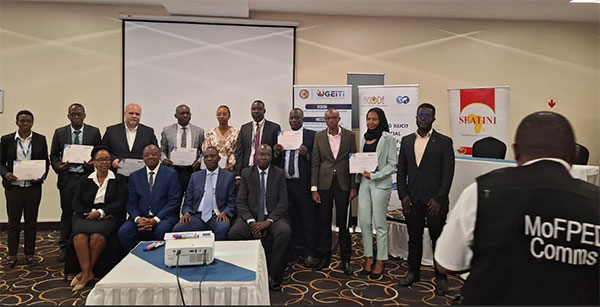
Kampala, Uganda | RONALD MUSOKE | When Gloria Mugambe, the Head of Uganda’s EITI Secretariat (UGEITI) stepped up to the podium at the launch of the country’s Fourth Extractive Industries Transparency Initiative (EITI) Report on November 20, there was an unmistakable change in her tone.
Normally measured, technical and understated, Mugambe sounded frustrated. A few years into Uganda’s attempt to cultivate a culture of accountability in its extractive industries sector, her composure appeared to be giving way to a more urgent kind of honesty.
“Every time we approach companies, once the MSG (Multi-Sector Group) has decided the companies that will be included in the scope of the report, and we start approaching these companies, many times we will get the same questions. What is this? Where is it from? Why do we have to do it? Is there a law? Am I compelled to do this?” she said, her voice cutting through the polite murmurs of Protea Hotel’s conference room.
“We do get some information; some information is complete, some of it has gaps. We have a particular challenge with beneficial ownership information, and this is something that’s going to come up during the validation.”
“Sometimes; by the time we get the data, we do not have the opportunity to cross check and go back to the company and say, you have given us information but it is not full, are you able to fill in these gaps? So, we need that participation from the companies,” she said.
Her remarks landed with weight because they captured a growing unease within the country’s transparency movement. The EITI process, which relies heavily on voluntary cooperation, is now being tested by a mining sector that seems increasingly determined to keep its books, and in some cases, its very existence, hidden. What was intended to be a progressive framework for openness is instead becoming a battleground between regulators seeking clarity and companies that have little incentive to provide it.
“I don’t know how the Ministry of Energy and Mineral Development can help us in this area, because they are the ones who issue licences to these companies. Actually, in the last process, we got a letter from the Minister of Energy, and it was sent to the companies, and she wrote to them saying, this is something that you must do, and we require that you submit this information. But compliance was still not 100%,” Mugambe said.
“By the time the Minister informs you that you must do something and you still don’t do it, I don’t know what other avenues are open to us for complying or ensuring compliance with this requirement.”
Cleaning-up Uganda’s mining sector
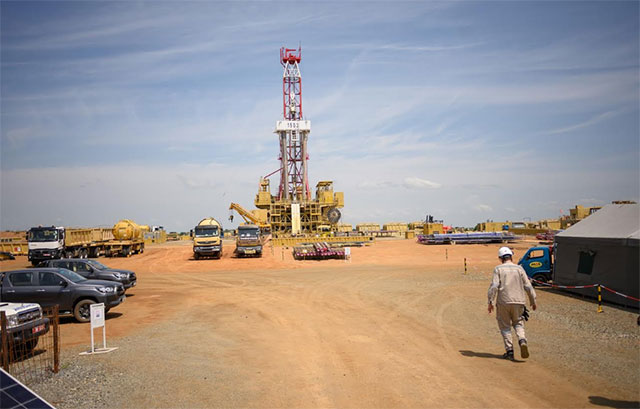
Uganda joined the EITI in 2020 with the promise of aligning itself with global standards of transparency in the extractive industries sector. The country’s mineral potential which has been long overshadowed by oil prospects, is now expanding rapidly. Gold, rare earth elements, graphite, iron ore, and other critical minerals have drawn international attention. Government officials often tout mining as the next major pillar of Uganda’s economic growth.
“Uganda’s Vision 2040 is anchored on harnessing our natural resources, including oil, gas and strategic minerals to prepare Uganda to the upper-and middle-income status,” said Amos Lugoloobi, the Minister of State in charge of Planning, during the report launch. “For this vision to be realised, we must ensure that resource wealth does not become a curse but a driver of broad-based prosperity.”
Lugoloobi said Uganda’s Vision 2040 explicitly recognizes transparency, good governance and institutional reforms as prerequisites for economic transformation. “Consistent and credible transparency reports send a strong signal to investors that Uganda is committed to modern governance standards, thereby enhancing attractiveness of UgandA,” he said. But the governance systems meant to accompany this expansion appear not to be keeping pace, and the EITI reporting process has become the clearest mirror of that disconnect.
Uganda’s fourth EITI report
For the 2022/23 reporting period, the Uganda EITI Multi-Stakeholder Group (MSG) agreed that all mining companies paying more than Shs 750 million in taxes would be included in the reconciliation.
Out of the 20 companies included in the reconciliation scope, ten companies submitted declaration forms, while the remaining ten companies did not submit forms. Of the latter ten, two companies; DGR Energy Turaco Uganda-SMC Limited and Armour Energy Uganda had their licenses and PSAs expire in May 2025.
According to the available information, neither company sought renewal of their respective licenses, and their offices were not accessible during the reconciliation exercise. They therefore did not submit any declaration forms.
The Independent Administrator for the report, Moore Insight, soon discovered that expectation was more hopeful than realistic. Several companies ignored all communication from the Secretariat. Others responded with incomplete, unsigned, or unaudited data.
In stark contrast, the companies involved in the country’s oil and gas sector included in the same report submitted polished, audited figures. The difference reflected the regulatory gulf between the two sub-sectors.
Experts that spoke to The Independent said oil and gas companies have long operated under structured, enforceable reporting obligations while, on the other hand, mining companies continue to function in a loosely regulated environment where transparency is more a suggestion than a rule.

The national EITI Secretariat determined that the biggest sources of discrepancies in the report stemmed from partially completed declarations and from companies whose business activities extended well beyond extraction. Some were construction firms holding mineral licenses on the side. Others were trading entities whose accounting systems lumped extractive and non-extractive activities together. This made it nearly impossible to verify mineral-related payments, contributing to the opacity that has plagued Uganda’s mineral sector for decades.
Is voluntary disclosure enough?
Mugambe acknowledged the root of the problem plainly. “Because there is no law yet, many companies treat this process as optional,” she said. “They do not see it as a regulatory requirement.”
Civil society members have reached similar conclusions. Dr. Henry Bazira, the Executive Director of the Water Governance Institute and an MSG member, told The Independent that mining companies will continue resisting transparency as long as there are no legal consequences.
“Voluntary reporting will never work for a sector where secrecy benefits the actors,” he argued, pointing to how a formal directive from the Minister of Energy urging compliance with EITI requirements was disregarded by several companies.
However, mining companies defend their reluctance by pointing to the cost and complexity of compliance. They argue that reporting requires preparing financial records, reconciling payments, and in some cases securing audited statements.
For smaller companies, particularly those with weak administrative systems, these demands, they say, are seen as burdens rather than duties. For those involved in informal or illegal operations, transparency is not simply inconvenient, it is dangerous.
Gold, Uganda’s most controversial mineral, illustrates this danger most clearly. It remains the darkest and least regulated corner of the extractive sector. Official production figures capture only a fraction of what is actually mined. Export data contradicts production data. Government agencies contradict one another. A substantial portion of Uganda’s gold economy operates in the shadows, hidden from regulators and, by extension, from the EITI process.
Put on the spot during the report launch, David Ssebagala, a Senior Inspector of Mines at the Directorate of Geological Survey and Mines (DGSM), laid out the scale of the problem. “Seventy to eighty percent of Uganda’s gold is illegal,” he said. “A huge part of it bypasses DGSM completely.”
Interestingly, illegal or under-declared gold cannot be formally reported. Gold passing through smuggling routes; some disguised as samples, some labeled as in-transit consignments to and from Kenya or the DR Congo, cannot be reported. Artisanal mining networks, which often operate without licenses, contribute heavily to this informal supply chain.
“The system is designed to lose gold,” one civil society advocate said during the dissemination session. “Companies benefiting from these opaque channels are unlikely to welcome the scrutiny EITI demands. Their absence from the reporting process is not accidental, it is strategic.”
Disconnected government MDAs
Beyond company resistance, the government’s own inconsistencies continues to undermine the reporting effort. The EITI framework requires coherence among government agencies, yet DGSM, the Uganda Revenue Authority (URA), the Uganda Registration Services Bureau (URSB), and the Bank of Uganda submitted data that often failed to align. Production figures, royalty collections, export data, and payment records always differ from one agency to another.
Mugambe acknowledged the problem with characteristic frankness. “Government agencies must align their systems,” she said. “If DGSM says a figure, URA must reflect the same. At the moment, that is not happening.”
This lack of internal consistency gives private companies the perfect excuse to question the accuracy of state data or to withdraw from the reporting process altogether. It also threatens Uganda’s performance in the next EITI validation exercise. The country’s previous validation scored it at moderate progress, citing weaknesses in beneficial ownership disclosure, artisanal mining governance, data quality, licensing, and company reporting.
Without significant improvements, Uganda risks a downgraded score, added corrective measures, or even suspension in extreme cases. Such consequences would erode investor confidence, limit access to international transparency funding, and weaken civil society’s ability to hold powerful actors accountable.
One of the more politically sensitive aspects of the EITI process -beneficial ownership disclosure, remains among the weakest. The Uganda Registration Services Bureau (URSB) continues to struggle to obtain full ownership information from companies. Some firms use complex foreign shareholding structures.
Others hide behind shell entities. Many simply do not submit the information required. Because beneficial ownership exposes the individuals behind corporate entities, including politically exposed persons, some companies view it as a direct threat to the networks that protect their interests.
Without a legal requirement, they will not willingly reveal themselves, the particicpants said, and the recurring nature of these obstacles exhausts the Secretariat.
Mugambe described a cycle in which each reporting year begins from zero. She said staff turnover in mining companies means new personnel must be trained repeatedly. She said some companies rely on temporary consultants unfamiliar with EITI as thers change ownership or management frequently, leaving the Secretariat to explain the process afresh.
With a small team, the Secretariat must train companies, chase data, harmonize conflicting government submissions, coordinate stakeholder engagements, and defend the final report internationally. Oil and gas companies—with larger budgets and better internal systems—move through the process with far fewer difficulties, highlighting the structural divide between the two sub-sectors.
Despite these challenges, government officials continue to present EITI as a fundamental governance tool. Moses Kaggwa, the Director of Economic Affairs at the Ministry of Finance and Chairperson of the MSG, emphasized that Uganda adopted EITI principles to transform the extractive sector through transparency and accountability.
Lugoloobi described transparency as both a safeguard against corruption and a catalyst for investment. By requiring full disclosure of payments by companies and receipts by government, he argued, the EITI framework helps reduce leakages and curb illicit financial flows.
Yet the data in the EITI report shows that while mining and quarrying contributed Shs 2.685 trillion to national revenues, the sector employs just 0.026 percent of the working population. Production is dominated by a handful of companies, and compliance gaps make it difficult for government to fully understand revenue flows or to design policy based on accurate information.
Artisanal miners remain largely outside the regulatory system. Their operations, especially in gold mining, contribute heavily to the informal economy but rarely appear in official statistics. “A lot of the gold in Uganda is produced by artisanal mines,” Ssebagala said. “These guys, 70 to 80 percent of their operations, are illegal. They are unlicensed. We cannot report production from unlicensed operations.”
He added that discrepancies between production and export figures must be addressed urgently. “We need to sit down with customs and URA and stop the export of minerals from illegal operations… Otherwise, we will keep publishing information that is inconsistent,” he said.
The political economy of mining adds further complications. Dr. Bazira warned that Uganda’s laissez-faire approach to mineral trade encourages unregulated transactions and potential money laundering.
He noted that some mining operations are linked to individuals with political influence, some of whom go as far as the First Family. This reality, Bazira says, discourages full disclosure and complicates enforcement.
Development Economist, Dr. Fred Muhumuz,a underscored the responsibility of government regulators. “The government is supposed to set rules, and they should be followed,” he told The Independent in a separate interview. “If mining companies are supposed to disclose shareholders, net worth, audited accounts, the regulator should ensure compliance. It is not the companies’ discretion.”
For small-scale miners, compliance is often a question of cost. Kenneth Asiimwe of the Uganda Association of Artisanal Miners argued that companies will comply only if they see value in transparency. If reporting unlocks access to government programmes or financing, he said, compliance becomes more attractive.
Local governance presents another challenge. Royalties collected at the sub-national level need detailed analysis to ensure communities benefit directly from extraction. “People producing these extractives need to see something returned to them,” Mugambe said. “They should be able to hold local governments accountable.”
As Uganda prepares for its next validation in June, next year, the pressure is mounting. The previous score (78.5%) demonstrated promise but exposed weaknesses that have not been meaningfully addressed. Kaggwa believes Uganda can reach 90% or even 100% if it strengthens beneficial ownership disclosure and contract transparency. But without cooperation from mining companies, the Secretariat faces an uphill battle.
At the heart of the challenge lies a contradiction. Uganda is accelerating its mining ambitions while its governance frameworks lag dangerously behind. Without enforceable transparency, mineral expansion could intensify corruption, revenue loss, land conflict, exploitation of artisanal miners, and environmental degradation.
Faltering transparency experiment?
The EITI was meant to serve as the stabilizing framework in this transition. But the framework cannot function if mining companies refuse to participate. “Transparency is not optional,” Mugambe said in her closing remarks. “If Uganda is to benefit from its minerals, we must all be accountable; government, companies, and communities alike. The EITI process cannot work if mining companies continue to ignore it. Our validation depends on this. Our credibility depends on this.”


