The Independent Uganda: You get the Truth we Pay the Price


From Johannesburg to Kampala, Africa’s digital ambitions are now inseparable from the strength of its power grids
Kampala, Uganda | RONALD MUSOKE | Africa’s digital economy is beginning to recast the continent’s electricity landscape, with data centres emerging alongside households, factories and mines as a significant new source of power demand. What was once a largely traditional power market is increasingly being shaped by the infrastructure that underpins cloud computing, mobile services and digital finance.
The shift mirrors a global trend. By 2030, uninterruptible power supply demand for IT equipment is expected to approach 250 gigawatts, while total installed capacity — including cooling and auxiliary systems — could exceed 370 gigawatts. Africa, where digital adoption is accelerating from a relatively low base, is now firmly part of that expansion.
According to the African Energy Chamber’s State of African Energy 2026 Outlook, data centres are poised to become a transformative force in African power markets. Their rapid growth is redirecting investment priorities, strengthening the case for new generation capacity and placing electricity infrastructure at the centre of the continent’s digital ambitions.
Momentum is already visible in markets such as South Africa, Kenya, Nigeria and Egypt, where demand is being driven by cloud services, fintech platforms, mobile connectivity and government digitisation. Unlike many traditional electricity users, data centres require large volumes of reliable, uninterrupted power around the clock, making them a distinctive presence on often fragile grids.
That reliability requirement also makes them unusually attractive to utilities and power developers. Their predictable, long-term demand can anchor new power plants, justify grid upgrades and improve the bankability of energy projects. In markets where utilities struggle with revenue certainty, data centres offer rare stability.
The impact extends beyond electricity. Data centres support job creation, foster local technology ecosystems and help African economies compete more effectively in global digital markets. Large operators are also pushing sustainability higher up the agenda, accelerating investment in renewable energy procurement, battery storage and energy efficiency — trends that align with Africa’s longer-term energy transition.
“Data centres are no longer just a technology story — they are an energy story,” said NJ Ayuk, executive chairman of the African Energy Chamber. “If Africa gets the power framework right, digital infrastructure can unlock investment, strengthen grids and accelerate inclusive growth.”
Structural hurdles remain
But the promise comes with serious challenges. Across much of the continent, electricity supply remains uneven. Power outages, limited redundancy and grid congestion undermine the operational resilience that data centres require. Without reliable electricity, digital infrastructure simply cannot function.
There are also policy and regulatory gaps. Sustainable data centre growth depends on coordinated frameworks that cover power, telecoms, land use and investment incentives. Regional collaboration is increasingly important as cloud providers adopt pan-African strategies rather than country-by-country approaches.
Historically, much of Africa’s digital demand was served by data centres located in Europe. Rising latency requirements, combined with data sovereignty regulations that require sensitive data to be stored locally, are making this model increasingly unworkable. As a result, global cloud players are establishing a local presence, accelerating demand for domestic data centre capacity – and, by extension, for reliable power.
South Africa illustrates both the scale of opportunity and the importance of electricity readiness. It is Africa’s largest and most mature data centre market, with cloud zones from Microsoft and Amazon Web Services already live and Google expected to follow. Utilization rates exceed 80% and are projected to rise above 90% by 2030, with demand concentrated around Johannesburg and Cape Town.
Kenya is emerging as East Africa’s fastest-growing hub. Supported by proactive digital policies and flagship initiatives such as the Konza National Data Centre, the market is forecast to grow at around 30% annually through 2028. By the end of the decade, Kenya could host more than 150 megawatts of data centre capacity, cementing its role in Africa’s distributed cloud future.
Uganda: opportunity meets constraint
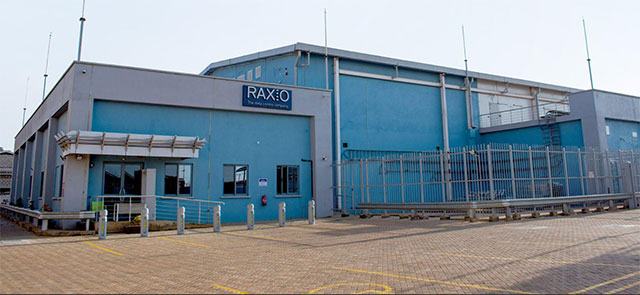
Uganda offers a revealing case study of both the challenges and opportunities facing smaller, fast-digitizing economies. According to “The State of Data Centres in Uganda – 2024,” report published by Raxio Data Centre, one of the leading data centres in the country, cloud computing in the country has grown by more than 30% in just three years. Small and medium-sized businesses, fintechs and government agencies are increasingly moving workloads online in search of efficiency, scalability and regulatory compliance.
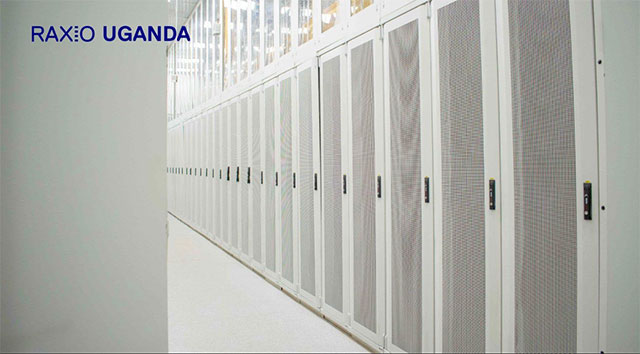
A key driver is regulation. Uganda’s Data Protection and Privacy Act, 2019, requires citizen data to be processed and stored locally, sharply increasing demand for in-country data centre capacity. At the same time, artificial intelligence and big data applications are spreading across banking, retail and healthcare, creating demand for low-latency, high-performance computing environments.
A reliable electricity supply, however, remains a critical constraint. Data centres require uninterrupted electricity, yet businesses face pricing uncertainty and reliability concerns. Backup diesel generators remain common, but they significantly raise operating costs and undermine sustainability goals. As Uganda’s energy sector evolves – including the exit of long-time distributor UMEME – enterprises are increasingly prioritizing data centre partners with robust backup systems and access to renewable energy sources such as hydro and solar.
The high capital cost of building private data centres also limits options for most companies. Investments in power, cooling, security and redundancy make ownership prohibitive, pushing demand toward colocation and managed services.
A pivotal moment
Operators such as Raxio Data Centre argue that this is a pivotal moment not just for Uganda, but for Africa as a whole. “As the backbone of the internet and cloud-based services, data centres are not only powering businesses but also advancing public services, financial services, education and healthcare,” Caroline Kamaitha, General Manager of Raxio Data Centre Uganda, noted in May, last year.
Across the continent, the message is becoming clearer; Africa’s digital future will be built as much in power plants and substations as in servers and software. Getting electricity right may prove to be the single most important factor in determining whether data centres become a catalyst for inclusive growth – or a missed opportunity in an already crowded digital race.