The Independent Uganda: You get the Truth we Pay the Price


From Shillings 3,400 to Shillings 6,900: Is the ‘Normalised’ Fuel Price Ever Coming Back Down?
COMMENT | MORRISON RWAKAKAMBA | When global crude oil prices skyrocket, prices at Ugandan fuel pumps shoot up overnight. When global crude prices plunge, local pump prices barely budge. They settle instead on a higher baseline than before.
Over the past two decades this continuous upward mechanism — known in economics as a ratchet — has functioned as an invisible, perpetual tax on every matatu ride, sack of posho and factory output across the country.
A ratchet turns easily in one direction and locks when asked to reverse. So it is with the Ugandan litre. In pricing economics the phenomenon is called asymmetric price transmission: fuel distributors raise retail prices the moment wholesale import costs rise to protect their margins; they delay cuts when import costs fall, citing expensive old stock, fixed overheads and exchange-rate losses. The market, in other words, is permitted to inhale and forbidden to exhale. What presents itself as commercial prudence is, in aggregate, a silent levy — paid not once, but every day, by the farmer on the feeder road, the factory at Namanve, and the parent counting school-term fare.
Adam Smith saw the same temptation two and a half centuries ago. In An Inquiry into the Nature and Causes of the Wealth of Nations, he wrote:
“The interest of the dealers, however, in any particular branch of trade or manufactures, is always in some respects different from, and even opposite to, that of the public. To widen the market and to narrow the competition is always the interest of the dealers. To widen the market may frequently be agreeable enough to the interest of the public; but to narrow the competition must always be against it and can only serve to enable the dealers, by raising their profits above what they naturally would be, to levy, for their own benefit, an absurd tax upon the rest of their fellow citizens.”
That “absurd tax” is no longer a figure of speech at the Ugandan pump. It is the difference between a cargo’s replacement cost and the price that refuses to come down after the cargo has been sold.
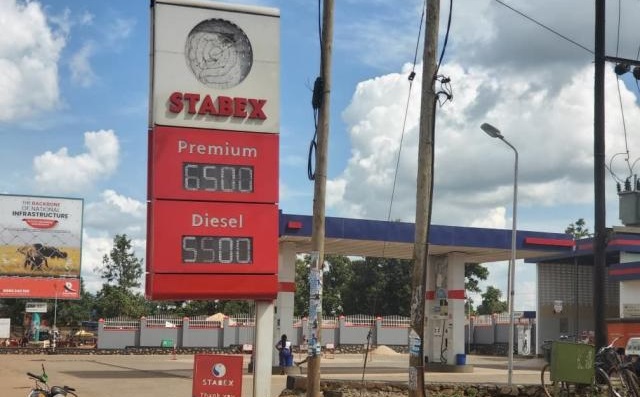
This habit has quietly reshaped the cost of living for ordinary Ugandans through three distinct geopolitical shocks. After the 2008 global financial crisis, the litre never returned to its pre-crisis levels. After 2011, prices built a new baseline around Shs 3,500 to Shs 3,700. Following the 2022 Ukraine war, that baseline reset near Shs 5,000. Now, in mid-2026, amid fresh Middle Eastern supply concerns, pumps at Shell and Total have reached Shs 6,850 to Shs 6,900 a litre — a steep jump of more than 40 per cent in just twelve months. Each time global markets spike, the excuse is the high cost of the latest cargo. Each time that cargo is sold and global prices calm down, the excuse remains — and the high price stays put.
The damage of this sticky litre goes far beyond the driver’s pocket. High pump prices ripple through every sector, driving up the cost of transport, maize flour, bread, cement and school fees, which in turn forces the Bank of Uganda to fight inflation that the pumps themselves helped create.
A weaker shilling and expensive fuel actively feed each other. As more foreign exchange leaves the country to pay high tanker invoices, the shilling slips, making the next tanker even more expensive in local currency even if Dubai markets cool. Farmers pay more to reach markets. Businesses freeze hiring. And while the Treasury collects a fatter excise duty from the Shs 200 increase per litre introduced this financial year, the broader economy suffocates.
Uganda must urgently change course, and the foundation for that change is already in place.
A market that only moves upward is not a free market. It is an unbroken ratchet. If government does not compel the pump to move downward now, the next global shock will start from Shs 7,000
The government’s decisive move to grant exclusive fuel import rights to the Uganda National Oil Company (UNOC), backed by global energy trader Vitol, is a masterstroke of economic sovereignty.
By bypassing regional middlemen and buying directly from global refineries, the UNOC–Vitol structure gives Uganda unprecedented bargaining power, direct pricing and strategic supply security. This deal is a massive victory for the country. Its full benefits will reach the ordinary citizen only if the government breaks the ratchet at the pump.
To turn the Vitol deal into real relief for Ugandans, the Ministry of Energy and the Ministry of Finance must replace vague market explanations with total transparency.
The government should publish the landed cost of every incoming cargo alongside current global replacement costs every month so the public knows the real price of fuel. Pump prices must be legally required to drop as soon as replacement costs drop — cargo by cargo — rather than waiting and allowing endless inventory lags.
Furthermore, any further increases in fuel excise tax should be frozen until global market premiums subside, and Vitol’s invoices should be treated as open public data. A market that only moves upward is not a free market. It is an unbroken ratchet. If government does not compel the pump to move downward now, the next global shock will start from Shs 7,000.
*****
 Morrison Rwakakamba is a coffee farmer based in Nyeibingo Village, Rukungiri.