The Independent Uganda: You get the Truth we Pay the Price


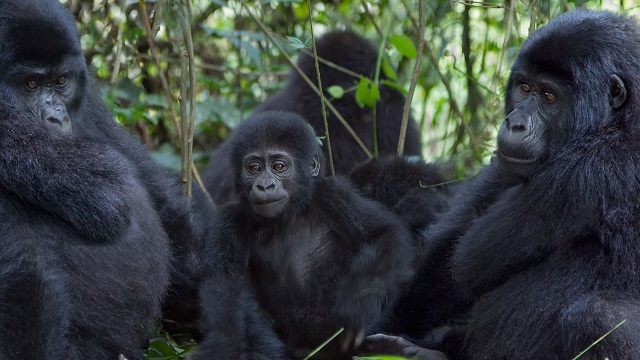
Kampala, Uganda | JULIUS BUSINGE | A new assessment of responsible gorilla tourism has identified gaps in the enforcement of visitor rules, staff training, tourism marketing and coordination among conservation stakeholders, raising concerns about the long-term protection of mountain gorillas in Uganda and Rwanda.
The assessment of the Gorilla Friendly Pledge, presented at a validation meeting organised by the International Gorilla Conservation Programme (IGCP) at Skyz Hotel in Kampala on October 28, calls for stronger enforcement of gorilla visitation rules, better preparation of tour guides and improved monitoring of tourism activities to protect the endangered primates.
The report, based on research conducted between December 2025 and February 2026, involved 250 respondents, including tourists, tour operators, conservation organisations, park managers and communities living near protected areas in Uganda and Rwanda.
It found that 95.2% of respondents had taken the Gorilla Friendly Pledge, while 73.6% had participated in related training. However, only 33.2% had shared information about the pledge with tourists, revealing a 46.6-percentage-point gap between training participation and communicating the initiative to visitors.
The findings suggest that awareness of responsible gorilla tourism has not consistently translated into practice, potentially undermining efforts to protect gorillas while sustaining tourism revenues.
The assessment was designed to evaluate the campaign’s impact, identify obstacles to its implementation, establish how it contributes to responsible tourism and find better ways of collecting feedback from visitors.
Disease risks
The report raises concerns about changes in gorilla health and behaviour, including changes in body condition and stress levels, altered dietary preferences and increased movement into farmland.
It also identifies limited enforcement of visitation rules, unregulated tipping, inappropriate visitor behaviour and attempts to influence gorilla movements, including herding the animals towards locations convenient for tourists.
Some tour operators and hotels were also found to be using inappropriate photographs and videos on social media, including images that appear to show visitors getting too close to gorillas or failing to observe recommended precautions.
The assessment further warns that reflective glass windows and attractive food plants around lodges can draw gorillas towards human settlements, creating additional risks for wildlife and people.
Mountain gorillas are particularly vulnerable to human-borne diseases because of their close genetic relationship with humans. Responsible tracking therefore requires visitors to follow established rules, maintain the required distance, wear masks where required and avoid behaviour that disrupts the animals’ natural movements.
From pledges
Wellard Makambo Molatu, executive director of IGCP, said the initiative was developed to ensure that the economic benefits of gorilla tourism do not undermine conservation.
“Mountain gorillas might be giving us the highest revenues from them in all parks. So we need the rules,” he said, emphasising the risks of disease transmission and the importance of protecting the visitor experience through compliance with established visitation guidelines.
Molatu said the programme was seeking feedback from tourism stakeholders to improve the initiative and support respectful interactions between tourists and gorillas.
The Gorilla Friendly Pledge was initiated in 2014 by IGCP and the Wildlife Friendly Enterprise Network before being relaunched in 2020. It encourages tourists to commit to following gorilla tourism rules and share their experiences through its online platform. The pledge draws on existing great ape visitation regulations and the International Union for Conservation of Nature’s best-practice guidelines for great ape tourism.
IGCP is a coalition involving Fauna & Flora, the World Wide Fund for Nature and Conservation International, working with protected-area authorities in Uganda, Rwanda and the Democratic Republic of Congo (DRC).
Charles Tumwesigye, Uganda Wildlife Authority (UWA) commissioner for field operations, welcomed the assessment and said the authority was ready to work with partners to implement its recommendations.
“IGCP came in with the ideas of gorilla tourism rules and were open to collaborate with us and promote implementation and commit to implement responsible tourism,” he said.
Tumwesigye noted that the programme had been affected by the COVID-19 pandemic but welcomed its continued development.
“We are more than ready to adopt this and implement it and urge partners like tour operators to commit and do responsible tourism such we conserve for generations,” he said.
He added that the next stage should involve certification, with tourism operators and other partners expected to demonstrate their commitment to responsible practices.
Henry Mutabazi, IGCP country director for Uganda, presented the consultant’s findings and said the organisation had been promoting responsible gorilla tourism through the pledge and online awareness campaigns.
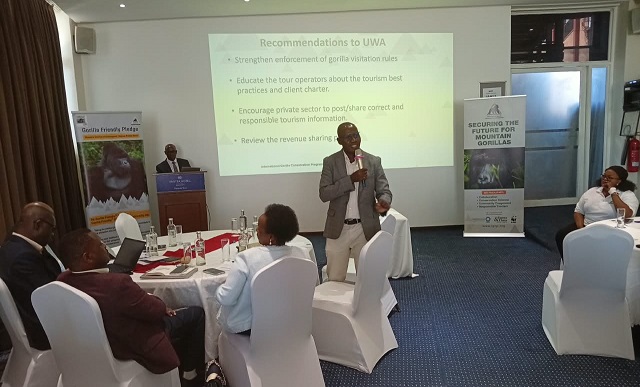
Key reforms
The assessment recommends that UWA strengthen enforcement of visitation rules, educate tour operators on best practices, encourage responsible tourism information on commercial platforms and review its revenue-sharing policy.
It also calls for a science-based assessment of tourism carrying capacity, measures to prevent interference with gorilla movements and independent email channels linked to the pledge website to collect tourist feedback in real time.
Private-sector recommendations include integrating the pledge into pre-tour briefings, improving guide training, sorting and disposing of waste properly, ensuring visitors observe protective measures and using responsible marketing materials.
The report also urges hotels and lodges to comply with National Environment Management Authority requirements, including obtaining the necessary environmental and social impact assessment certificates before December 2026.
IGCP, meanwhile, is advised to improve the pledge website, promote a QR code for easier access, strengthen engagement with tourism operators and park managers, and organise regional meetings to harmonise conservation messages.
The report was still being finalised at the time of the validation meeting. IGCP said it would follow up on the recommendations with the relevant stakeholders and share the completed report when ready.
Gorilla numbers
The stakes extend beyond wildlife protection. Mountain gorillas are found naturally in only two areas: the Bwindi-Sarambwe ecosystem and the Virunga Massif, which spans Uganda, Rwanda and DRC.
The latest published population benchmarks show the scale of the conservation achievement, although country-by-country figures for the Virunga population cannot be reliably separated because gorillas occupy a shared transboundary ecosystem.
In the Bwindi-Sarambwe ecosystem, a 2018 census recorded 459 mountain gorillas. The ecosystem includes Uganda’s Bwindi Impenetrable National Park and the adjoining Sarambwe reserve in DRC. Uganda launched a new census in 2025, but the 459 figure remains a historical benchmark pending the publication of updated results.
In the Virunga Massif, a census conducted in 2015 and 2016 recorded 604 mountain gorillas across the shared ecosystem encompassing Uganda, Rwanda and DRC. This figure should not be interpreted as Rwanda’s or DRC’s individual population.
Together, the two census results produced the widely reported total of 1,063 mountain gorillas.
These are historical figures from different census periods, not a verified population count for 2026.
Uganda’s economic figures illustrate why protecting gorillas is also a tourism development priority. According to Uganda Wildlife Authority figures reported in September 2026, Bwindi Impenetrable and Mgahinga Gorilla national parks generated Shs398.8 billion from gorilla tourism between the 2022/23 and 2025/26 financial years, out of combined park revenues of Shs584.3 billion.
UWA also disbursed Shs2.97 billion to communities around the Bwindi-Mgahinga Conservation Area in the year ending June 2025.
These figures show how gorilla tourism can support conservation financing, employment, accommodation businesses, transport services, guides, porters and markets for locally produced goods. Uganda's revenue-sharing arrangements also direct a portion of park income towards community projects and livelihoods.
Rwanda has similarly built gorilla trekking into its international tourism offering, with Volcanoes National Park attracting visitors seeking encounters with mountain gorillas. In DRC, Virunga National Park combines wildlife tourism with ranger-led conservation and community engagement, although insecurity creates additional operational challenges.
Shared benefits
Protecting mountain gorillas offers Uganda, Rwanda and DRC an opportunity to strengthen tourism as a shared regional economic asset.
The three countries protect different parts of the same interconnected mountain ecosystem.
Gorillas move within their habitats without regard to national borders, while threats such as disease, habitat pressure and human-wildlife conflict can undermine conservation efforts across the region.
That makes coordination essential. Common tourism standards, well-trained guides, consistent visitor rules and responsible marketing could help all three countries protect the quality of the gorilla-tracking experience while reducing risks to the animals.
There is also an economic argument for conservation. Healthy gorilla populations underpin the attraction that brings international visitors to the region. If tourism practices damage gorilla health or disrupt their behaviour, the countries risk undermining the wildlife resource on which this specialised tourism market depends.
Conversely, well-managed tourism can generate income for park authorities and surrounding communities, creating incentives to preserve forests and support conservation.
Conservation efforts in the Virunga region have combined regulated tourism, daily protection, veterinary interventions, law enforcement, community conservation and cross-border collaboration.
The challenge is to ensure that revenue generation does not take precedence over animal welfare. As the IGCP assessment indicates, a pledge is only effective when visitors understand the rules and tour operators, guides, hotels and park authorities consistently enforce them.
For Uganda, Rwanda and DRC, responsible gorilla tracking is therefore more than a visitor code of conduct. It is part of a wider strategy to sustain biodiversity, protect community livelihoods and preserve a tourism attraction whose long-term value depends on the survival of the gorillas themselves.