The Independent Uganda: You get the Truth we Pay the Price


COMMENT | MATHIAS RUKUBA | The growing unease across the Kampala metropolitan area is no longer whispered in corridors or confined to neighbourhood WhatsApp groups. It is visible in tightened gates, earlier closing hours for businesses, and heightened anxiety among residents. A disturbing rise in violent attacks, robberies, and targeted killings, particularly within private homes, has placed public safety at the centre of national conversation.
Recent incidents across the greater Kampala metropolitan area have exposed a troubling pattern: homes, commuter routes, and business premises are increasingly vulnerable to calculated and sometimes brutal attacks. Victims have been murdered in their residences, often without firearms, suggesting not random violence but deliberate, organised operations. These are not opportunistic thieves; they are patient, observant, and increasingly strategic.
What we are witnessing is a transition from petty, impulsive crime to structured and coordinated criminal activity. Assailants are employing organised crime tactics: careful surveillance, route mapping, and silent execution to evade detection. In some cases, attackers have bypassed physical security measures such as perimeter walls and gates, physically overpowering targets without sophisticated weapons.
This trend exposes a critical weakness: overreliance on static physical security and human surveillance that cannot effectively scale across multiple locations and routes. Security responses have often appeared reactive, deployed after incidents occur rather than predictive and intelligence-driven.
When crime becomes organised, security must become strategic.
The Visibility Question
Residents across Kampala have voiced frustration over what they perceive as low police visibility in high-risk areas. Whether perception or reality, public confidence in security institutions is as important as operational capacity. Security is not only about enforcement; it is also about assurance.
The Uganda Police Force remains central to maintaining order. However, policing in an expanding metropolitan region cannot be achieved in isolation. With population growth, urban sprawl, and increasing socio-economic pressures, the demand for security coverage has outpaced traditional deployment models.
As the country moves into the post-2026 election period, a time historically associated with heightened political and social activity, there is an urgent need to strengthen collaborative security frameworks. This includes structured cooperation between the police, licensed private security firms, and regulated community-based vigilante groups operating within the law.
Such collaboration must be coordinated, accountable, and intelligence-led—not reactionary or politically driven.
Public statements following violent incidents often aim to calm anxiety. While this is necessary, reassurance must be backed by visible, measurable action. Communities need to see patrols, arrests, and investigations progressing. Confidence grows not from silence, but from transparency and tangible results.
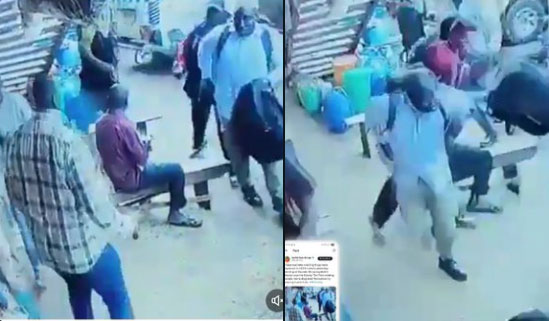
. @mkituuma “Three suspects in connection with the viral CCTV video circulating on social media, which shows a man being attacked, allegedly at Gwanda Shopping Mall in Kisenyi, near the Kisenyi Taxi Park have been arrested
Three motorcycles that were allegedly used in the attack… pic.twitter.com/jaZhIEKq29
— Uganda Police Force (@PoliceUg) February 22, 2026
Investigations must be robust and professional, ensuring justice for victims while dismantling criminal networks. At the same time, authorities must avoid fuelling unnecessary panic. The balance lies in communicating that security threats are being addressed decisively and systematically.
Community Is the First Layer of Security
Security does not begin at the police station; it begins at the gate, the neighbour’s compound, and the local leadership structure. Residents must understand their surroundings, identify unusual patterns, and participate actively in community-based security solutions.
Landlords, property managers, and resident associations have a responsibility to invest in layered protection systems. A single security measure is no longer sufficient. Effective urban security today requires multiple layers, including:
- Controlled access points
- Improved perimeter reinforcement
- Adequate lighting in residential zones
- Visible security presence to deter opportunistic threats
- Covert (covertly embedded) surveillance measures as part of risk coverage
- Professional guard services
- Well-trained guard dogs, which remain an effective deterrent and early-warning mechanism
- Layered security reduces the probability of unauthorised access and increases detection opportunities before an attack escalates.
From Reactive to Predictive Security
One of the most significant challenges facing urban security management in Kampala is the gap between incident response and threat anticipation. Criminals are adapting faster than systems are evolving. Where attackers are patient and calculating, security must be analytical and forward-looking.
This requires improved intelligence-sharing between private security firms and state agencies, better use of crime data mapping, and enhanced situational awareness within communities. Human analysis alone cannot effectively monitor every route and neighbourhood; technology must complement manpower.
However, technology is not a substitute for vigilance. Cameras without monitoring, fences without alertness, and patrols without coordination create a false sense of security.
The recent attacks serve as a wake-up call. They underscore the urgent need for proactive collaboration between residents, community leaders, landlords, private security companies, and the Uganda Police Force. Security resilience is built when each stakeholder understands their role.
Public safety is not guaranteed by walls alone. It is sustained by partnership, preparedness, and presence.
Kampala is growing. Its infrastructure, settlements, and population are expanding at unprecedented rates. Without corresponding investment in structured, preventive security frameworks, vulnerabilities will multiply.
The question before us is not whether crime exists; it always has. The question is whether we will continue reacting after lives are lost or whether we will shift decisively toward predictive protection.
Security must move beyond promises. It must become visible, collaborative, and layered so that safety in Kampala is not an aspiration but a lived reality.
*******
 MATHIAS RUKUBA | Security Management Advisor & Security Consultant
+256773061600