The Independent Uganda: You get the Truth we Pay the Price


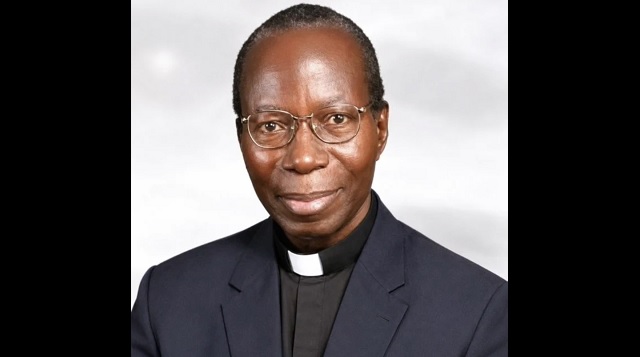
Kampala, Uganda | URN | Long after the final Amen has faded, the melodies remain. Every Sunday, in Catholic churches across Uganda, congregations rise in unison to sing the songs that defined their faith: “Tusimbe ffena mukisinde,” “Alifuga Ensi Yonna,” “Ndi mu ssanyu lingi,” “Ndisiimisaaki nze Omukama,” and “Ddunda tusasire.”
These are not just hymns; they are the living, breathing legacy of the late Rev. Fr. Dr. James Kabuye, the visionary composer who took the church’s sacred liturgy out of the Latin books and placed it firmly into the hearts and voices of ordinary Ugandans. The said beloved compositions, alongside more than 5,000 others, represent the monumental life’s work of a soft-spoken priest and master composer.
Fr. Kabuye passed away on the morning of 16 September 2022 at the age of 92 at the Kiyinda-Mityana Catechetical Centre, a place where his passion never waned, and where he continued to teach and mentor young choristers almost to his very final days. For more than six decades, Fr Kabuye filled Catholic churches across Uganda and beyond with music that moved easily from solemn Gregorian calm to joyful African rhythms without ever losing its deep reverence.
His songs were not merely sung at Mass; they became the soundtrack of faith for generations. Alifuga Ensi Yonna does not begin gently. The introduction gathers force, voices stacking into polyphony until the claim of the title feels less like a hope than a fact being announced.
Early life and vocation
Kabuye was born on 14 January 1934 in Ttanda village, Mityana, a place known before him mostly for the old legend of Walumbe Tanda. He was the last-born of eight children of Yakobo Baziwandiika, a catechist, and Pia Alibayagadde, who had married in 1910.
After Naluggi Primary School, a visiting parish priest steered him toward Bukalasa Minor Seminary. Word of his acceptance reached the village so late, over the unreliable rural post and communication of those days, that he learned he had a place barely a day before he was due to report.
“I learned that I had a place barely a day before I was due to report,” he would later recall with a smile. His hurried, last-minute arrival at Bukalasa Minor Seminary gave absolutely no hint of the patient, exacting master composer he was destined to become.
It was at Bukalasa that music claimed him. Through the seminary band, taught by the white fathers and largely self-taught and taught by fellow students, he began writing simple songs almost as soon as he could read a score. One decisive memory stayed with him: watching an older seminarian, Joseph Kyagambiddwa, step up to teach the school music, and understanding for the first time what a life given over to sacred song could look like.
Kabuye was in the first class taught by Kyagambiddwa, one of the greatest Catholic Church composers in Uganda, remembered for the music performed at the canonisation of the Uganda Martyrs in Rome and for introducing African instruments there for the first time. Though Kyagambiddwa never became a priest, Kabuye always spoke of him with deep respect and followed in his footsteps with love for well-crafted Kiganda compositions.
Available information shows that from Bukalasa he proceeded to Katigondo National Major Seminary for philosophy and theology. He was ordained a priest in 1962. That year Uganda attained independence and the Second Vatican Council opened.
A life of ministry and composition
Archbishop Joseph Nakabaale Kiwanuka recognised his exceptional gift early. In 1963, barely a year after ordination, the Archbishop sent him to the Lucerne School of Music in Switzerland for formal training. This was a rare investment in so young a priest. He would also later earn a doctorate at Marian College in Indianapolis.
In October 1964, while still a student abroad, he helped prepare the choir of Ugandan students in Europe and the United States for the canonisation of the Uganda Martyrs at St. Peter’s Basilica in Rome. This was the first African choir to fill that basilica with the sound of Kiganda instruments and rhythm.
When he returned to Uganda in 1967, he was posted to Rubaga Catholic Cathedral as curate, choir trainer, and later Director of Liturgy for Kampala Archdiocese. It was here that he began systematically introducing African music alongside the Latin tradition.
“I was given a chance to introduce African music alongside the interpretation of the Latin songs,” he told a local newspaper in 2013. “It was not easy… people were more used to Latin, given that Mass was still celebrated in Latin.”
He used the opening created by the Second Vatican Council fully—folding the Gregorian discipline the White Fathers had taught him and the harmonic language of Bach, Handel, Mozart and Purcell into the rhythmic and melodic vocabulary of Kiganda tradition. He wrote hymns built for a congregation to sing back, not merely receive. He also sang in the mass choir for Pope Paul VI’s 1969 Mass at Kololo. This was the first papal visit in Africa.
In 1971 he moved to St. Mary’s National Seminary, Ggaba, to teach pastoral theology and music. There he found, in the compositions seminarians brought him to correct, evidence that Ugandan Catholic music had a future beyond his own generation. He later served as parish priest of Nazigo (1977–1978) and of Kiyinda-Mityana, Episcopal Vicar for Mityana Zone, and Bishop’s Delegate. He was Rector of Mubende Minor Seminary (1988–1998) and spent his final decades as Vice-Rector and teacher of Bible and Doctrine at St. Matia Mulumba Catechetical Training Centre in Kiyinda-Mityana, where students were still bringing him their music in his last years.
Beyond his compositions, Fr. Kabuye left an indelible mark on generations of clergy and catechists during his decades as a formator. Countless priests who passed through his hands fondly recall his meticulous training, affectionately coining terms like “Kabuyesis” and “Kabuyelogy” to describe his unique teachings, strict liturgical discipline, and philosophy of worship. To his students, these were not just academic lessons, but a foundational way of life that shaped the very identity of the modern Ugandan priesthood.
The songs that endure
Through all of it he kept composing, mainly in Luganda, English, Latin and German, blending Western classical and baroque form with African traditional style and Gregorian-derived chant. Among his personal best-loved works are Ye Ggwe Lwazi (sung before Pope John Paul II at the 1993 papal Mass at Namugongo), Ye Ggwe Katonda Wa Bajjajjaffe, Gwe Kabaka, Otumbidde, Nze Mugaati Gw’obulamu, the Te Deum setting Ggwe Katonda, Missa Yebazibwe, and the Christmas favourite Noel Noel.
He also wrote school songs such as Decide, Behold the Greatest Jubilee, The Trinity, and Go and Preach, widely used in school music festivals. Serving as the chairperson of the Inter-Diocesan Music Committee, which united the musical traditions of Kampala, Masaka, and Kiyinda-Mityana, Fr. James Kabuye spearheaded a collaborative liturgical breakthrough. Alongside Monsignor Expedito Magembe, Fr. Vincent Bakabulindi, and other prominent committee members, he directed the compilation of the landmark 1992 hymnal, Mujje Tutendereze Omukama.
Later republished in a refined edition in 2003, the compilation is affectionately known to millions of faithful across the Kampala Ecclesiastical Province simply by its initials: MTO. While Fr. James Kabuye’s pioneering style primarily resonated with Luganda speakers and quickly transformed liturgical music across Buganda, the movement soon inspired other regions. Among those who championed this revolution outside Buganda was Monsignor Bonaventure Kasaija, a prominent Catholic priest and liturgical composer from the Tooro region who brought the same musical transformation to the Runyoro-Rutooro language.
In 2010, Fr Kabuye published a book titled Kiganda Music, written expressly to teach younger composers how to build hymns from Buganda’s own rhythms and dance forms rather than import them wholesale from the West. He composed new music for Pope Francis’s 2015 visit to Uganda—more than fifty years after he first wrote for a papal occasion on Ugandan soil. His career later became a subject of academic study in university theses examining his compositional style and contribution to Catholic music in Kampala Archdiocese.
The man behind the music
Away from the choir loft, those who knew him in his younger years remembered a sharp right-winger on the football pitch at Katigondo and, by his own telling, an unreasonably fast driver. Once, on what was meant to be a short road test of a new car, he did not notice how far he had gone until the Rwanda border came into view.
He marked fifty years of priesthood in 2012 and his diamond jubilee in 2022. Both milestones were celebrated in his home village of Ttanda, the very same village he had once left in a confused rush as a boy. By then, his music had already returned to Ttanda many times over, carried on the voices of congregations from every corner of Uganda. On the momentous occasion of his diamond jubilee, Fr. Kabuye’s lifelong devotion was formally recognized when he received a prestigious Apostolic Blessing from Pope Francis.
To generations of Catholic faithful, Fr. James Kabuye does not merely occupy a page in church history; he ranks among the absolute titans of local sacred music. He stands shoulder-to-shoulder with his legendary mentor, Joseph Kyagambiddwa, alongside other transformative masters like Rev. Dr. Joseph Namukangula of Masaka Diocese, the late Monsignor Expedito Magembe, and Fr. Vincent Bakabulindi.
Together, this elite vanguard of composers breathed African life into the liturgy, forever changing how Uganda prays. “My compositions are inspired by the Bible, meditating on scripture and admiration for the surroundings,” he once said. “I am passionate about writing Godly music.” He did not work for glory. Yet through his music, he came into the spotlight not only in the Catholic Church but among other Christians as well. Generations who may never learn his full name will continue to sing what he gave them.