The Independent Uganda: You get the Truth we Pay the Price


COMMENT | GEORGE ILEBO | Since time immemorial, forests have been a vital pillar for human sustenance. Covering about 32% of the Earth’s land surface, or about 4.14 billion hectares, forests provide critical ecosystem services, including food, medicine, fresh water, air purification, and climate regulation, among others. These ecosystems are home to about 80% of global terrestrial biodiversity, including nearly two-thirds of all bird species. Further, 1.6 billion people around the world rely on forests for livelihoods. According to the International Labour Organization (ILO), the forestry sector employs about 33 million people worldwide, and for every 100 jobs in the sector, an additional 73 jobs are supported across the broader economy, underlining its importance.
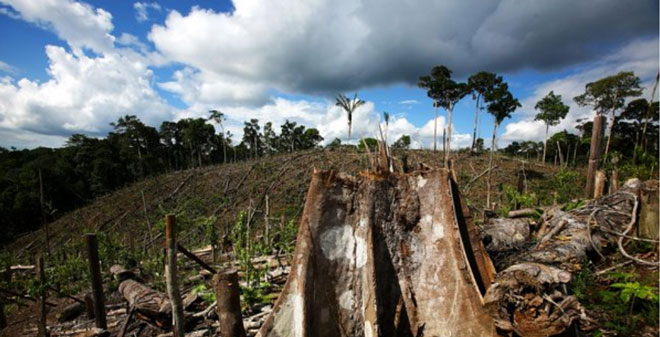
However, forests are disappearing at an alarming rate. According to the 2025 FAO Global Forest Resources Assessment, an estimated 489 million hectares of forest have been lost worldwide through deforestation since 1990. Between 2015-2025, the deforestation rate was estimated at 10.9 million hectares per year. Africa has the second highest deforestation rate globally, after South America. Since 2015, the continent has lost about 2.96 million hectares per year. Major drivers of deforestation on the continent include expansion of subsistence and commercial agriculture, infrastructure development, and mining.
Every year, the world celebrates International Day of Forests (IDF) on 21st March, to raise awareness on the importance of these critical ecosystems. This year’s IDF theme Forests and Economies highlights the vital role forests play in supporting livelihoods and driving economic prosperity. Yet too often, development decisions treat forests and economies as competing interests. Short-term extractive approaches can produce headline Gross Domestic Product (GDP) growth while hollowing out the very natural capital that supports sustained prosperity. This results in long-lasting economic consequences, including declining crop yields leading to reduced household incomes and food insecurity; higher disaster recovery costs; lost market opportunities; and deeper poverty.
Thus, protecting forests requires concerted efforts from governments, the private sector, local communities, civil society, and the academia. Healthy forests are not a luxury or a backdrop to development, but rather they are infrastructure that sustain the economies on which communities and nations depend. Recognizing this is not just an environmental argument; it is an economic imperative.
Across Africa, BirdLife International, the world’s largest nature conservation partnership, is working with partners to protect and conserve forests through restoration and scaling of locally led nature-based solutions (NbS) that generate jobs and incomes. BirdLife partners are involved in the African Forest Landscape Restoration Initiative (AFR100 Initiative), which aims at addressing deforestation to fight climate change while boosting food security and improving livelihoods for local communities.
In Mount Bero, Guinea, and Rusizi, Rwanda, over 2,000 hectares of degraded forest land restored by communities are improving soil productivity, increasing climate resilience and expanding tree-based income opportunities. In Burkina Faso, an initiative dubbed Birds, Bees and Business (BBB) promoted the sustainable use of Non-Timber Forest Products (NTFPs) and beekeeping, becoming a stable source of income for local communities. This further demonstrates that sustainable exploitation of NTFPs can provide a pathway for economic development while improving access to natural resources, and promoting conservation efforts.
Close collaborations with local communities who are custodians of these forests is a critical element of this work. In the Guinean Forests of West Africa, BirdLife and partners have resulted in strengthened protection of 15 Key Biodiversity Areas (KBAs); over 500,000 hectares of forests under improved management, and building capacity of 25 local Civil Society Organizations (CSOs) in sustainable forest management. In Liberia and Sierra Leone, BirdLife is working with local communities to promote ecotourism as a strategy to conserve the 370,000 ha of Gola Forest, which straddles Sierra Leone and Liberia, thus improving livelihoods for local communities while enhancing conservation. Further, we are working with the private sector to promote green value chains and responsible sourcing of agricultural commodities to support landscape restoration and the livelihoods of smallholders.
These forest protection and conservation initiatives are not endpoints but proof points, demonstrating what is possible when investment, innovation, and community leadership converge around nature. On this International Day of Forests, as we celebrate the abundant ways forests fuel economies, there is a need for a mindset shift from viewing forests as a resource to be exhausted for short-term gain to valuing them as foundational assets that deliver sustained returns: food security, jobs, climate resilience and cultural heritage.
With the right policies, financing, and partnerships, forest-based economies can be engines of resilient, inclusive and sustainable economic development across Africa. This International Day of Forests, let us commit to making forest economies a reality: for people, for nature, and for posterity.
*****
 The writer is Africa Forests Programme Coordinator at BirdLife International | Email: george.ilebo@birdlife.org