The Independent Uganda: You get the Truth we Pay the Price


Mbarara, Uganda | PATRICIA AKANKWATSA | Uganda’s livestock sector has long been constrained by slow-growing local breeds and inconsistent market supply.
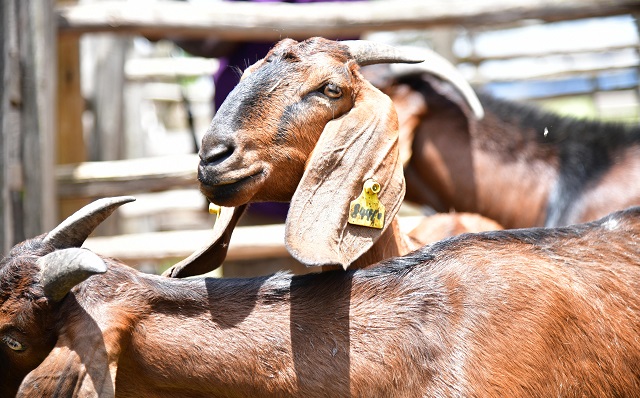
At the Mbarara Zonal Agricultural Research and Development Institute (MBAZARDI), scientists are evaluating the Jianzhou big-eared goat, a Chinese breed introduced under the FAO–China South–South Cooperation (SSC) Project. Preliminary findings suggest show that the new breed of goats could significantly shorten production cycles, increase meat production.
This would in turn improve farmer earnings from goat farming.
The intervention comes at a time when Uganda is seeking to balance rising domestic demand for animal protein and growing the export market particularly to Middle East markets.
However productivity gaps remain. Indigenous goat breeds, while resilient, typically grow slowly and take longer to reach market weight, limiting turnover and income for smallholder farmers.
The imported breed is designed to address exactly that constraint.
According to Dr Andrew Wange Bugenyi, senior research officer at MBAZARDI, the goats are already demonstrating strong growth performance under Ugandan conditions.
“It is a stabilised breed called the Jianzhou big-ear goat. This breed has attained stability and it is a very fast growing breed, variety for meat. We received about six goats in October and have since multiplied these, we now have an additional seven kids, three males and four females.”
He added growth rates critical for commercial viability are being closely monitored.
“We have noted that indeed these goats are capable of attaining about 200 grams a day. As of now, they attain 145 grams gained per day,” he said.
“Even the kids are showing progress. For example none of them that was born before January 21 st is below17 kilos”.
Such performance, if sustained, could fundamentally alter goat production economics allowing farmers to bring animals to market faster and with higher weights.
But productivity gains alone are not enough. Adaptation to local conditions remains the decisive factor in whether imported genetics translate into real-world impact.
“We want to look at how they grow under various nutritional conditions. how does it resist the diseases? how does it tolerate the temperatures,” Dr Bugenyi said.
“Fortunately, we have not had anything scary. We see worms coming in, but the animals haven’t been affected too much that means the goats are able to tolerate the challenges that we have in our area”, he noted.
Feeding often a major constraint in livestock systems has also been tested against local realities.
“When these goats were brought, they were feeding on beans. You cannot tell a farmer to give his beans to a goat. So we have given them what we give our local goats and they are thriving,” he said, adding that reliance on concentrates has already been reduced.
From research to market
The broader objective is not simply to introduce a new breed, but to close the productivity gap between Uganda’s livestock potential and its actual output.
Dr Jacob Mukose, the National Livestock Counterpart for the FAO–China programme, framed the goats as part of a wider commercialization strategy.
“The purpose of the big ear goat is basically to improve the quality of our local goats because of the size and early maturing age, they are very good animals to better the multiplication and the volume in the shortest time possible,” he said.
That increase in volume is central to both domestic supply and export ambitions.
“Our market for animal products is very good but meat is not even enough for the local market. We need to first satisfy the local market and also target the export market,” Mukose added, noting that Uganda is positioning itself to supply markets such as the United Arab Emirates.
Crossbreeding as a scaling strategy
Given the limited number of imported animals, scaling the impact will depend on crossbreeding with local goats.
“We plan to crossbreed it with our native goats if we have been having a goat gaining maybe 40 grams a day, can we have a stable cross and gain maybe 100 grams a day?” Dr Bugenyi said.
Such incremental gains rather than dramatic transformations are what researchers say will ultimately drive sector-wide change.
“Those small improvements are what matter to us as researchers aiming to develop agriculture in our country,” he added.
Uganda is currently the first African country to receive the breed.
The goat programme sits within a broader, decade-long cooperation framework led by the Food and Agriculture Organization of the United Nations, which has deployed dozens of Chinese experts across Uganda since 2012.
As the project approaches its final review, the focus is shifting to sustainability how to embed gains within Uganda’s own systems.
Debel Gutta, South–South Triangular Cooperation specialist at FAO, said the next phase will depend on scaling what has worked.
“We are here to witness the implementation document the good lessons and discuss the next steps, how we can scale up,” he said.
“Even though the project is coming to an end, we need to sustain the results. The technologies introduced need to be adapted to Uganda’s context,” he added, noting that new Chinese experts in breeding and feed are expected to support the transition phase.
For districts like Mbarara, where livestock already plays a central economic role, the stakes are high.
Mathias Byamukama, the district production officer, described the area as a core production zone.
“Mbarara contributes a significant percentage of Uganda’s milk production and serves as a key livestock production area with balanced weather conditions suitable for both crop and livestock farming” he said.
He also pointed out to the complementary interventions particularly in feed systems that are critical for sustaining productivity gains.
“The training provided to extension officers in hay preservation addresses farmers’ struggles with maintaining feed during dry seasons,” he said, adding that improved millet varieties are also enhancing pasture options
If the Jianzhou Big-Eared Goat proves viable at scale, it could mark a shift in how Uganda approaches livestock development less about expanding herd sizes, and more about improving productivity per animal.