The Independent Uganda: You get the Truth we Pay the Price


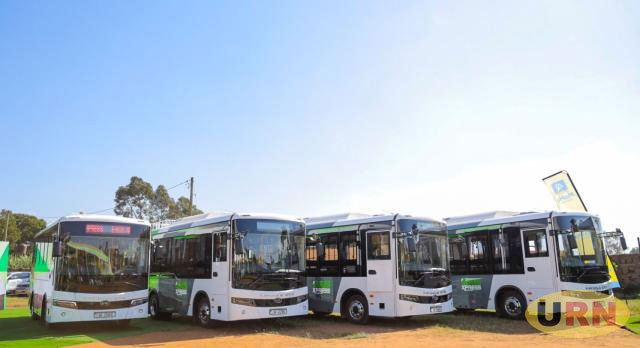
Kampala, Uganda | URN | E-Bus Express, an urban electric bus passenger service operator, has launched new routes in Kira Municipality, with plans to extend its services to Kampala Central as it expands its fleet to 50 buses by the end of the year.
The company, a subsidiary of electric vehicle manufacturer Kira Motor Corporation (KMC), has so far deployed 16 electric buses on three routes: Kisasi–Kyanja–Kungu, Ntinda–Najjera–Nakwero and Ntinda–Naalya–Namugongo.
Following the launch, the company will offer free rides for one week, up to September 6, after which passengers will be charged fares starting at Shs800 for adults. Schoolchildren will pay half the adult fare. The buses are equipped with a cashless fare payment system powered by MTN MoMo, as well as free Wi-Fi, phone-charging facilities and enhanced safety features.
The launch has been hailed as an important step towards addressing traffic congestion in Kampala, which is attributed to the growing number of private cars, passenger service minibuses and inadequate road infrastructure, among other factors. Speaking at the launch, Minister for Kampala Capital City and Metropolitan Affairs Minsa Kabanda asked E-Bus Express and Kira Motors to explore the possibility of providing washrooms on the buses to cater for health and emergency needs.
Kabanda said the Kampala Capital City Authority (KCCA) would work to create a better operating environment as more buses are deployed. She also appealed to the Ministry of Science, Technology and Innovation and the management of E-Bus Express to engage existing matatu operators and explain the operational model and benefits of the electric buses in order to prevent possible conflicts.
The minister said the initiative forms part of the implementation of the Greater Kampala Transport Master Plan, which involves not only the deployment of buses but also the development of transport systems that protect the environment and promote the dignity of travellers.
Eng. Jacob Byamukama, the Deputy Director of Transport and Roads Management, said the electric buses would improve the passenger travel experience while contributing to the reduction of traffic congestion in the city. However, he acknowledged that operating a bus system in the centre of Kampala would be challenging because the city currently has no dedicated bus lanes, forcing buses to compete for road space with other forms of traffic.
He said the lack of dedicated infrastructure was among the challenges that affected previous bus operations, including Pioneer Easy Bus, whose problems were compounded by internal management challenges. Byamukama said that by December, when E-Bus Express plans to extend its services to Kampala Central and other parts of the metropolitan area, improvements would have been made in traffic management regulations and road infrastructure.
E-Bus Express Board Chairman Emmanuel Mugunga urged the Minister for Kampala and other authorities to allocate additional routes to the company, saying it is ready to deploy 100 buses across the Greater Kampala Metropolitan Area before the end of the year. He said the company ultimately plans to deploy up to 1,000 electric buses across major cities in Uganda.
Kira Municipality Mayor Allan Bulamu called for the integration of transport networks across the Kampala Metropolitan Area so that E-Bus Express services can connect with rail, road and other modes of transport to create a seamless passenger transport system.
He also called for the implementation of plans to provide dedicated bus lanes, designated stages, passenger shelters and other facilities, while ensuring that the infrastructure is safe and accessible to the public. Bulamu cautioned against excluding existing taxi operators from the new transport developments, urging authorities to ensure that they are incorporated into the evolving public transport system.
Speaking at the launch of the Kira Municipality routes, Ibrahim Senyonga, General Manager of the Enterprise Business Unit at MTN Uganda, said MTN would provide the cashless payment system, allowing passengers to pay their fares without carrying physical cash.
He added that MTN had also deployed internet services on the buses and would work to ensure uninterrupted connectivity as much as possible. The launch of the new routes follows what the company describes as a successful pilot and rollout project in the Jinja area, which began in November 2024.
The service introduced daily electric bus transport along the Jinja–Iganga and Jinja–Nakibizi corridors using a fully cashless payment system.According to the company, the service initially transported about 300,000 passengers during the early stages of the rollout and has since carried about 3.5 million passengers, demonstrating strong commuter demand despite operating a fleet of only seven buses.
On the environmental benefits of the electric buses, Ian John Kavuma, the Managing Director of E-Bus Express, said the company had helped avoid approximately 1.5 tonnes of carbon emissions and had covered billions of green kilometres. He said the figures demonstrate the potential of electric buses to reduce carbon emissions associated with public transportation.
The company says the statistics also demonstrate the benefits of using locally manufactured buses, which have yet to achieve widespread adoption on Ugandan roads due to limited demand from transport operators. Although electric buses are relatively expensive, with KMC’s Kayoola buses costing between US$99,000 and US$330,000—approximately Shs370 million to Shs1.2 billion, depending on the size, battery capacity and specifications—the manufacturer says they offer several advantages over imported diesel-powered buses.
These include lower maintenance costs, as the electric buses do not require conventional engine servicing, diesel or petrol refuelling, but instead require battery charging. They also produce no tailpipe carbon emissions. By comparison, an equivalent diesel-powered bus typically costs between US$70,000 and US$150,000, approximately Shs260 million to Shs560 million, as an upfront purchase price.