The Independent Uganda: You get the Truth we Pay the Price


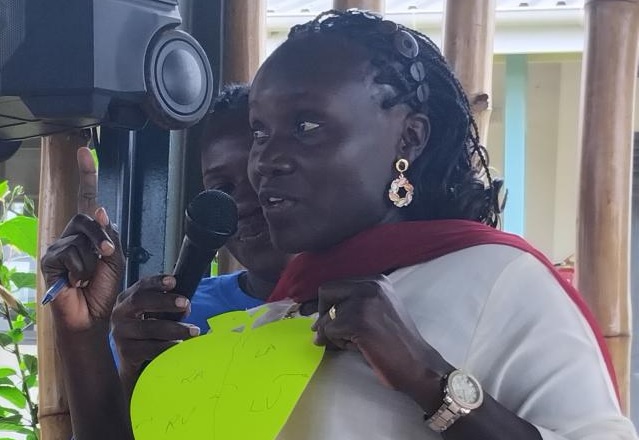
Kampala, Uganda | URN | For many, stares and whispers of a crowded city are a source of discomfort. For Ugandan pediatrician Judith Namuyonga, they were a masterclass in empathy.
Speaking at the World Down Syndrome Day celebrations in Buikwe District on Saturday, Dr. Namuyonga, a Senior Consultant Pediatrician and Cardiologist, shared a deeply personal journey. She linked her lived experience with albinism to her current mission of saving the hearts of children born with Down syndrome.
“God blinded me in such a way that He knew He had to take me through albinism so that when Down syndrome comes, it’s nothing to me,” she told the audience. “My face won’t change; my attitude won’t change towards that parent.”
Dr. Namuyonga, was the only child without albinism in her family of four. She broke down the the nature and care of Down Syndrome to the families gathered in Bukiike Village. For children with Down syndrome in Uganda, the challenge is often a literal race against time for cardiac survival. She said that that 50% of children born with Down syndrome in Uganda have a heart defect. Of those, 75% suffer a complex condition known as an Atrioventricular Septal Defect (AVSD).
“This condition involves large holes in the center of the heart, effectively merging the four chambers into a single, struggling pump,” she explained. “They develop heart failure quickly. Because they have large tongues and underdeveloped structures in their lungs, they are prone to infections and high lung pressure. If we don’t operate between four to six months of age, we often lose them.”
Beyond the medical complexities, Dr. Namuyonga addressed a painful social reality where fathers frequently abandon their families after a child with down syndrome is born. She noted that in many African communities, the birth of a child with a disability often leads to men walking away, leaving mothers to carry the physical, emotional, and financial burdens alone.
“The men will run away; they can’t stand the pressure,” she said, lamenting the way some use a somber interpretation of scripture to justify exiting the lives of “imperfect” children.
She added that language remains a major barrier to care. In many local dialects, there is no clinical term for Down syndrome except derogatory labels.
“It’s not the right name,” she insisted, referring to the traditional stigmas. “But that is what we grew up with.”
By replacing stigma with science, Dr. Namuyonga believes these children can lead productive lives. While they may not all pursue academic paths like medical school, she emphasized their potential for vocational success.”They can do other things with their hands. We have to empower them.”
Dr. Namuyonga emphasizes that survival starts with early intervention. This includes early screening at birth, consistent breath monitoring, and prioritizing corrective heart surgeries which are essential for ensuring these children thrive in their communities.
“Every child matters,” she said. “And every heart matters.”
*****
URN