The Independent Uganda: You get the Truth we Pay the Price


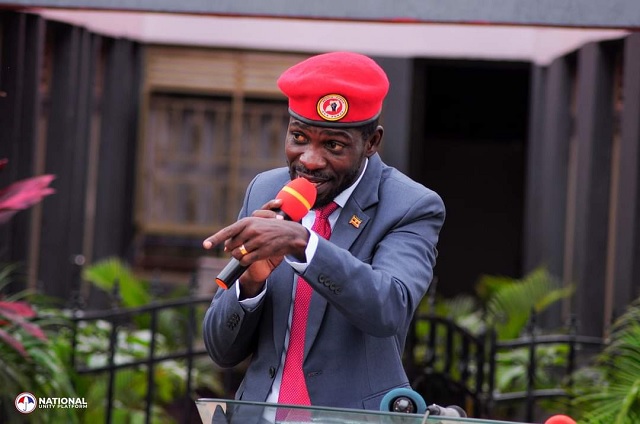
COMMENT | OBED K KATUREEBE | In one of our animated discussions in a journalists’ chat group, a colleague, Derrick Wandera of the Daily Monitor, questioned why the National Resistance Movement (NRM), and particularly the security agencies, are placing so much emphasis on what he described as “ghetto political slogans” used by NUP presidential candidate Robert Kyagulanyi.
According to Wandera, slogans such as Tubayisemu Egaali (a ghetto expression implying the subduing of those one disagrees with through force), Kuzoganya (unsettling one’s enemies), and Mukakuume mukabanje (protect the vote and demand answers if one is dissatisfied with the results) are harmless political statements. In his view, the government, especially security agencies, is panicking by reading too much into these rallying calls, which, he argues, should not be interpreted beyond their face value.
He is wrong.
To security agencies, these are not innocent slogans. They are deliberately coded statements designed to incite sections of the population to take the law into their own hands during an election season. To understand why security is concerned about such language, one does not need to look far; our region offers painful lessons on what political incitement can do in a highly charged political environment.
During the 1994 genocide in Rwanda, perpetrators began by coining coded language to incite ethnic Hutus against Tutsis. Words such as Inyenzi (cockroaches) were used to dehumanise Tutsis and justify violence against them. This systematic use of language was a powerful tool of incitement. We all know what people do when cockroaches invade their homes: they exterminate them. The result of this dehumanisation was the genocide against the Tutsi, which claimed close to one million lives in just three months.
Similarly, during Kenya’s 2007–2008 post-election violence, explicit and coded language was widely used to incite ethnic hatred and violence. Politicians and their supporters employed terms such as Madoadoa (blemishes or spots), a coded reference in the Rift Valley to “non-host” communities, particularly Kikuyu and Kisii, who were accused of supporting the wrong political choices. The implication was that these “spots” needed to be removed.
Other phrases included “beasts from the west”, reportedly used by some Kikuyu politicians to describe Luo supporters of opposition leader Raila Odinga, while some Kalenjin supporters retaliated by referring to the Kikuyu as “vermin.” The phrase “clear the weeds from the grass” echoed Rwanda’s genocidal rhetoric and was a coded call for the physical removal of non-Kalenjin communities from the Rift Valley. Another expression, “the mongoose has stolen the chickens,” alluded to historical land grievances, portraying the Kikuyu as land grabbers.
The consequences were devastating. Tribal clashes, particularly between the Luo and the Kikuyu, displaced thousands of people. Property, infrastructure, and industries were destroyed; about 1,000 people were killed; and many more were displaced. For the first time, Uganda received hundreds of Kenyan refugees fleeing the violence.
Therefore, when security agencies act cautiously in response to inciting statements and innuendoes, they should not be dismissed as panicky or overzealous. Instead, they should be commended for restraining desperate political actors who seek votes by any means, including those that endanger communities and national stability.
The use of coded language and slogans by the leadership of the National Unity Platform (NUP) to incite citizens must be condemned by all. While campaigning in Luweero District, NUP presidential candidate Robert Kyagulanyi crossed a dangerous line when he told a cheering crowd that if one is a true son of Buganda and votes for President Museveni, then “something is wrong with your head.” Such rhetoric is deeply inciting, and his team and advisers should restrain him. Ironically, before entering the often reckless world of politics, he once sang, “Akalulu tekatwawula” (elections should never divide us).
For Christians, the Bible offers a sobering warning about the power of words. In James 3:5–6, the apostle uses vivid imagery, comparing the tongue to a small spark capable of setting an entire forest ablaze. He illustrates how reckless speech can cause immense destruction, corrupting individuals and communities alike.
The scripture reads: “So also the tongue is a small member, yet it boasts of great things. How great a forest is set ablaze by such a small fire! And the tongue is a fire, a world of unrighteousness. The tongue is set among our members, staining the whole body, setting the course of life on fire, and itself set on fire by hell.” These biblical words highlight the disproportionate power of the tongue to cause immense destruction, comparing its small size to the massive scale of a blaze that can consume an entire forest or wild bush.”
***
 The writer is the Acting Executive Director, Uganda Media Centre.