The Independent Uganda: You get the Truth we Pay the Price


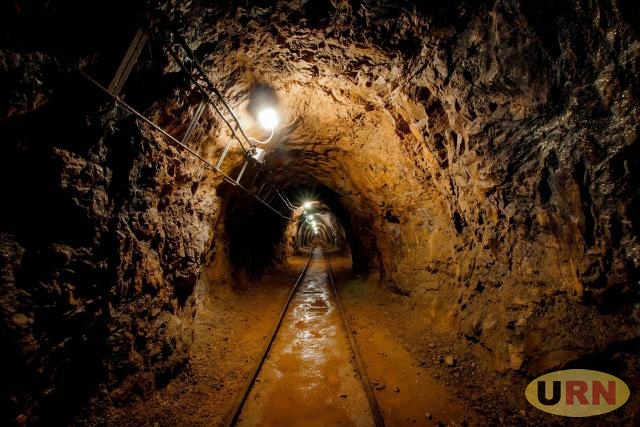
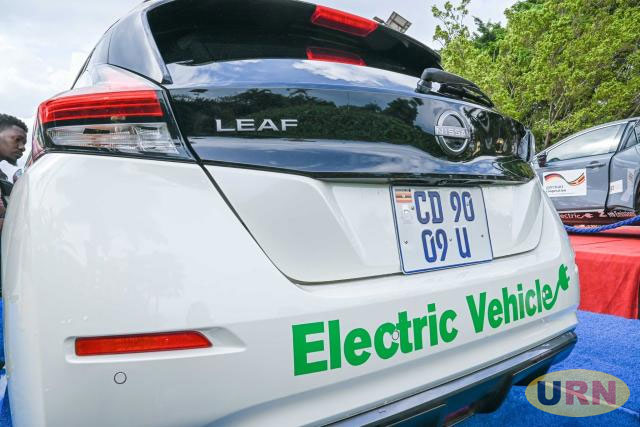
An electric vehicle requires roughly four times more copper than a conventional internal-combustion engine car because of their heavy reliance on electric wiring, motors and batteries.
SPECIAL FEATURE | DERRICK LAMAR WATIMA | In the 20th century, oil shaped global power — it made and unmade nations. Nations sitting on vast petroleum reserves — such as Saudi Arabia, Kuwait and Venezuela — saw their fortunes transformed almost overnight.
That era is not over. But a new one is beginning.
Copper, cobalt, coltan, lithium and rare earth minerals are rapidly becoming the strategic commodities of the 21st century — the backbone of electric mobility, renewable energy systems, AI infrastructure and the vast electricity grids required to power them all. Global demand for these metals could triple by 2030. The future will quite literally be built from them.
In this emerging landscape, the countries that control these minerals could become the new ‘’electro-states’’ — wielding the kind of strategic leverage that oil exporters held for the past century.
For Uganda and the wider Great Lakes region, the question is therefore a simple but profound one: will we help build the future — or merely supply the raw materials for others to build it?
The Global Scramble for Energy Transition Metals
Copper has been indispensable to human civilization for over ten thousand years. But nothing in its long history compares to what is being asked of it now.
According to global industry projections, the world consumed roughly 28.6 million tonnes of refined copper in 2024, and demand is expected to keep rising sharply through the next decade.
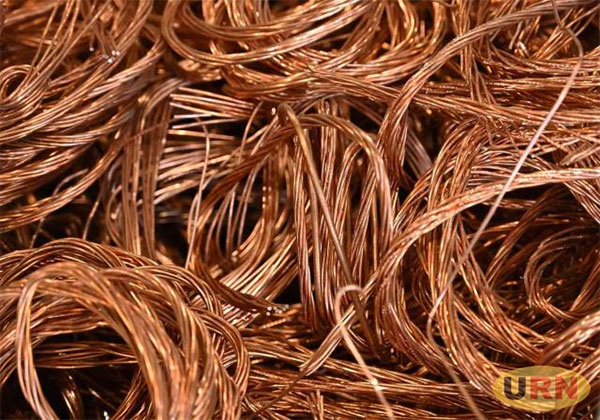
An electric vehicle, for example, requires roughly four times more copper than a conventional internal-combustion engine car because of their heavy reliance on electric wiring, motors and batteries. And because the solar farms, wind turbines and AI data centres now being built across the planet are among the most metal-intensive infrastructure projects in history.
As a result, global demand for copper is projected to rise sharply over the next two decades, with analysts warning that the world may face significant supply shortages if new mines are not developed quickly enough. Some projections suggest a global supply deficit of as much as 30% by 2035
In other words, critical minerals are rapidly becoming what oil was in the 20th century: a strategic commodity underpinning global power, industry and geopolitics.
The US, EU and allies are scrambling to reduce their dependence on Chinese processing capacity, which dominates large parts of the global refining industry. Beijing, meanwhile, is tightening its grip. Mineral-rich governments across Africa and Latin America are finding themselves courted — sometimes pressured — by rival economic blocs desperate to lock in long-term access and supply.
This is no longer just a commodities story. It is a story about power — who has it, and who will have it in the decades ahead.
The Rise of the “Electro-States”
The minerals powering the new economy are not evenly distributed. Chile and Peru dominate copper. South America’s lithium triangle — Chile, Argentina, Bolivia — holds the majority of the world’s battery-grade lithium. The Democratic Republic of Congo produces most of the world’s cobalt. Indonesia, after boldly banning raw nickel exports and forcing foreign companies to invest in processing locally, has transformed itself into a strategic industrial power almost overnight
Taken together, these countries are beginning to resemble a new class of resource powers—what some analysts have started calling “electro-states.” the 21st century’s answer to Saudi Arabia and Kuwait.
But there is a crucial difference. The petro-states of the last century were mostly somehow wealthy or quickly became so through sheer volume of revenues. Many of today’s mineral powers are developing economies — across Africa, Latin America and Asia — that have historically watched others extract wealth from their soil without seeing it return.
This shift could quietly alter the balance of economic opportunity in the coming decades.
That pattern is not inevitable. It is a choice. And it is precisely the choice now facing Uganda.
Uganda’s Hidden Opportunity
High in the foothills of the Rwenzori Mountains near Uganda’s border with Democratic Republic of the Congo lie the shafts of Kilembe Mines—once one of East Africa’s most important copper operations. At its peak, the mine supplied copper across the region and supported an entire industrial township in Kasese. Government estimates suggest the deposit still contains millions of tonnes of copper-bearing ore, alongside cobalt.
For years the mine has remained largely dormant, but interest in reviving it has returned as global demand for copper rises. In recent years the government of Uganda has courted several investors and mining firms with experience in large scale operations including Tibet Hima Ltd, CATL, and as of 2026 SARAI Group to redevelop the site.
Kilembe, however, is only part of a wider mineral story. Geological surveys indicate deposits of critical minerals in areas such as Buyende, Kigezi and Bugisu, alongside rare earth elements in eastern Uganda
Recognizing this potential, the government of Uganda has begun placing greater strategic emphasis on mineral development. Recent reforms—including the passage of the Mining Act 2022 and the creation of the Uganda National Mining Company—are designed to modernize the sector, strengthen oversight and attract serious investors. Within the country’s broader 10-Fold Growth Strategy, minerals have been identified as a strategic pillar for industrialization and export diversification. In fact Uganda has already issued dozens of exploration licences in recent years as companies search rare earth elements and other critical minerals across the country.
The ambition is clear: But geology alone does not determine prosperity.
Governance that allows for building of processing capacity and downstream industries that capture more value within the country is what normally bring real transformation
History offers many warnings.
The Resource Curse, will history repeat itself in Uganda?
Natural resources can generate enormous wealth. They can also destroy countries.
Economists call it the “resource curse” some even the Dutch Disease — the paradox in which nations blessed with vast mineral or energy wealth end up poorer, more unequal and less stable than their resource-poor neighbours. The mechanism is well understood: commodity revenues flood government coffers, inflate the currency, make other industries uncompetitive, and create a class of politicians whose primary interest is controlling the resource rents rather than building a productive economy.
There are many cautionary examples.
The Democratic Republic of Congo is the most painful illustration and the most instructive, given that it shares a border with Uganda. It holds some of the world’s largest deposits of cobalt, coltan and copper. Its minerals are in virtually every smartphone, electric vehicle and laptop on the planet. Yet the Congolese state remains among the poorest and most fragile on earth. Decades of extraction have enriched foreign companies, armed militias and a succession of corrupt governments while the average Congolese citizen has seen almost none of it.
Nigeria offers another warning. At independence, Nigeria had a diversified agricultural economy — groundnuts, cocoa, palm oil. Then oil came. Within a generation, those industries had collapsed, hollowed out by petro-revenues that made everything else uncompetitive. Today, despite decades of oil wealth, Nigeria struggles with chronic power shortages, deindustrialisation and over 130 million people living in poverty.
Norway chose a different path. When North Sea oil arrived in the 1970s, Oslo resisted the temptation to spend the windfall immediately. Instead it built a sovereign wealth fund — now the largest in the world at $ 2.2 Trillion — ring-fenced revenues from the budget, and used oil income to invest in education, infrastructure and future generations. Norway did not get lucky. It made deliberate, disciplined institutional choices.
The difference between these stories is not geology. It is governance.
For Uganda, the lesson is uncomfortable but necessary: minerals in the ground are neither a blessing nor a curse. They are a test.
Beyond Extraction: The Real Opportunity
Here is the truth that no mining contract will tell you: the money is never in the rock.
It is in what you do with the rock after you pull it from the ground. President Museveni has made this argument more forcefully and more repeatedly — than perhaps any other African leader. In speech after speech no matter the audience or place, he returns to the same point: that exporting raw materials while importing finished goods is simply a more polite form of economic subjugation. It is a haemorrhage of wealth, slow and steady, that no amount of foreign investment can compensate for if the value addition happens elsewhere.
He has already begun to back that argument with policy. Uganda’s ban on the export of raw iron ore was a direct expression of that philosophy — and it is already producing results. Companies such as Tera International and Devki Mega Steel are now establishing processing facilities in Ntungamo, and Tororo respectively, exactly the kind of downstream industrial activity that transforms a mining sector into a manufacturing base.
The logic applies with equal force to copper. A tonne of raw ore exported to China is only about $ 1000 a fraction of what returns as finished copper wire, electrical components or battery materials. That margin — captured in processing, refining and manufacturing — is where industrialisation actually happens. It is where jobs are created that do not disappear when a seam runs dry.
Uganda and its neighbours have a choice. We can repeat the extractive model that has defined Africa’s relationship with global commodity markets for over a century digging, shipping, watching others build. Or we can demand more.
That means investing seriously in processing capacity. It means using mineral revenues to train engineers, not just to fund consumption budgets. It means the East African Community — a market of over 300 million people — acting as a coordinated bloc rather than a collection of competing raw material suppliers undercutting each other for foreign investment.
None of this is easy. But it is not unprecedented. Indonesia did it with nickel. Botswana negotiated it with diamonds. The question is whether our institutions have the discipline and the vision to follow.
There is a dimension to this story that rarely gets discussed — and it should make every policymaker in Kampala uncomfortable.
The mineral boom may not last forever.
Oil and gas are consumed continuously. Every car journey, every power station, every factory burns through reserves that must constantly be replaced. Critical minerals do not work that way.
A wind turbine, once built, does not need a fresh supply of copper every year. A solar panel, once installed, does not consume cobalt the way an engine consumes fuel.
The demand surge being driven by the global energy transition is largely a construction boom — a one-time build-out of new infrastructure across the planet. But layered on top of it is something even more immediate: the AI revolution. The hyperscale data centres now rising across the United States, Europe, China, the Gulf and India are among the most copper-intensive structures ever built — each 100-megawatt AI campus alone absorbs several thousand tonnes of copper, before even accounting for the grid infrastructure needed to power it. Copper demand from data centres is forecast to more than double — from 1.1 million metric tonnes in 2025 to 2.5 million by 2040. In the United States alone, nearly $1.5 trillion has recently been announced in data centre investment.
This is not a distant trend. It is happening right now — and it is hungry for exactly the metals that sit beneath Uganda’s soil.
Once that infrastructure is in place — once the grids are wired, the turbines are spinning, the electric fleets are on the road crazy new constrictions stops or at drastically reduced — demand for many of these minerals will plateau. Some analysts believe global demand for certain critical metals could peak within two to three decades.
That is not a very long time.
For Uganda, this means the window to convert mineral wealth into lasting industrial capacity is real but finite. The countries that move decisively in the next ten to fifteen years — building processing industries, training skilled workforces, locking in strategic partnerships — will capture the value. Those that delay, argue, or simply continue issuing exploration licences without a broader industrial vision will watch the opportunity close.
We have been here before. When oil was discovered in the Albertine region, there was a decade of debate about pipelines, refinery capacity and revenue management frameworks — while the clock ticked. The minerals question deserves more urgency, not less.
Uganda’s Choice
I have stood at the entrance of Kilembe Mines. The shafts are still quiet, the township that once hummed around them half-forgotten. But the copper is still there, hundreds of metres below the Rwenzori foothills, patient and indifferent to our debates about what to do with it.
That patience will not last indefinitely.
The world is reorganising itself around a new set of strategic materials, and Uganda sits on some of them. That is not rhetoric. That is geology. The question — the only question that matters — is what kind of country we choose to be when the world comes knocking.
We have seen what happens when African nations open their doors without conditions. The minerals leave. The profits leave. What remains are the holes in the ground, a handful of jobs, and the bitter arithmetic of a deal signed in a hurry by people more interested in the commission than the country.
We have also seen the alternative. It requires patience, discipline and leaders willing to resist the seductive rush of quick revenues. It requires institutions that outlast any single government. It requires the courage to say to a foreign investor: you may mine here, but you will also process here, train here, build here.
Norway did it with oil. Botswana did it with diamonds. Indonesia is doing it right now with nickel. None of them had better geology than we do. They simply had better decisions.
Uganda’s mineral wealth is not our destiny. It is our raw material — in every sense. What we build from it, or whether we build anything at all, will say everything about who we are as a nation in the 21st century.
The Rwenzori copper is waiting. The question is whether we are ready.
*****
Watima Derrick Lamar is a Senior Researcher and Constituency Coordinator at OWC with interests in political economy, Technology and strategic resources.