The Independent Uganda: You get the Truth we Pay the Price



Regional watchdog, aviation experts push enforcement of 2025 consumer protection rules as delays and cancellations surge
NEWS ANALYSIS | JULIUS BUSINGE | When Moses collected his luggage at an East African airport, he expected a routine arrival. Instead, he found opened gadget packages in his side bag—items he said he had not purchased. He suspects they were placed there after someone tampered with another passenger’s luggage.
“It appeared someone had opened a passenger’s bag, taken the gadgets, and then slipped the empty boxes into my bag,” Moses said.
Anslem, another frequent traveller, missed a connecting flight in Lusaka in February after his flight from Entebbe was delayed by an hour without explanation. “It was so irritating,” he told The Independent, after discovering his onward flight to Livingstone had already departed. He said the airline offered no practical solution.
Incidents like these are not uncommon. Across the Common Market for Eastern and Southern Africa (COMESA), travellers increasingly report lost luggage, delays, and inadequate grievance-handling procedures.
In Uganda, the national carrier Uganda Airlines has also faced operational challenges in recent months, including schedule disruptions linked to fleet and maintenance constraints.
Across COMESA, several airlines—including Kenya Airways, Ethiopian Airlines, Zambia Airways, and others—have faced scrutiny from regulators and travellers over flight delays, cancellations, and poor customer service.
One widely cited case involved Kenya Airways, where passengers on a flight from Entebbe to Nairobi faced delays exceeding six hours. The disruption caused travellers to miss onward flights to Lusaka and Livingstone in Zambia.
Many passengers reported waiting over seven hours in Nairobi before being rebooked, without receiving meals or accommodation. Some were forced to organise alternative transport at their own expense.
The incident drew the attention of the COMESA Competition and Consumer Commission (CCCC), which recently launched an investigation into potential violations of regional consumer protection rules.
Similarly, Zambia Airways was reported to have delayed a domestic flight between Livingstone and Lusaka for over six hours. Regulators noted that stranded passengers were neither rebooked promptly nor provided with meals or accommodations, forcing them to bear the financial and logistical burden themselves.
In response, the regional competition watchdog imposed penalties for unfair treatment, citing violations of aviation sector standards and passenger care.
Even Ethiopian Airlines, Africa’s largest carrier by passenger numbers and network reach, has occasionally faced operational pressures. Analysts cite aircraft maintenance backlogs, global spare parts shortages, and operational constraints as causes of schedule disruptions.
These examples highlight structural challenges in regional aviation, where airlines are expanding routes and passenger volumes faster than operational systems can reliably handle.
The effectiveness of communication, compensation, and re-routing becomes the true measure of service quality when disruptions occur.
Air travel across COMESA has become an essential component of the region’s economic and social integration. COMESA, which includes 21 member states, has a combined population exceeding 640 million and a GDP of approximately US$1 trillion. Intra-COMESA trade surpasses US$20 billion annually, driven by business, manufacturing supply chains, tourism, education, and diplomatic engagement.
As trade, tourism, education, and professional engagements expand, air transport facilitates travel between cities such as Nairobi, Addis Ababa, Lusaka, Kampala, and Dar es Salaam.
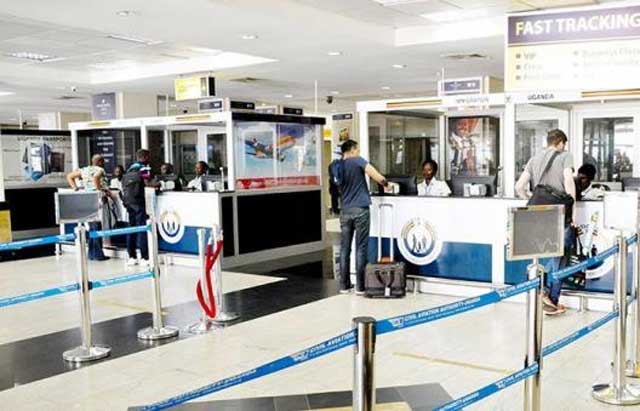
Reliable air services are critical for business executives, traders, government officials, students, and families, and also serve as gateways for regional travellers connecting to international destinations.
In October 2025, the CCCC issued a formal guidance letter to airlines operating in the region, following a surge in passenger complaints related to flight disruptions, baggage handling, and poor customer support.
The advisory reinforced obligations under the COMESA Competition and Consumer Protection Regulations (CCCPR), requiring airlines to provide timely information, care, and redress to affected passengers.
Willard Mwemba, the chief executive officer, stressed in an interview with The Independent: “Consumers have the right to redress, and airlines must uphold it. Failure to respond to passenger complaints may amount to denying consumers their rights under our regulations.”
Under the CCCPR, airlines are prohibited from engaging in unfair, misleading, or unconscionable practices that disadvantage consumers. Mwemba explained that failure to address complaints regarding delays, cancellations, or unplanned returns could constitute breaches under Regulation 52(e) and unconscionable conduct under Regulation 54 if the airline exploits its bargaining position.
“Failure to apply these provisions consistently may constitute unfair and deceptive practices, which the Commission takes seriously,” Mwemba added. He noted that some Uganda Airlines routes, including Entebbe–London, Entebbe–Dubai, and Entebbe–Mumbai, may fall outside the direct scope of the CCCPR, which applies to conduct affecting two or more member states.
But he said passengers are legally entitled to compensation unless delays or cancellations are caused by exceptional circumstances such as force majeure. “Internal operational issues are not considered exceptional, and failure to compensate passengers in such cases can be unconscionable under Regulation 54,” Mwemba said. International law under the Montreal Convention also governs liability for delays, requiring airlines to compensate for damages unless they prove all reasonable measures were taken to avoid harm.
Passenger rights outlook
Corporate lawyers Jackline Natukunda, managing partner at Magna Advocates, and legal associate Nicholas Murere, emphasised that flight delays, cancellations, and baggage issues carry legal consequences.
“Flight delays and cancellations… are legally cognisable events with real human and economic consequences,” the duo told a local daily newspaper in Uganda.
“Uganda Airlines… bears a heightened responsibility to comply with international and regional standards,” they added, noting that passengers have legal remedies and that enforcement of these rights is critical to restoring public confidence. “Passengers are entitled to information, care and… compensation,” the learned friends said.
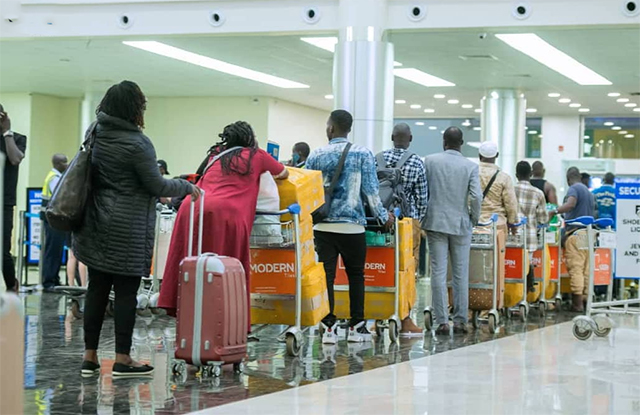
Data from CCCC, contained in the guidance letter to the airlines, revealed widespread challenges. It refers to a survey which collected 350 complaints from passengers across COMESA member states, revealing that flight delays accounted for 31.71 percent of complaints, rescheduled flights 15.43 percent, damaged baggage 11.71 percent, delayed baggage 10.57 percent, cancelled flights 9.43 percent, lost luggage and unfair booking conditions 8 percent, and overbooked flights 5.14 percent.
Among passengers experiencing delays or cancellations, 71.63 percent reported receiving no form of redress, while only 39.6 percent received assistance such as refunds, meals, re-routing, or accommodation. For baggage complaints, 27.66 percent of passengers were not given information on claims or compensation procedures. These findings indicate systemic deficiencies in airline adherence to consumer protection obligations.
The guidance letter sets clear expectations for airline conduct. For delays of 2–4 hours, airlines must provide updates every 45 minutes, refreshments, communication facilities, and the right to reschedule flights.
Delays of four hours or more require meals, hotel accommodation, and transport to lodging. If a delay exceeds six hours, passengers may claim a full ticket reimbursement or re-routing.
Cancellation policies are similarly robust, including explanations for cancellations, the right to alternative flights, compensation, and care provisions. Overbooked flights and baggage mishandling are also regulated, with compensation amounts tied to flight duration under the Yamoussoukro Decision and liability limits under the Montreal Convention.
The CCCC has powers to investigate complaints affecting two or more member states and to impose fines of up to 10 percent of annual turnover, along with corrective measures. Mwemba emphasized: “Repeated failure to address consumer complaints undermines regional aviation standards and consumer trust. Airlines must integrate these obligations into daily operations.”
Fleet, governance challenges
Uganda Airlines and other regional carriers face operational constraints, including small fleets and limited technical capacity. Aviation experts argue that professional governance, disciplined fleet planning, and data-driven decisions are essential to sustain reliability and comply with consumer protection rules.
Ugandan based Flight Captain Mike Mukula and Captain Francis Babu highlight the need for commercially managed, professionally led airlines, with attention to fleet standardization, maintenance, and leadership with aviation experience.
With rising trade, tourism, conferences, and professional travel within COMESA, the pressure on airlines to deliver reliable, consumer-focused service is intensifying. Failing to enforce the aviation rules risks financial, reputational, and operational consequences for airlines while inconveniencing millions of regional passengers.
Looking ahead
As Airlines expand operations within the region and beyond, CCCC and aviation experts insist on strict adherence to consumer protection rules.
Mwemba concluded: “Ultimately, airlines must recognize that consumers have rights, and redress mechanisms are not optional—they are central to a functioning, fair aviation market in COMESA.”
The rising complaints, survey evidence, and expert commentary underscore a pressing need for robust enforcement, professional airline governance, and systematic operational improvements to restore passenger confidence and ensure sustainable growth of the regional aviation sector.