The Independent Uganda: You get the Truth we Pay the Price


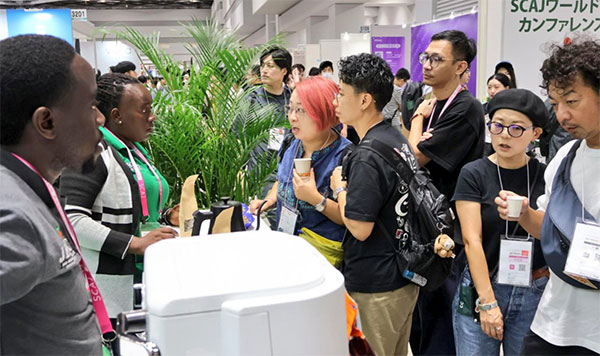
COMMENT | KENNETH BARIGYE | Uganda’s coffee has found its way to Tokyo — not just in cups, but in diplomacy. At the 2025 Speciality Coffee Association of Japan (SCAJ) Expo held in September, Uganda’s coordinated presence signalled a confident new approach to market expansion and global branding.
Supported by the Ugandan Embassy in Tokyo and the Ministry of Agriculture, Uganda hosted a unified national booth featuring Mountain Harvest, Bugisu Cooperative Union, JKCC, Gorilla Highlands Coffee, and Crystal Coffee. The participation of Ambassador H.E. Tophace Kaahwa and Assistant Commissioner Gordon Katwirenabo added diplomatic weight and credibility. This partnership between government and private exporters offered a model of how “coffee diplomacy” can open markets that were once hard to reach.
A New Style of Representation
The Ugandan booth was more than a showcase; it was a story of origin and identity. Designed around the country’s highland landscapes and sustainable coffee heritage, it invited visitors to experience Uganda’s coffee as distinctive and traceable. Embassy and ministry coordination reduced costs for producers and created a national image of reliability. Japanese importers repeatedly noted that government involvement projected seriousness and stability—qualities that turn introductions into long-term partnerships.
A seminar on sustainability, co-led by Mountain Harvest, Katwirenabo and Kemigisha Charlotte, the spokesperson of the Ministry of Agriculture, drew roasters, café owners, and investors interested in Uganda’s climate-smart farming practices. The session highlighted soil regeneration, shade systems, and farmer training while exploring possible Japanese partnerships in certification, technology, and value addition. The joint presentation demonstrated how Uganda’s private and public sectors can speak with one voice on sustainability.
During the four-day event, Uganda’s booth hosted dozens of business meetings. Japanese roasters expressed strong interest in Arabicas from Bugisu, Rwenzori, and Kigezi, while mid-elevation Robustas attracted attention for espresso blends. Several buyers requested sample shipments, marking tangible progress toward trade relationships. Japanese manufacturers also explored distribution opportunities for processing equipment, particularly moisture and water activity meters—an encouraging sign for Uganda’s growing coffee technology ecosystem.
Why Japan Matters
Japan is the world’s third-largest coffee market, valued at about USD 35 billion and growing at over 4 per cent annually. The roasted coffee segment alone generates more than USD 2.2 billion, with Arabica as the dominant variety and Robusta as the fastest-growing. These trends make Japan an ideal destination for Uganda’s Highland Arabicas and fine Robustas.
Globally, supply from Brazil and Colombia remains volatile due to climate disruptions, and the International Coffee Organization expects tightness to persist for several years. Uganda, whose production has doubled to over eight million bags annually, is well placed to meet emerging demand. With stability, quality, and sustainability credentials, Uganda can build a long-term foothold in Asia before new competitors catch up.
Uganda’s advantage lies in diversity. Its Arabicas from Mt. Elgon and Rwenzori are gaining recognition in global competitions, fetching up to USD 20 per kilo. Meanwhile, improved washed Robustas are attracting speciality buyers seeking bold flavors and climate resilience. The ability to supply both premium Arabica and fine Robusta gives Uganda flexibility across price and quality segments.
The Tokyo experience revealed how collaboration multiplies impact. Shared infrastructure under a national booth cut costs for exporters. Government presence built trust with buyers who value regulatory backing and transparency. Unified branding around “The Pearl of Africa” helped position Uganda as a serious origin rather than a scattered group of traders. The lesson is clear: when the public and private sectors act together, Uganda competes better on the global stage.
The Way Forward
To build on this momentum, Uganda should tailor its marketing to Japanese tastes by offering consistent blends, digital traceability, and certifications such as organic, fairtrade, and Rainforest Alliance. Future expos—in Tokyo, Seoul, Shanghai, and Melbourne—should feature coordinated embassy-led delegations to sustain visibility and credibility.
At home, strengthening producer capacity, post-harvest quality, and climate-resilient practices will be vital. Uganda’s coffee narrative must continue emphasizing sustainability, traceability, and farmer welfare—messages that resonate with premium buyers worldwide.
Uganda’s performance at SCAJ Tokyo shows that coffee is more than an export—it is a diplomatic tool and a symbol of national pride. By aligning producers, government, and embassies under a shared strategy, Uganda can expand its global footprint, attract investment, and secure better prices for farmers.
If this spirit of unity and professionalism continues, Ugandan coffee will not just be tasted—it will be trusted, valued, and remembered in every cup brewed across Asia.
*****
 Kenneth Barigye is a commercial coffee farmer and Managing Director of Mountain Harvest, a specialty coffee exporter promoting sustainable and regenerative farming. He also serves on the boards of the African Fine Coffees Association, Uganda Coffee Federation and the National Coffee Research Institute