The Independent Uganda: You get the Truth we Pay the Price


From Abstract Matrices to Nagongera: How a Ugandan scholar’s ‘Neocomplexity’ is building real-world bridges
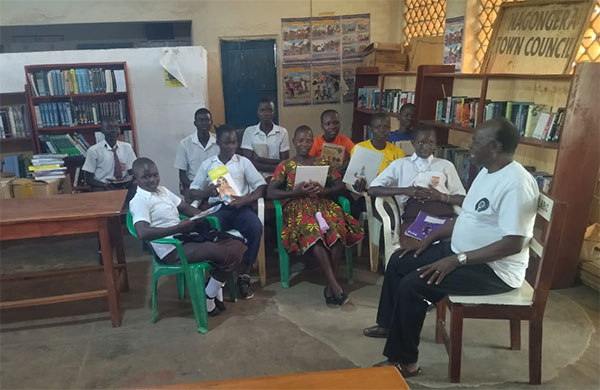
SPECIAL FEATURE | THE INDEPENDENT | On an ordinary day in Nagongera, Tororo District, a gathering of local residents, elders, and visiting researchers exchange ideas, their voices harmonizing over the blueprints of a new community project. To a casual observer, it is a standard grassroots development meeting. But to those familiar with contemporary African philosophy, this gathering represents something far more profound: it is the physical manifestation of an indigenous philosophical paradigm designed to rescue 21st-century education from chaos.
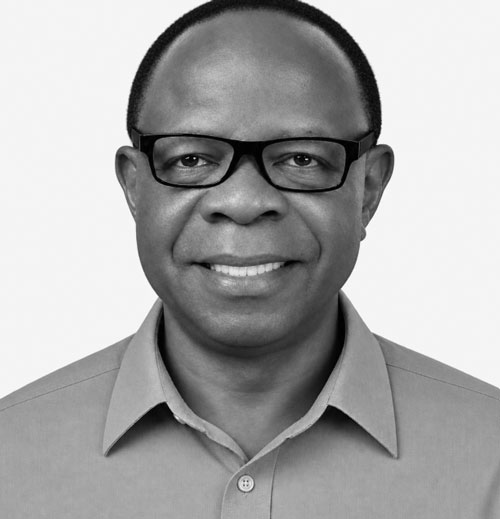
At the centre of this initiative is Solomon Ochwo-Oburu, a veteran scholar from the Department of Education at Busitema University. The new paradigm shift was conceived at Busitema University, born at Kampala University but clothed in Nagongera Library.
For decades, Ochwo-Oburu has quietly challenged the Eurocentric foundations of modern pedagogy and the education thinking system in general. Last year, his life’s work in higher education and public service received the ultimate national validation when President Yoweri Museveni awarded him the National Independence Diamond Jubilee Medal. This was followed by another award, a Silver Medal in February 2026, when the cultural head of the Jopadhola, His Royal Highness Moses Stephen Owor, recognised the scholar’s efforts for championing education in Padhola Kingdom
Yet, for Ochwo-Oburu, the true test of any philosophy lies not in medals or ivory-tower accolades, but on the ground. Today, his theoretical framework—known as Neocomplexity Philosophy (NCP)—is leaping off the academic page and into the communities of Eastern Uganda through a series of ambitious digital preservation projects and the establishment of a community library in Nagongera.
The epistemology of Neocomplexity
To understand the library in Nagongera, one must first unpack the epistemology Ochwo-Oburu introduced to the academic world. In his foundational 2020 essay published by Politeknik International, titled “Neocomplexity Philosophy: A Paradigm Shift in Theories of Education for the Chaotic 21st Century?”, he argued that traditional Western complexity theories are fundamentally incomplete.
While Western thinkers use complexity to analyze physical, mathematical, or mechanical systems, Ochwo-Oburu expanded the scope to human society. He posited that reality is an inseparable, stratified matrix of socio-scientific, socio-cultural, and socio-political systems. Crucially, his epistemology redefines what it means to “know.” In Neocomplexity Philosophy, knowledge is not merely passive data or intellectual prestige; it is a deeply held belief that functions as a tool to fulfil a human and cosmic mission. Ochwo-Oburu argues that every learner is born with a “dual toolkit”.
First is the Visible Toolkit: our physical senses—eyes, ears, hands, and tongue—used to observe the material world and to perform divinum officium (Latin meaning Divine mission).
Second, the Invisible Toolkit: Our internal attitudes, aspirations, cultural values, and communal intentions, interests, joy, and ambitions integrate with visible toolkits for service. He describes the earth as a stadium of work, not a picnic parlor.
In his 2020 paper, Ochwo-Oburu issued a stark warning to modern institutions: “Network or die.” He argued that the fragmented, siloed mindsets inherited from 19th and 20th-century ideologies—like rigid neoliberalism or unyielding Marxism—are entirely unequipped to handle the chaotic, interconnected crises of the modern era. Survival, he insists, requires a unified matrix where indigenous wisdom and modern science speak to one another.
Theory Meets Praxis in Nagongera
For years, Ochwo-Oburu’s texts and poetry were circulated in limited print editions within East Africa, often published independently through the Association of Independent Educational Thinkers and Authors (ASSIETA). However, a recent wave of international interest is bringing his work to a global audience. His poetry book “I Feel African in Every Vein” is being used in the United States and West Africa. In Indian Universities, it is rubbing shoulders with Wole Soyinka’s literature and Chimamanda Ngozi Adichie’s novels for the competence-based curriculum in literature.
Academic collaborations, including Fulbright research initiatives, have begun a drive to digitally preserve his extensive physical archives. This includes not only his philosophical treatises but also his deep cultural research into the history and oral traditions of the Jopadhola cultural institution (Padhola).
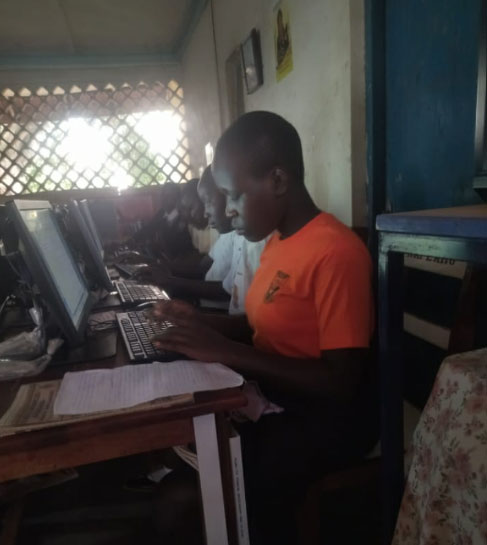
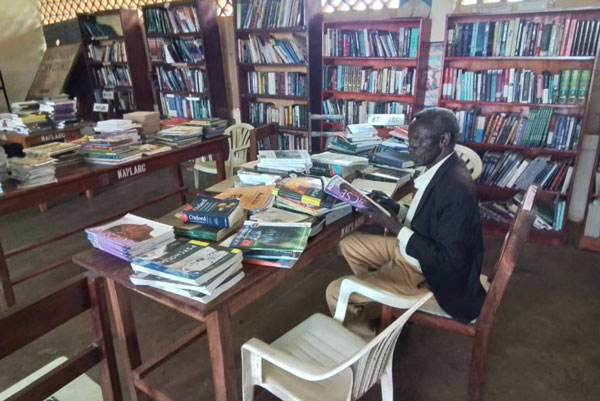
But the crown jewel of this philosophical praxis is the Nagongera Community Library.
In a country where access to quality educational infrastructure remains heavily skewed toward urban centers, the library is designed as a direct answer to NCP’s core principle of universal oneness and equity. By establishing a physical repository of knowledge in a rural sub-county, the project seeks to democratize access to the “toolkits” Ochwo-Oburu wrote about in 2020.
The library is envisioned not just as a room full of books, but as a dynamic cultural hub. Here, modern digital tools will coexist with local oral histories, bridging the gap between what Ochwo-Oburu calls the corporeal (physical) and the intelligible (intellectual) realms.
A Blueprint for the Future
As Uganda continues to debate curriculum reforms and the decolonization of its education system, Ochwo-Oburu’s Neocomplexity Philosophy offers a timely blueprint.
It suggests that the answer to Uganda’s educational challenges does not lie in copying Western models, nor in retreating entirely into the past. Instead, it lies in recognizing the complex, interconnected matrix of the modern world and equipping young Ugandans with both the scientific and cultural tools to navigate it.
In Nagongera, as the dust settles on the library’s future site, the abstract equations of Neocomplexity Philosophy feel remarkably human. Solomon Ochwo-Oburu has proven that philosophy in Uganda is not a dead language spoken only in lecture halls—it is a living, breathing network building the foundations of rural empowerment.