The Independent Uganda: You get the Truth we Pay the Price



Former Karamoja minister and outgoing Bududa MP jailed four years for diverting relief aid
NEWS ANALYSIS | THE INDEPENDENT | The story of Agnes Nandutu is in many ways a study in contrasts, from hardship to prominence, from the newsroom to Parliament, and ultimately from public trust to criminal conviction.
Long before she entered the political arena, Nandutu’s life was defined by struggle. Born into a fractured family in the hilly terrain of Bududa District in eastern Uganda, she has often spoken of a childhood marked by instability, moving between grandparents and stepmothers after her parents separated. Poverty was a constant companion.
“I had a troubled childhood,” she once said in a television interview. “We would first dig at home before going to school.”
Her early education reflected those hardships. She recalled putting on shoes for the first time in Primary Seven, not as a daily necessity but for a school drama competition in Mbale, now a city. Despite these challenges, she excelled academically at Bumwali Primary School, earning five aggregates, a testament, she would later say, to natural ability in the absence of privilege.
But the pressures of poverty soon took their toll. By the age of 18, she had dropped out of school, her ambitions deferred by circumstance. Determined to find a way out, she briefly sought opportunities beyond Uganda’s borders, travelling with her mother to Nairobi in search of work.
The experience, however, proved equally harsh. She returned home and took up humble jobs, first as a cook in a local restaurant, then as a barmaid, in an effort to survive.
Her breakthrough came in 2008, when she joined NTV Uganda. There, she became a household name, known for her sharp delivery and distinctive presence on programmes such as the satirical Point Blank segment and the widely followed People’s Parliament.
Leveraging her visibility and communication skills, she contested for the Bududa Woman Member of Parliament seat in 2021 as an independent candidate and won.
President Yoweri Museveni would later appoint her State Minister for Karamoja Affairs, a move that appeared to cement her standing within government and placed her at the centre of efforts to stabilise and uplift one of Uganda’s most vulnerable regions.
Four-year prison sentence
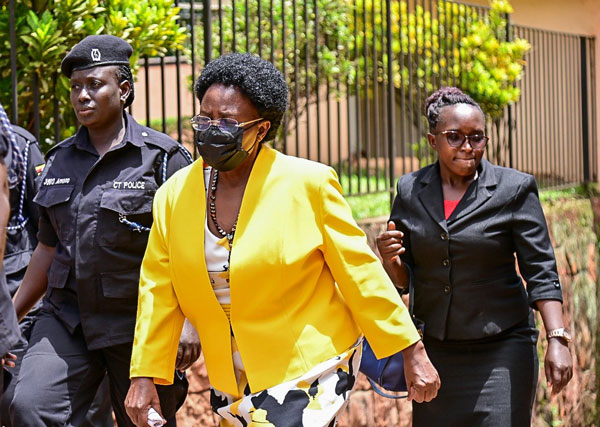
But that ascent has now been overshadowed by a dramatic fall. On April 10, Uganda’s Anti-Corruption Court sentenced her to four years in prison over her role in the diversion of relief materials meant for vulnerable communities in the Karamoja sub-region. She also lost her parliamentary seat in the recent elections to her rival, Agnes Shiwuma of the National Resistance Movement.
In a ruling delivered by Jane Okuo Kajuga, the court said Nandutu had abused positions of impeccable trust in both the executive and legislative arms of government.
She was also barred from holding public office for ten years, a decision that effectively ends her political career for the foreseeable future.
The case centred on 2,000 iron sheets that prosecutors said Nandutu received from a government programme intended to support disarmament efforts and assist vulnerable groups, including elderly residents and reformed Karachuna in Karamoja.
Justice Kajuga told the court that only a fraction of the materials reached their intended beneficiaries. Of the 10,000 iron sheets allocated under the programme, just 1,000 were delivered as planned.
“These are offices held in trust for the good of the people and the country,” the judge said, adding that the scheme had been designed to restore peace and stability in the troubled region.
In determining the sentence, the court applied Uganda’s sentencing guidelines, weighing aggravating and mitigating factors. It found that Nandutu had used her position for personal benefit and that the offence involved essential items meant for a particularly vulnerable community.
Her lawyers had asked for leniency, citing her status as a first-time offender, her role as a single mother of seven and her responsibility for an elderly parent. The defence also noted that she had apologised publicly, returned the iron sheets and paid for those that were missing.
However, the judge said these factors did not outweigh the seriousness of the offence. She also noted that no updated medical evidence had been provided to show that Nandutu was unfit to serve a prison sentence.
No fine
The court declined to impose a fine instead of a custodial sentence, arguing that the maximum penalty allowed under the law, Shs 3.2 million, was too low.
“The sentencing must be true to the crime committed,” Justice Kajuga said. “A fine of 3.2 million is so low that it makes it difficult to hand down to convicts.”
She suggested that lawmakers review the penalties prescribed under the Anti-Corruption Act.
The case forms part of a wider corruption scandal involving the alleged diversion of iron sheets in 2023 meant for Karamoja, a region that has long struggled with poverty, drought and insecurity.
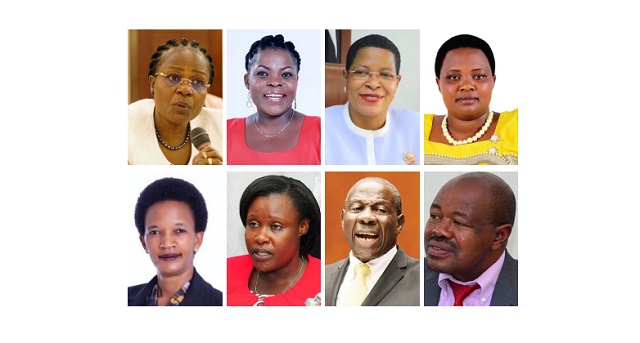
Several senior officials were implicated, including former Karamoja Affairs Minister Mary Goretti Kitutu, State Minister for Finance Amos Lugoloobi and Speaker of Parliament Anita Among.
But, while Nandutu, Kitutu and Lugoloobi were charged in connection with the scandal, Anita Among was not, with reports indicating that she returned the 500 iron sheets that had been allocated to her.
Interestingly, charges against Lugoloobi were later dropped by the Directorate of Public Prosecutions, despite earlier allegations that iron sheets meant for vulnerable households had been found on his farm in Kayunga District.
Kitutu, on the other hand, filed an appeal to block her prosecution, citing torture and human rights violations during her interrogation.
The scandal also drew international attention. In 2024, the United Kingdom imposed sanctions on Nandutu, Kitutu and Anita Among, accusing them of involvement in the misappropriation of relief materials. The measures included travel bans and asset freezes.
The United States later announced similar sanctions, saying they were intended to promote accountability among public officials accused of abusing their positions for personal gain.
Agnes Nandutu’s timeline
Early life and education
- Born in Bududa District
Grew up in a low-income, fractured family setting marked by instability after her parents separated. - Primary education
Attended Bumwali Primary School, where she performed well academically despite financial hardship. - Teenage years
Dropped out of school at around 18 due to poverty and lack of support.
Early survival years
She worked various low-income jobs, including cooking in a restaurant and later bar work after returning from Nairobi, Kenya, where she had briefly sought employment with her mother.
Entry into media and journalism
- Early 1990s
Begins working in broadcasting after moving to Kampala, starting as a freelance journalist at Radio Uganda. - 1990s to early 2000s
Builds experience across radio, print and media houses. Gains recognition for strong storytelling and reporting skills despite lacking formal qualifications at the time. - 2008 Joins NTV Uganda
Becomes a prominent television journalist and household name through programmes such as Point Blank and People’s Parliament.
Transition to politics
- 2017 Barred from covering Parliament over academic documents
- 2013 to 2017 (parallel development) Returns to school as an adult, completes UCE and later UACE after balancing education with work responsibilities.
- 2021
Contests as an independent candidate for Bududa District Woman Member of Parliament and wins.
Rise in government
- 2021 Appointed State minister for Karamoja affairs by President Yoweri Museveni.
- Takes on responsibility for government programmes targeting disarmament, peace building and support for vulnerable communities in Karamoja.
*****
RELATED STORY
Flash-back to 1970s coffee smuggling through Chepkube, and the Agnes Nandutu who went missing