The Independent Uganda: You get the Truth we Pay the Price


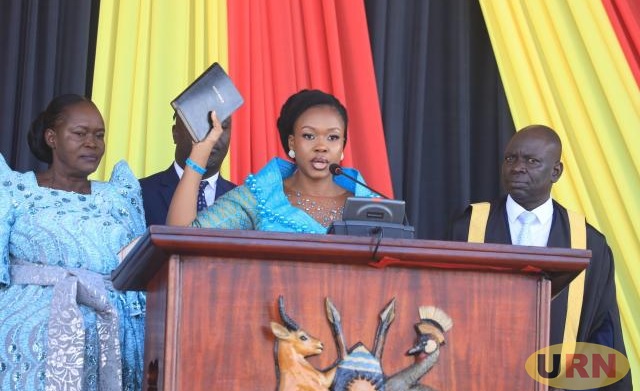
Kampala, Uganda | URN | As early as 7:00 a.m. on Wednesday, the usually tight security surroundings of Uganda’s Parliament turned into a scene of colour, celebration, and political transition as Members of Parliament-elect arrived for the swearing-in of the 12th Parliament.
Accompanied by family members, political supporters, relatives, and friends, the legislators-elect arrived in colorful processions, marking the beginning of a defining five-year legislative journey that will shape Uganda’s governance, accountability, and democratic trajectory through 2031.
The ceremony, conducted under tight parliamentary protocol and ceremonial grandeur, officially commenced at 8:00 a.m. with the Uganda Peoples’ Defence Forces (UPDF) Brass Band performing both the Uganda National Anthem and the East African Community Anthem, underscoring the constitutional and regional significance of the occasion.
At the centre of the ceremony was the Clerk to Parliament, Adolf Mwesige Kasaija, who formally read the presidential proclamation convening the new Parliament and cited the constitutional provisions empowering him to administer the Oath of Allegiance and the Oath of Member of Parliament to the legislators-elect.
Under Uganda’s 1995 Constitution, no elected legislator can participate in parliamentary business before taking and subscribing to the prescribed oaths contained in the Fourth Schedule of the Constitution.
In keeping with parliamentary tradition, the swearing-in exercise is being conducted in alphabetical order. Enos Asiimwe Kinywamachunda, the Kabula County MP for Lyantonde District, became the first legislator to take the oath, setting the tone for the highly choreographed event.
He was followed by Orungo County MP Jeje Abubakhar Odongo of Amuria District, while Sylvia Alinaitwe Tumuheirwe, the Rukiga District Woman Representative, emerged as the third legislator sworn in.
Other legislators sworn in during the opening session included Lucy Akello (Amuru DWR), Lillian Aber (Kitgum DWR), Anne Adeke Ebaju (Soroti DWR), Angella Akoth Nzokire (Tororo DWR), Julius Achon Bua of Otuke County, Anifa Kawooya Bangirana, MP Mawogola West Constituency in Sembabule, and Remigio Achia, the Pian County MP in Nabilatuk District.
Among the notable figures sworn in was Anita Annet Among, the Bukedea District Woman Representative and incumbent Speaker of Parliament, who arrived accompanied by her husband, Moses Magogo. Her appearance drew considerable public attention amid speculation about whether she would retain the Speakership in the new Parliament.
The swearing-in ceremony is expected to run for three consecutive days, concluding on Friday, May 15, with a total of 176 legislators scheduled to take the oath on the first day alone. According to the official programme issued by the Office of the Clerk to Parliament, the exercise is being conducted in two daily sessions running from 8:00 a.m. to 1:30 p.m., followed by a 30-minute break before resuming at 2:00 p.m. until 6:30 p.m.
Clerk to Parliament indicated that the second day of the exercise is expected to open with Kangwagye Stephen Rwakanuma and conclude with John Baptist Nambeshe, while the final day will begin with Betty Nambooze and climax with the swearing-in of Victorious Zawedde. After taking the oaths, legislators proceed to sign the official oath book, undergo biometric registration, take official parliamentary photographs, and later address journalists waiting within the parliamentary grounds.
The ceremony not only marks the formal assumption of office by legislators but also signifies the operational birth of the 12th Parliament, which will soon embark on one of its earliest constitutional duties, electing the Speaker and Deputy Speaker before President Yoweri Kaguta Museveni addresses the House.
The swearing-in comes at a time when Uganda’s Parliament remains under intense public scrutiny over questions relating to accountability, legislative independence, public expenditure, and executive oversight.
Under Articles 77 and 79 of the Constitution, Parliament is mandated to protect the Constitution, promote democratic governance, and make laws for the peace, order, development, and good governance of Uganda. The institution is also expected to play a critical oversight role over the implementation of the Fourth National Development Plan (NDP IV), the Parish Development Model (PDM), oil and gas infrastructure projects, and Uganda’s growing public borrowing obligations.
Security around Parliament remained heightened throughout the morning, with access tightly controlled by parliamentary police and security personnel. Parliament limited each legislator-elect to only three accompanying guests, a measure officials said was intended to manage congestion and maintain order during the exercise. However, Parliament granted special consideration to Members-elect with disabilities, allowing each to be accompanied by an additional aide in line with inclusivity and accessibility principles embedded within Uganda’s disability rights framework and parliamentary procedures.
For many first-time legislators, the moment represented the culmination of years of political mobilisation and electoral struggle. For returning MPs, it marked the continuation of an often demanding and highly scrutinised public service role. As jubilant supporters waved party colors, ululated, and took photographs outside the August House, attention now shifts to whether Uganda’s 12th Parliament will distinguish itself as a more assertive, reform-oriented and citizen-responsive legislature in the years ahead.