The Independent Uganda: You get the Truth we Pay the Price


COMMENT | IAN BURUMA | Last November, US President Donald Trump’s administration declared in its National Security Strategy that Europe stands on the brink of “civilizational erasure.” It was an odd claim to make in an official strategy document. Even stranger was the overarching argument that Europe, not China or Russia, is the main problem for the United States today. Europeans are apparently committing societal suicide by allowing in immigrants: “Certain NATO members” are destined to become “majority non-European,” the document portends.
Trump is not just alarmed by what he thinks is going on in Europe. He previously warned that immigrants are “poisoning the blood” of the US.
Neither the fear that Western civilization might soon be lost, nor the concern about the purity of bloodlines, is new. German reactionaries in the late 19th and early 20th centuries were obsessed with these topics.
The West, in their eyes, was weak, decadent, shallow, materialistic, and undermined by “racial chaos.” The vital German people, on the other hand, were rooted in blood and soil and prepared to sacrifice material comforts and even their lives for the sake of the nation. That spirit, the thinking went, could save Europe from its civilizational downfall by purging the continent of the noxious ideas associated with French republicanism, as well as British liberalism and commercialism. They saw Germany as a nation of warriors at odds with nations of shopkeepers.
These radical German nationalists viewed the US as the worst offender in the West: a country where liberalism, shallow materialism, addiction to comfort, commercialism, and, above all, “racial chaos” reigned. They believed that Jews and other “inferior” and “undesirable” races could buy US citizenship for a fistful of dollars.
What is happening now is a peculiar shift of perspective. America’s current leadership defines itself in opposition to Europe’s liberalism, relative openness to immigrants, rule of law, and lack of a warrior spirit. And just as some early-20th-century German nationalists regarded Russia (later the Soviet Union) as a useful ally against more liberal European countries, the Trump administration views Russia and Hungary as friends united against a common enemy.
There are several reasons for this role reversal. Even though America symbolized everything German and other European chauvinists hated in the early 20th century, similar strains of anti-immigrant, antisemitic nativism existed in the US, too. Aviator Charles Lindbergh espoused an isolationist and racialist America First agenda in the 1930s, as did the reactionary radio priest Father Charles E. Coughlin and several Republican politicians. But US President Franklin D. Roosevelt’s New Deal, and the horrors of Hitler’s Third Reich, brought such ideas into disrepute.
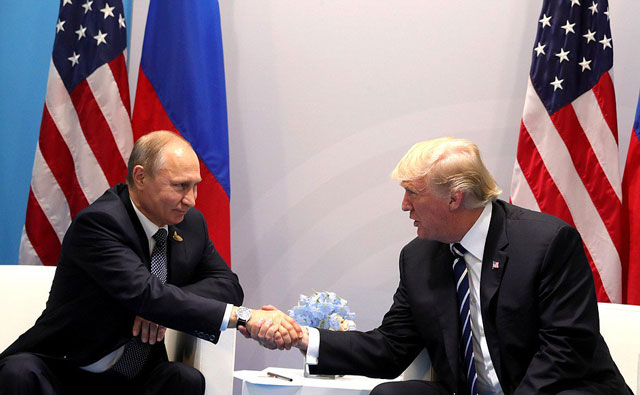
Trump’s MAGA (Make America Great Again) movement has, however, turned that once-discredited ideology into Republican Party dogma. That is why Trump feels more comfortable with Russian President Vladimir Putin than with democratic European leaders like German Chancellor Friedrich Merz or French President Emmanuel Macron. He admires Putin’s exercise of raw, unconstrained power, and shares his ideological hostility to liberal ideas.
MAGA’s anti-Europe fervor is also a populist reaction to educated American elites’ affinity for European style and high culture. This inclination is regarded, not always without reason, as an expression of snobbery, of looking down on “ordinary Americans” who – like the current president – prefer a hamburger to foie gras.
But there is an older, more profound reason why Europe is particularly loathed, not just by the MAGA crowd, but by Trump’s far-right admirers on the continent. German nativists, as well as like-minded nationalists in other countries, used to associate Franco-British-American liberalism with Roman imperialism, which was regarded as an attempt to foist common rules onto disparate European tribes. Such supranational empires aspired to a kind of universalism, where people were defined by citizenship, not blood.
The European Union is, in some ways, the natural heir to the Roman Empire. And so was Pax Americana – the “rules-based international order” imposed by the US – whose values were regarded by many Americans as universal. But the informal US empire is backed by overwhelming military force, whereas the EU, under the protection of American warriors, is a union of merchants.
The raison d’être of postwar European unity has been to prevent another war by replacing nationalist passion with commercial interest. The EU is nothing if not a rules-based community. Law, not ethnicity, is at its core. This is why right-wing politicians such as Geert Wilders in the Netherlands and Nigel Farage in the United Kingdom hate the bloc. While Trump is trying his best to undermine the rule of law in his own country, his foreign policy aims to cultivate “patriots” – namely, the far right – to do the same in Europe, in the name of stopping its “civilizational decline.”
As a result, liberal Europe confronts a paradox. To protect a community of nation-states built on the rule of law and a common trade regime, the EU must be able to defend itself against outside attempts to destroy it. This means that a community of merchants must inject itself with some of the warrior spirit it was designed, after 1945, to erase.
*****
 Ian Buruma is the author of numerous books, including Year Zero: A History of 1945 (Penguin Books, 2014), The Collaborators: Three Stories of Deception and Survival in World War II (Penguin Press, 2023), and, most recently, Spinoza: Freedom’s Messiah (Yale University Press, 2024).
© Project Syndicate 1995–2026