The Independent Uganda: You get the Truth we Pay the Price


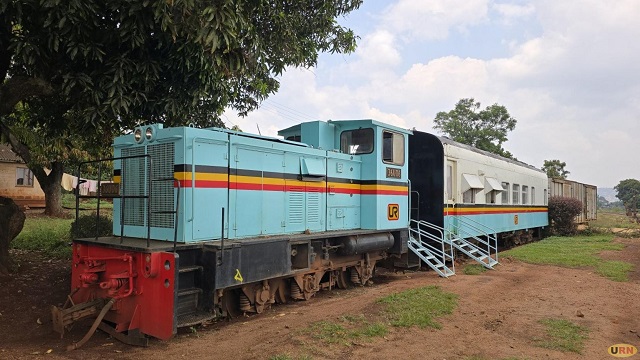
NEWS ANALYSIS | URN | From the 1977 EAC breakup to the Rift Valley Railways concession and today’s missing wagons, Uganda’s railway records reveal decades of investment but no continuous account of where the assets ended up.
After the collapse of the East African Community (EAC) in 1977, the Uganda Railway Corporation (URC) was formed to provide the service that the East African Railways and Harbors had previously supplied.
URC operated under a 1977 decree which gave it the responsibility to caretake the affairs of the East African Railways Corporation as an interim measure.
The country has spent nearly five decades rebuilding its railway system, buying locomotives, wagons, and coaches, and investing heavily in workshops, spare parts, and foreign technical expertise.
But as the railway passed through successive phases of public management, rehabilitation and private concession, the paper trail tracking those assets became increasingly fragmented.
The investments included locomotive engines, hundreds of wagons and passenger coaches, service railway vehicles, Lake Victoria wagon ferries, recovery equipment, a major locomotive workshop at Nalukolongo and other specialised railway infrastructure.
Uganda had steam engines, from which the term “Gari ya Moshi” or “Gari yo Omuka” was derived. Records examined by Uganda Radio Network show that after the collapse of the East African Community in 1977, Uganda embarked on an ambitious programme to rebuild its railway fleet.
The first point of our investigation was to establish what Uganda inherited as of the division date of 30th June 1977.
Four years after the collapse of the East African Community, Kenya and Uganda returned to the question of what had happened to the assets of the former East African Railways and Harbours Corporation.
A mediation committee was established. It had experts from Kenya, Uganda and Tanzania.
In December 1982, a joint Working Party comprising officials from Kenya Railways Corporation and Uganda Railways met in Kampala to establish a comprehensive inventory of rolling stock that existed at the time and vehicles that had been scrapped since the division.
The exercise was important because the breakup had left railway assets spread across Kenya and Uganda. It was necessary to establish what existed, what had been scrapped, and how the remaining equipment should be divided.
The Working Party was chaired by D.M.S. Fairweather of Kenya. Uganda was represented by Engineer Sam Kwesiga, then Chief Mechanical Engineer of Uganda Railways Corporation. Engineer Sam Kwesiga was not simply an outside observer.
He was then URC’s Chief Mechanical Engineer, directly connected to the technical management of the railway fleet.
He later served as Acting Managing Director of Uganda Railways Corporation in the late 1990s. Also on Uganda’s side was Charles Karamagi, the then Chief Traffic Manager of URC.
The Working Party established that the former East African Railways and Harbours Corporation had 509 coaches. Kenya was allocated 402 coaches, while Uganda received 107.
The Party also identified 6,354 wagons. Of these, 5,422 were allocated to Kenya and 932 to Uganda. Taken together, East African Railways and Harbours Corporation had 6,863 coaches and wagons, with Uganda’s allocation amounting to 1,039 pieces of rolling stock.
The point to take is that Kenya emerged from the mediation with 5,824 pieces of rolling stock compared with Uganda’s 1,039. Uganda got just 15% of the rolling stock. The documents examined by URN were silent about why the imbalance existed.
The Working Party identified rolling stock based in Kenya and Uganda for scrapping too. For this investigation, the deliberations from a two-day mediation held in Kampala, the Working Party serves as the first asset-accounting baseline placed on our ledger.
There was no mention of the motive power stock (Steam Engines and Locomotives).
That was also a key issue to find out because, according to the Railway experts, motive power in the form of locomotives or steam engines is key in railway operations.
This part of the ledger is revealed in a Commonwealth report titled “The Rehabilitation of the Economy of Uganda.
It was authored by a team of experts from the Commonwealth. David M. Nowlan and Donald F Peckham almost begin from where we ended on the rolling stock at Uganda Railways Corporation.
“With this separation has come a continuing set of problems for Ugandan Railways: it must rely on heavy-duty Kenyan engines for the main-line haul from Kenya to Kampala,” they noted.
The fleet included British-built Class 35 and Class 72 locomotives, German Class 36 shunters, and German Class 61 and Class 62 locomotives.
The report recorded six Class 36 German shunting locomotives, all six of which were in service. Major servicing of the locomotive engines was to be done in Nairobi.
“At prices and standards with which Uganda is unhappy; and the number in Uganda of former EARC wagons, which run between the two countries, is generally both less than the number required by Uganda and considerably less than the number Uganda believes it should have as a result of the division,” said the report commissioned by the Commonwealth Secretariat in June 1979 under the Commonwealth Fund for Technical Cooperation.
The report said of the EARC locomotives, Uganda got 27 steam and 21 diesel engines. According to the authors, only four of the 27 steam engines were serviceable, and only with maintenance facilities in either Uganda or Kenya. The steam engine workshop in Kenya had been closed. Even the four steam engines in Uganda were expected to be out of service.
The question of whether URC had steam engines is answered in the affirmative. There were some retired at Tororo locomotive shed during the eighties. They were later dismantled and sold as scrap. Not a single piece was spared for museum purposes.
This detail is not part of the Railway Museum based at Jinja railway station; visitors are shown steam engines on paper because not a piece of them exists.
The Commonwealth report said Uganda had 21 diesel engines; 18 were out of service but being worked on at the Tororo workshop, with the help of German technicians. It confirms that the Idi Amin regime purchased 10 short- range engines from Germany to supplement the former EARC locomotives.
The report shows that there were efforts to address the rolling stock and motive power just after the war.
There were about 47 covered wagons from the old fleet and 132 open wagons in the country, the combined total of which is well short of the 925 wagons Uganda had expected to have, on average, following the break-up of the EARC.
“To supplement this meagre supply, 130 covered and 20 goods wagons have been purchased from Belgium and are now in use. An additional 250 covered wagons (plus 20 coaches) have been purchased from India and paid for, except for 25.61 million shillings in transportation charges, for which the Indian Government has extended credit. 50 more coaches and 34 service cars have been ordered from East Germany.”
It was expected that when all these arrived, the Ugandan rolling stock would be sufficient to handle reconstruction-period traffic.
According to the authors, one of the major significances to the development of Ugandan rail services was the decision by the military regime in 1978 to increase the rail-wagon ferry capacity on Lake Victoria. The motivation for the military regime’s decision to increase wagon-ferry capacity on Lake Victoria was not fully explained. They noted that “
Until the breakup of EARC in 1975, Uganda did make some use of the alternative ocean outlet by ferry from Jinja to Mwanza, and then over Tanzania rail to Dar-es-Salaam.”
URN established from former Uganda Railway Corporation workers that equipment for construction of the ferries began arriving at Mombasa in 1979 and 80.
“A Belgian firm has been contracted to provide floating dry dock facilities at Port Bell, which will be used to assemble four wagon ferries each with a one-way load capacity of about 800 net tons of cargo.”
The country acquired locomotives from Germany and France, wagons and coaches from India and East Germany, and invested heavily in the Nalukolongo Railway Workshop to maintain the new fleet.
An October 1983 memorandum from the Eastern Africa Projects Department of the World Bank’s Transportation Division adds more information to this investigation.
It shows that URC had 62 diesel locomotives, compared with just 21 inherited diesel locomotives and 28 steam engines. It said all 28 inherited steam locomotives had by then been retired or lost.
Steam engines were bulky, built with strong steel, but they still got lost?
According to the document, the existing locomotives were in relatively good condition because they were less than five years old. URC was about to import 25 tank wagons financed by the European Development Fund.
“For a railway of its size and current and anticipated traffic levels, this fleet is more than adequate,” reads the document.
A 1989 World Bank appraisal found that URC had 60 locomotives, while another 13 locomotives had been ordered from German manufacturer Thyssen-Henschel.
This particular report takes us back to the period after 1977. It brings out some of the issues that were not covered in the 1983 report.
“EARC’s break-up left URC with a fleet of the lighter range of locomotives; wagons mostly over 30 years old, though generally in fair condition,” reads the report.
According to the report, Uganda was handed vintage coaches, and only lineside depots for running maintenance of locomotives and rolling stock, as the main workshops, located in Nairobi, reverted to Kenya Railways Corporation. Uganda also received some open wagons; these were popularly known as Kayoola.
Kayoola wagons were popular along the Kampala-Kasese line, transporting cotton, livestock for slaughter in Kampala, matooke and Kasese waragi from Kamwenge and Bushenyi, among others.
By 1989, URC owned 48 main line locomotives, 12 shunting engines, about 1500 wagons and 104 coaches.
“The 20-standard diesel-hydraulic units (class 73) are the mainstay of the fleet; in addition, URC has 19 light-duty diesel hydraulics inherited from the defunct EARC and 9 heavy-duty Alsthom diesel-electrics, especially acquired for the Kampala-Jinja freight hauls,” the World Bank appraisal found.
Half the wagon fleet was relatively new, purchased in the post 1977
period; the inherited stock was over 30 years old. By that time, the ex-EARC passenger coaches had been withdrawn from service and replaced by new coaches purchased in the last ten years.
“Thirteen new standard main line locomotives (Class 73) had been ordered recently and were delivered in mid-1989.”
One hundred tank wagons were ordered around the same period from Spain under a project funded by the former European Economic Community.
They were to be delivered in 1988, and orders for another 300 to 600 covered/open wagons were expected from Zimbabwe.
Two motor vessels had been refurbished and were being used for passenger and cargo services to the offshore islands, near Jinja.
URN has failed to trace the two motor vessels being reported in 1989. They are missing from the ledger.
The EARC dissolution deprived URC of main workshop facilities for locomotives and rolling stock. Uganda was left with just two main running inspection and maintenance depots at Kampala and Tororo.
The locomotive shed in Tororo had to be converted from a steam shed
for light repairs and heavy diesel-hydraulic locomotive maintenance until the new base workshop, planned at Nalukolongo near Kampala, was built.
The Nalukolongo Railway was commissioned in 1987 with experts from Germany and France deployed to train Ugandan technicians for light and heavy repairs of the locomotives and rolling stock.
The workshop was designed to handle 150 locomotives, although the World Bank considered 75 a more realistic operational ceiling at the time. German assistance included specialised equipment, training and technical support for locomotive maintenance.
This is an important part of the story because it shows that Uganda’s post-1977 railway investment was not simply about acquiring trains. The government was attempting to create an entire railway engineering system capable of maintaining those assets domestically.
The Commonwealth report put the cost of the Nalukolongo workshop and associated equipment at two hundred and sixteen million shillings in the 1979 procurement records.
The railway was therefore being rebuilt on two fronts: new rolling stock and new capacity to maintain it. When RVR took over operations on 1 November 2006, IFC project documentation recorded Uganda’s railway assets as comprising.
URC has 44 locomotives and 1,433 wagons. It should be noted that Uganda was short by 16 locomotives. Some had been involved in accidents.
Under KfW-supported rehabilitation programmes, 562 URC freight wagons were overhauled in two phases.
The first phase alone rehabilitated 197 wagons between May 2002 and June 2003. Some sources formerly working at Nalukolongo Railway workshop indicated that the workshop suffered from severe stripping, especially around the late nineties and early 2000’s when its administration kept on changing from URC to Adtranz, to Bombardier, and later Rift Valley Railways.
The workshop, like the entire railway network, suffered from the emerging steel mills that sought scrap steel as feedstock. For Example, URC lost the entire Busoga railway track stretching through Iganga, Mbulamuti, Kaliro, and Jinja to scrap dealers.
Sources indicate that some wagons and engine parts would be sold as scrap to dealers.
Some equipment had been retired, some rehabilitated, some reclassified or renumbered. The problem is that the available public records do not provide a continuous asset-by-asset bridge between these different fleet snapshots.
The condition of Nalukolongo provides another measure of what happened to Uganda’s railway investment. The workshop had been built and equipped as a strategic public asset.
By the RVR period, it was still being used for locomotive rehabilitation, but reports described a facility whose equipment and spare-parts base had deteriorated.
Uganda invested heavily in the workshop’s machinery, technical systems and training. After decades of public expenditure and donor support, can Uganda Railways Corporation account for the railway assets it bought?
In the 1980s, the World Bank described Nalukolongo as a major workshop designed for large-scale locomotive maintenance, supported by German technical expertise and specialised equipment.
Decades later, former railway workers described a depleted facility. The issue is therefore not simply what happened to locomotives and wagons. It is also what happened to the infrastructure Uganda built to keep those assets productive.
At the start of the concession, RVR Uganda was given access to a fleet of 43 locomotives previously owned by Uganda Railways Corporation, comprising six Class 36, six Class 62, two Class 71, 24 Class 73 and five Class 82 locomotives. Of these, 16 were operational, and 27 were non-operational.
The Works and Transport Sector Development Plan (WTSDP) 2015/16–2019/20 further records that a joint verification by URC and RVR in June 2012 identified 1,321 wagons, comprising 21 high-open, 473 covered, 200 fuel-tank, 513 flatbed-container, 34 low-open, 51 ballast-hopper and 29 other wagons.
The document says 365 wagons had been rehabilitated under a KfW-funded programme by October 2014, while RVR subsequently acquired four Class 96 locomotives in 2014 and 240 new flat wagons in 2015/16.
These figures provide a documented picture of the assets under the concession, although they do not by themselves establish which individual assets were eventually returned to URC when the concession ended.
The current condition of that equipment, and what happened to individual major machines acquired with public or donor funds, deserves the same asset-tracking treatment as locomotives and wagons.
For an investigation into public assets, retirement, disposal, and sale as scrap are three different documentary events. The railway records need to show what happened between them.
That gap has become more significant today. The Parliamentary Physical Infrastructure Committee has raised questions about the whereabouts and disposal of railway wagons. Its findings include allegations that wagons were routed through a “virtual station” in Nyahururu, Kenya.
The 2006 concession documents give us the number. But a complete wagon register showing individual wagon numbers, types, ownership, condition and subsequent disposition would provide a much stronger bridge to the post-RVR period.
The history reconstructed from the available records is therefore not a simple story of wagons disappearing. It is a story of investment followed by ageing, rehabilitation, retirement, concessioning, transfer and incomplete documentation.
Today, Parliament is questioning the whereabouts of some wagons and the management of the remaining fleet.
The unanswered question is not simply: Where did Uganda’s railway wagons go? It is what happened to the billions of shillings, foreign loans, donor grants, technical assistance, and public assets invested in Uganda’s railway system over nearly five decades, and why is it so difficult to follow the trail of those assets from purchase to retirement or disposal?