 The Independent Uganda: You get the Truth we Pay the Price


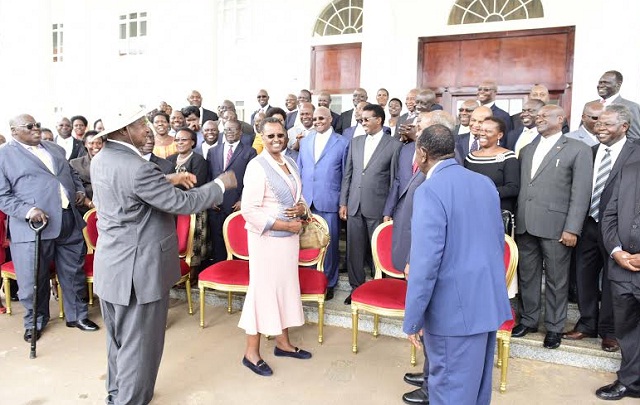
COMMENT | CRISPIN KAHERU | By the time President Yoweri Kaguta Museveni took oath of office on 29 January 1986, the young guerrilla had already made his most consequential political decision. He would not govern alone. Of the forty-eight ministers he swore in during those first weeks, nearly half came from outside the National Resistance Movement. They came from the Democratic Party, from Andrew Kayiira’s Uganda Freedom Movement, from the Federal Democratic Movement of Uganda, from independents and even from the Uganda People’s Congress fold he had just displaced.
Paul Kawanga Ssemogerere, the DP leader he had run against, sat as Minister of Internal Affairs. Abu Mayanja, the veteran Muslim intellectual, took Education. Sam Kutesa, then of the Conservative Party, handled Justice. It was a cabinet described at the time as “broad-based”, short for, rule by grand coalition of a country’s plural parts.
Read forty years of Museveni through that single lens and the pattern becomes almost architectural. His politics has been a long game of addition. Where Idi Amin subtracted by the bullet and Milton Obote by the ballot, Museveni, more often than not, ‘subtracted’ by inclusion. He brought rivals inside the tent rather than ostracizing them.
Consider the receipts. In 1993, against the advice of some hard-liners in his own army council, he restored the kingdoms that Obote had abolished in 1966. Ronald Muwenda Mutebi II was crowned Kabaka; Bunyoro, Toro and Busoga followed. It was a wager on identity as a source of unity, not division.
In 2000, at the height of the war in Northern Uganda, he signed the Amnesty Act, a law that has since pardoned more than 28,000 former combatants, including LRA, ADF and West Nile Bank Front fighters.
In 2022, he added Norbert Mao, a three-time presidential challenger and DP president, as Minister of Justice. The cabinet is large, and no honest observer will pretend otherwise. But largeness, in Museveni’s method, seems to be less of appetite but more of architecture. Each appointment is a coordinate of geography, of faith, of generation, of gender, of tongue, and of trade. Each piece is intended to ‘balance the boat’ by the very weight some would trim.
Critics, not without cause, call this co-optation. But addition and co-optation could be cousins, not twins. Co-optation demands that the newcomer shed his colours at the door. Museveni’s method has more often been the opposite. His seems to be, keep your identity, bring your constituency, and lend your strength to a common national project. Ssemogerere remained a DP man in the cabinet. Mao remains DP president in cabinet. It is a bargain. Yes, sometimes an uneasy one, but it is not a swallowing.
His posture, too, has been consistently misread. What looks like bending backwards has usually been a strategy. For example, the 1985 Nairobi talks were a pause, not a surrender. What looks like patience has usually been timing. He waited seven years before restoring the kingdoms and another seven before returning Kabaka’s land under the 1998 Land Act. What looks like humility is discipline; what looks like forgiveness is arithmetic. For him, every reconciled comrade is one less grievance and one more voice.
Which brings us to the present hour. Our politics has, in recent seasons, grown heavier than it needs to be. More radicalised in its language, more polarised in its camps, more monetised in its transactions, and more generational in its fault lines.
The sobering consolation is that Uganda has walked out of valleys steeper than this. Deeper wounds have been dressed at this same table; angrier adversaries have found their way back to a shared meal. The Bush War generation is approaching its sunset, and reconciliation, unlike memory, admits of no proxy; it is a treaty that only the original signatories can honourably close.
Done in the old comrades’ way, by addition rather than subtraction, by strategy rather than spectacle, this presidency will close on its most enduring entry: apologies made, forgiveness received, comrades reconciled, and a country handed forward whole, united and intact.
******
Crispin Kaheru is a Member, Uganda Human Rights Commission (UHRC)
After reading your article, I don´t doubt how naive you are in the politics of the country. Praising your father for putting food on the table without talking about his beatings, and abuses IN THE FAMILY, is short of nothing but hypocriicy. So Museveni has co-optated members from other walks of party life, but to what aim? The emalgamation of all these individuals is just tod the bidding for Museveni. Nothing else! A shamba-boy does not own his master´s garden! He is still a shamba-boy. So your praises on Museveni may carry some weight in your myopic analysis, but the whole country is crying: FOUL!