The Independent Uganda: You get the Truth we Pay the Price


The U.S., Allies, and Africa in the Spotlight
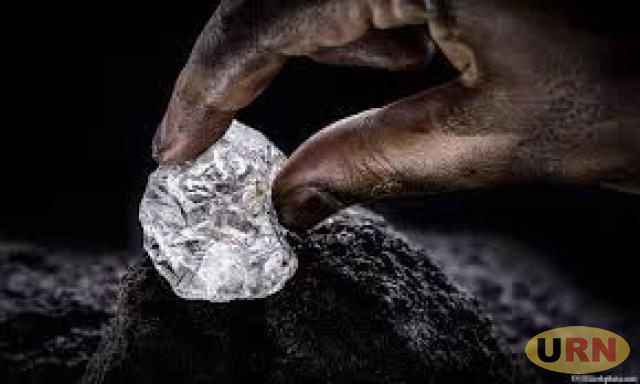
Washington, USA | THE INDEPENDENT | The United States has taken a decisive step to secure its place in the global critical minerals market with the launch of Project Vault, a $12 billion strategic reserve aimed at stockpiling essential minerals for both defense and civilian industries.
Announced at the Critical Minerals Ministerial Meeting in Washington, the initiative marks the first time in American history that a domestic stockpile will serve not only military but also commercial purposes.
Widely seen as a move to outcompete China, which dominates the refining and processing of rare earths and other strategic minerals, Project Vault underscores the increasing geopolitical stakes in the sector.
“We here, I think all of us, are friends. We’ve spent years describing this problem. But for too many of those years, we talked about it and refused to solve it. Now, we have a practical and enforceable approach,” President Donald Trump said.
“We want to secure our ability to build, to produce, to defend ourselves—and we want our friends and allies to be part of that effort. No one should have to rely on any country outside this partnership for critical minerals.” U.S. officials outlined four central initiatives: investing in mining projects, stockpiling minerals, protecting domestic companies, and rebuilding the mining ecosystem.
Secretary of State Marco Rubio said Wednesday that every country has a role to play in a global initiative for critical minerals. He affirmed that the new initiative was targeting China’s dominance in the sector.
It is feared that China could use its dominance in the critical minerals industry as a tool of leveraging geopolitics.
The US strategy
David Copley, Special Assistant to the President and Senior Director for Global Supply Chains at the National Security Council, explained the strategy in detail.
“We are investing heavily in mining projects, from MP Materials to Lithium Americas, Korea Zinc, Modin, and others. Over the next few years, the U.S. government, through debt and equity, will deploy hundreds of billions into the mining sector to accelerate projects.
Minerals are the elemental building blocks of everything we need for our manufacturing sector as we reindustrialize our country.”
Project Vault itself will be funded by $2 billion in private capital and a $10 billion loan from the U.S. Export-Import Bank, aiming to shield American industry from global supply shocks.
Copley also highlighted market stabilization efforts- “We plan to create a trading block among allies and partners, one that guarantees American access to industrial might while expanding production across the entire zone.
Regardless of how much material flows into the global market, prices within the preferential trade zone will remain consistent.”
The administration is simultaneously reforming permitting processes, reducing mine development timelines from decades to months, and encouraging young professionals to pursue careers in mining. Currently, the U.S. graduates only 200–250 mining engineers annually, far too few to meet demand.
The meeting brought together leaders from countries representing roughly two-thirds of global GDP. Japan, represented by State Minister Yuyao Hori, underscored the importance of multilateral cooperation and supply chain resilience.
“Diversity only comes from collective action. No single country can overcome the fragility of critical mineral supply and over-dependence on specific countries on its own. With the launch of FORGE, the Forum on Resource Geostrategic Engagement, now it is time for action. Together, let’s make a meaningful difference in building resilient, reliable, and secure global supply chains.”
Japanese initiative
Japan has already taken significant steps domestically, including the 2022 Economic Security Promotion Act, establishing public-private support measures, and allocating $3.5 billion to strengthen upstream and downstream supply chains.
Hori highlighted collaboration with countries across Africa, the Americas, Europe, and Oceania, emphasizing that collective action is essential to reduce vulnerability.
“We will engage in discussions with like-minded countries, including the U.S. and the European Union, to build an effective mechanism with industrial engagement. Japan has unwavering determination to work with you as your trusted partner.”
Africa remains central to global critical mineral strategies. The Democratic Republic of the Congo (DRC), the world’s largest producer of cobalt and a major source of copper and other critical minerals, is expected to send its president to Washington on Thursday.
His visit will be a crucial moment for strengthening alternative sources of supply and securing investment in refining and processing infrastructure.
“We are confronting a problem where too many resource-rich countries cannot realize the full value of their deposits,” Copley said. “Capital cannot reach them so long as investors lack confidence that markets will remain stable for long enough to justify long-term commitments. This is where partnerships with the U.S. and other allies matter.”
Uganda’s minerals
Uganda, though not represented at the ministerial, also holds significant strategic potential. The country is rich in cobalt, tantalum, gold, tin, and rare earth elements, positioning it as a potential partner in diversifying supply chains.
Analysts suggest that Uganda could play a role in future international agreements on critical minerals, especially as the U.S. and allies seek to reduce dependence on China. For now, President Museveni maintains a raw minerals export ban. Can Uganda join the stockpile race?
“Countries like Uganda have untapped potential to contribute to a global, resilient supply network. While not present here today, their resources are strategically significant, and partnerships will be critical moving forward,” said a senior U.S. official involved in the project.
A key goal of Project Vault and related initiatives is to stabilize critical mineral markets, which have been historically volatile.
Overproduction, strategic dumping, and concentrated supply chains have undermined investment incentives worldwide.
“Across Europe and North America, dozens of mining and processing initiatives have been suspended or abandoned because sustained price weakness makes financing impossible. Time after time, projects cannot clear costs. We want to fix this problem. Let’s make prices predictable so that domestic and international supply chains can thrive,” Copley said.
The proposed preferential trade zone will set enforceable reference prices at each stage of production, protecting participating nations from market manipulation while encouraging long-term investment in mining, refining, and industrial applications.
The launch of Project Vault comes amid growing concern over China’s dominance in rare earths and other strategic minerals, which underpin high-tech industries, renewable energy, and defense systems. Analysts say the initiative is a clear attempt by the U.S. and its allies to diversify supply sources and reduce dependence on a single, potentially coercive actor.
“No single country can overcome this challenge alone. We need collective action to build a secure, resilient, and fair global market,” State Minister Hori said.
With the DRC president’s visit, ongoing collaboration with Japan, Europe, and other resource-rich nations, and Project Vault itself, the United States is seeking a global network of trusted partners to sustain industrial and technological growth.
Project Vault represents a historic pivot in U.S. strategy, integrating domestic investment, stockpiling, regulatory reform, and international cooperation. It is a clear message to global competitors, particularly China, that the U.S. intends to reclaim leadership in the critical minerals sector while building a resilient supply chain for itself and its allies.
“Before, we spent decades talking about the problem. Now, we are solving it. We have a plan, and we are focused on project execution—getting deals done, securing minerals, and rebuilding global mining in a fair and balanced way,” Copley said.
“This is a chance to lead, to secure our industries, and to ensure prosperity and security for all participating nations.”
As global demand for AI, renewable energy, electric vehicles, and advanced manufacturing surges, the next few years will be critical in determining which nations emerge as leaders in a rapidly evolving critical minerals landscape.
Africa’s resource-rich countries, including Uganda and the DRC, are poised to play a defining role.
*****
URN