The Independent Uganda: You get the Truth we Pay the Price


As global demand grows, Orom-Cross is betting that processing graphite in Uganda can deliver more than a mining project
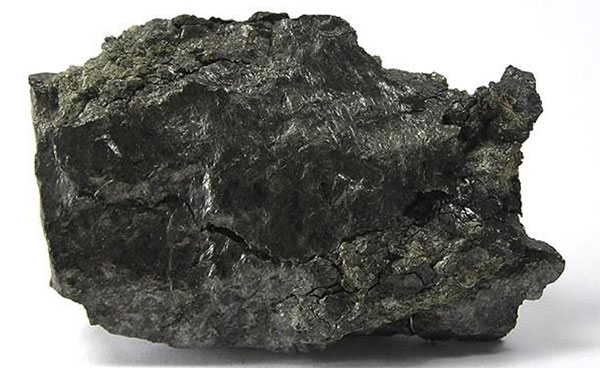
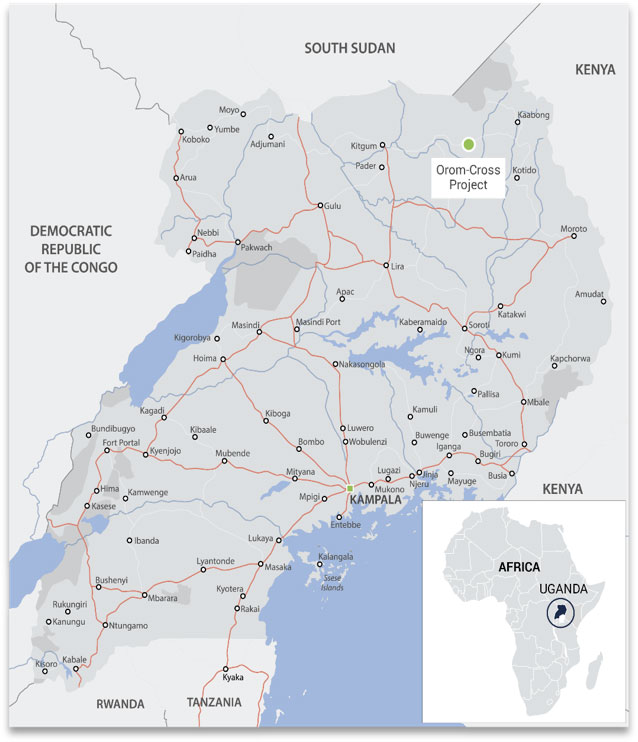
NEWS ANALYSIS | RONALD MUSOKE | A graphite project in northern Uganda is taking on a more ambitious shape. What began as a proposal to mine and export graphite from Orom East in Kitgum District is increasingly being positioned by its British developer, Blencowe Resources, as a potential source of higher-value graphite products for global battery, energy-storage and advanced industrial markets.
The shift matters for Uganda because it coincides with a longstanding government push of local beneficiation of the country’s minerals. The latest developments at Orom-Cross offer an unusually clear test of that ambition.
In an Aug. 17 update, Blencowe said graphite produced from the project was being tested in specialised applications for advanced aerial platforms, while a potential European customer relationship had reached an advanced commercial stage, subject to further technical testing and documentation.
Blencowe noted that Iain Wearing, its Chief Operating Officer had in July this year visited development and testing partner American Energy Technologies (“AETC”) in Chicago for an update on several important programmes currently underway using Orom-Cross graphite products. The company said a particular ultra-fine graphite material used in the application had indicative market pricing approaching US$20,000 per tonne at the manufacturing plant.
The latest tests further demonstrate the potential for Orom-Cross graphite products to access specialist, high-value markets beyond conventional concentrate sales. This supports Blencowe’s strategy to continually optimise its product and sales mix towards higher-value applications as the project advances towards production, Blencowe noted.
A day before that latest announcement, Blencowe had also reported further battery testing involving Orom-Cross graphite, describing results that it said demonstrated the material’s performance in multiple battery applications. The developments point to a strategy that is broader than simply digging graphite out of the underbelly of the Kitgum hills.
They also show how much the project has changed since Blencowe chief executive Mike Ralston spoke to Mining Indaba TV during the “Investing in African Mining Indaba” in Cape Town in February last year. At the time, Ralston was focused on the difficult transition from exploration and feasibility studies to actual production.
“We have a great project. We’ve been developing it for the last five years, and we’re in the latter stages of the definitive study, and thereafter we’re moving to production,” he said. Eighteen months on, the question is no longer simply whether Orom-Cross can produce graphite. It is increasingly about what kind of graphite Uganda can produce, how much of the value can be captured locally and whether the project can secure the money needed to get into production.
Why graphite matters
Graphite may not have the public profile of lithium or cobalt, but it is an important component of lithium-ion batteries, particularly the anode. That makes it relevant to the global growth of electric vehicles and renewable-energy storage.
A report by MarketsandMarkets estimates that the global graphite market was worth US$15.67 billion in 2024 and projects it will reach US$36.40 billion by 2030, representing annual growth of 15.1%. The consultancy points to growing electric-vehicle adoption and energy-storage systems among the drivers of demand. Graphite also has applications outside batteries, including steelmaking, high-temperature materials, electronics and other industrial uses.
But unlike some metals that can be sold into relatively standard commodity markets, graphite buyers are interested in particular characteristics of the material. That was one of the lessons Ralston highlighted at the Mining Indaba.
“The most important thing, the biggest challenge for graphite is that you’re not selling it to a metal market like you are for many base metals,” he said. Instead, producers have to take samples through a process of testing and qualification by potential customers. “You have to do a process called pre-qualification, where you’re taking your end samples right through to the end users, and you’re going through a process where they test it,” Ralston said.
For a project such as Orom-Cross, therefore, finding graphite underground is only the beginning. The material has to be shown to perform consistently in the products for which customers intend to use it. Ralston said that process had taken time and money, but added: “Fortunately for us, we’ve got a high-purity end product, so it works very well.”
The resource is growing
The geological picture has also become considerably larger since that interview. Blencowe’s current formal mineral-resource estimate is reported under the “JORC Standard,” an internationally recognised system used to give investors and mining companies a consistent way of reporting the size and quality of mineral deposits.
In May this year, the company announced a new estimate for its Beehive deposit of 21.3 million tonnes of mineralized rock containing an average of 6.58% total graphitic carbon. Total reported resources at Orom-Cross subsequently rose to 64.3 million tonnes, grading an average 6.03% total graphitic carbon, across four deposits.
Total graphitic carbon (TGC) is a measure of the amount of graphite contained in the mineralized rock. The Beehive estimate is described as an inferred resource, meaning there is still geological work to be done before all of it can be treated with the same level of confidence as more extensively drilled portions of the deposit. The company says only about 22% of the Beehive target had been modelled when the estimate was released.
That is important because a mineral resource is not the same thing as a mineable reserve. Blencowe’s reported ore reserve remains 23.08 million tonnes at 5.18% TGC, according to the company’s May resource announcement. In other words, the project is getting larger, but not every tonne identified underground can automatically be counted as economically mineable. That distinction matters when assessing the company’s ambitious projections.
The numbers look increasingly attractive
Blencowe’s Definitive Feasibility Study; the detailed assessment used to determine whether and how a mining project could be developed, initially presented strong economics in December 2025. But the company updated those numbers in May 2026, incorporating new offtake arrangements, pricing, product mix, additional resources and downstream processing opportunities.
The revised model increased the project’s estimated net present value, using a 10% discount rate, from US$1.087 billion to US$1.254 billion. Blencowe also projected average annual EBITDA (Earnings Before Interest, Taxes, Depreciation and Amortization) of US$333 million and net free cash of US$4.466 billion over the initial 15-year mine life.
These are projections, not money the project has already made. The revised development plan calls for US$45 million for Phase 1 and another US$125 million for Phase 2. Phase 1 is designed to produce up to 20,000 tonnes of graphite concentrate a year, with an initial downstream pathway capable of producing up to 3,000 tonnes of spheronised (spherical) graphite.
Phase 2 would take concentrate production to as much as 70,000 tonnes a year and expand in-country downstream processing. The company says the project is less constrained by how much graphite it could potentially produce than by how much it can contract and sell into higher-value markets. In other words, a large mineral deposit is valuable only if it can be turned into a product customers want to buy at a price that makes the mine viable.
From Kitgum to Gulu
Perhaps the clearest sign that Blencowe’s strategy is changing came in June 2026, when the company announced that it had selected a 100-acre site about 35 kilometres north of Gulu for planned downstream processing. The company has taken an option to purchase the land for US$70,000 and says the site has access to Uganda’s hydro-linked electricity network and a permanent water source.
The proposed facilities are intended to process graphite concentrate into higher-value products, including spheronised purified graphite and expandable graphite. In simple terms, the plan is to do more to the graphite before selling it.
That could mean more industrial activity, technical jobs and supporting businesses in Uganda rather than sending the mineral abroad for further processing. It is also where the Orom-Cross project begins to intersect directly with President Yoweri Museveni’s in-country mineral-beneficiation agenda.
A project that fits Uganda’s value-addition policy
For years, Museveni has argued that Uganda should stop treating its natural resources simply as commodities to be dug up and exported. In January 2025, while commissioning a steel factory in Jinja, the President said: “We are going to support manufacturers to ensure they can mine and process resources locally.” He argued that exporting raw materials also means exporting jobs and economic opportunities.
In May 2026, while discussing an iron-ore processing plant in Ntungamo, in western Uganda, he again emphasised the policy, saying: “Remember, we banned the export of unprocessed minerals.” The policy does not automatically make Orom-Cross a success. But Blencowe’s proposed downstream strategy is clearly consistent with the direction the government says it wants the mining sector to take.
Ralston made a similar argument at the 2025 Mining Indaba. “Africa has the minerals, we know that,” he said. “We know it’s got an abundance of valuable commodities under the ground but it’s a question of how you get them out.” For him, the bigger issue was what happens after extraction. “You have this ability to take value beyond just digging something out of the ground and just sending it abroad,” he said.
He argued that African countries should develop processing capacity close to their mines and create secondary industries around their mineral resources.
“Africa would ideally, and I know most governments are looking for this, like to build up their sort of secondary markets where they’re processing in country or close to the mine sites and have this ability to create more jobs,” he said.
That argument fits Uganda’s policy ambitions almost word for word. But it also creates a standard by which Orom-Cross should ultimately be judged. It will not be enough to say that graphite is being “value-added” in Uganda.
The questions will be more concrete: How much will actually be processed here? How many Ugandans will be employed? How much local procurement will the operation generate? What skills will be transferred? And how much of the economic value will remain in the country?
The financing test
For all the promise surrounding the project, one obstacle remains stubbornly important: money. Ralston acknowledged it when he spoke in Cape Town. “Early-stage funding is where it’s the hard part,” he said. “Everyone wants to fund you in your production, and you’ve got it all done, but for us, early-stage is tricky.”
That challenge remains. Blencowe’s May 2026 update said it was pursuing funding for the first phase while also developing a longer-term debt pathway for Phase 2. Several prospective funding parties had signed confidentiality agreements and were undertaking due diligence, the company said.
The company has also continued to describe funding as the key hurdle to first production. That may be the most important reality behind all the impressive numbers. Orom-Cross now has a larger reported resource, a strengthened feasibility model, prospective customers, a proposed downstream site near Gulu and graphite being tested in increasingly specialised applications. But none of those things is the same as a producing mine.
As Ralston put it in his 2025 interview, moving from exploration and feasibility into production is a difficult transition. “There are a lot of funding, there’s off-take contracts, and other big challenges there, that sort of meaty end of it,” he said.
What Orom-Cross could mean for Uganda
The global graphite market gives Orom-Cross an opportunity. The country’s industrial policy gives it a potentially supportive framework. The project’s growing resource and product-testing programme give Blencowe a commercial proposition to take to investors and customers. But Uganda’s real interest lies beyond the headline valuation figures.
If the project succeeds as currently planned, it could become part of a supply chain connecting graphite mined in Kitgum to processing near Gulu and customers seeking alternatives to established Asian supply chains. That would be a more ambitious outcome than simply exporting concentrate.
It would also fit the logic behind Uganda’s push for mineral beneficiation: use the country’s natural resources as the foundation for more processing, skills, manufacturing and employment. Blencowe’s latest announcements suggest it is trying to build precisely that model.
Yet the company’s own language provides the appropriate caution. Ralston said investors ultimately want to see “delivery”, not endless promises. That is now the central test for Orom-Cross. The project has spent years moving from exploration towards development. Its formal resource has expanded sharply in 2026, its projected economics have strengthened, and the company has begun laying the groundwork for processing graphite in Uganda. The next stage is harder.
Blencowe must secure financing, turn prospective customers into firm commercial contracts, build the mine and processing facilities, and demonstrate that the promised value addition can work commercially. For the people of Kitgum and for Uganda, that is where the real story begins. The graphite beneath northern Uganda may have a place in the world’s batteries and other advanced industries. The bigger question is whether Uganda can capture a meaningful share of the value created from it.
******
RELATED STORY