The Independent Uganda: You get the Truth we Pay the Price


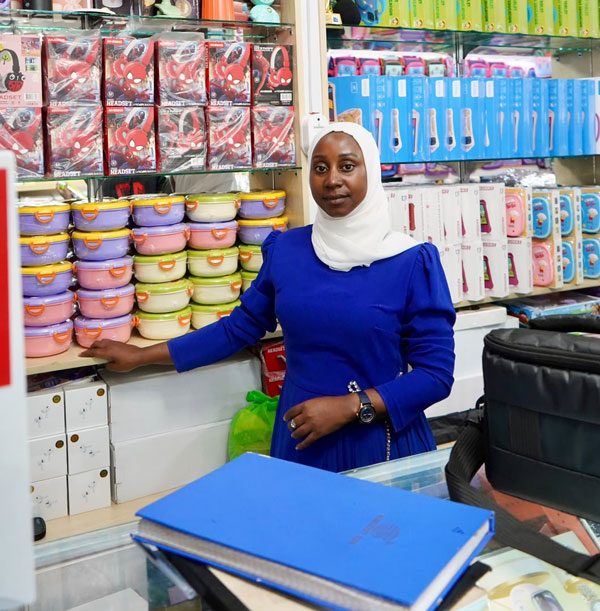
SPECIAL FEATURE | THE INDEPENDENT | Her name is Alma Daizy Namunswa. Online, she is known as Mummy Gadgets
What began in the boot of her car during Uganda’s COVID-19 lockdown has grown into Mummy Gadgets, a Kampala-based retail brand. Her journey mirrors the wider transformation of Uganda’s retail economy, the rise of social commerce and the growing influence of women-led entrepreneurship.
THE PANDEMIC THAT CHANGED HER PATH
When Uganda’s COVID-19 lockdown disrupted livelihoods and accelerated the country’s shift towards digital commerce, Alma Daizy Namunswa identified an opportunity in children’s educational technology.
The pandemic disrupted lives and livelihoods across Uganda in ways few could have anticipated. Businesses closed their doors, supply chains stalled, schools suspended classroom learning and thousands of workers suddenly found themselves without a stable source of income. For many families, the period was defined by uncertainty.
Yet periods of disruption often reshape markets in unexpected ways.
While sectors such as hospitality, tourism and entertainment experienced steep declines, demand began to emerge in areas linked to remote learning, home-based work and digital communication. Families who had never considered purchasing tablets suddenly found themselves looking for affordable technology that could help children continue their education outside the classroom.
For her, the crisis became an unexpected turning point.
Rather than waiting for economic conditions to improve, she began exploring ways of responding to the changing needs of Ugandan families. Speaking in interviews published by local media, Namunswa said the closure of schools highlighted a growing demand for educational technology, particularly among parents searching for practical learning tools for children adapting to online and home-based education. It was an observation that would eventually shape the direction of a business now widely recognised under the name Mummy Gadgets.
SHE STARTED FROM THE BOOT OF HER CAR
The enterprise began on a modest scale. Without a fully established retail outlet or significant start-up capital, she relied on digital communication platforms such as WhatsApp and Facebook while personally delivering products to customers across Kampala. Operating from the boot of her vehicle, she supplied educational tablets and children’s gadgets directly to families, building the business through personal interaction rather than conventional advertising.
The approach reflected a broader trend that emerged during the pandemic, when many Ugandan entrepreneurs adopted flexible business models in response to movement restrictions.
What distinguished her approach, according to customers interviewed by local media, was an emphasis on trust. Uganda’s electronics market has long faced concerns about counterfeit products, inconsistent warranties and limited after-sales support. For parents purchasing devices intended for children’s education, reliability became almost as important as affordability. Building confidence therefore became a commercial necessity.
Industry observers note that trust has become one of the defining currencies of digital commerce. Entrepreneurs able to establish credibility through customer experience frequently enjoy stronger word-of-mouth recommendations, particularly within family-oriented markets.
For Mummy Gadgets, that reputation developed gradually. Early customers shared their experiences through social media, recommendations spread among parents and teachers, and the business slowly expanded. As demand increased, what had started as a mobile retail operation evolved into a permanent outlet at Pioneer Mall in Kampala, marking an important milestone in the company’s development.
FROM ETHICS GRADUATE TO ENTREPRENEUR
Long before she became publicly known as Mummy Gadgets, her career aspirations followed a very different direction. Born on April 29, 1995, at Nsambya Hospital in Kampala, she later enrolled at Makerere University, where she pursued a Bachelor’s degree in Ethics and Human Rights. It was a discipline centred on governance, justice, accountability and the protection of human dignity.
Yet those who have followed her business journey argue that the principles she studied would later influence how she approached entrepreneurship. Rather than describing business purely in terms of sales or profitability, Namunswa has frequently emphasised customer trust, responsibility and long-term relationships, values that have become closely associated with the Mummy Gadgets brand.
During her university years, she also participated in community activities and charity initiatives, experiences that exposed her to the everyday challenges faced by many Ugandan families. While those engagements did not immediately translate into entrepreneurship, they reinforced an understanding that businesses could play a broader role than simply generating income.

The transition into entrepreneurship was neither carefully planned nor driven by long-held ambitions of becoming a technology retailer. Like many Ugandans, she found herself confronting the economic uncertainty brought about by the COVID-19 pandemic.
The pandemic, however, also exposed new gaps in the market.
With schools closed for extended periods, learning shifted into homes. Parents suddenly found themselves searching for practical ways to keep children engaged academically. Tablets, educational gadgets and digital learning tools became increasingly important for many families.
Speaking in interviews with local media, Namunswa explained that observing these changes prompted her to consider supplying educational gadgets specifically targeted at children. Rather than entering the highly competitive general electronics market, she identified a niche where demand was growing but specialised retailers remained relatively few.
Starting the business required careful financial decisions. Without significant investment capital or established commercial premises, she adopted a model that prioritised flexibility and low operating costs. Products were marketed primarily through WhatsApp and Facebook, while deliveries were made personally to customers across Kampala.
Her vehicle effectively became both warehouse and showroom.
Operating from the boot of her car, she transported educational tablets and related products directly to customers. The arrangement demanded long working hours and considerable persistence. Every order required coordination, travel and direct interaction with customers, but it also enabled her to understand consumer needs firsthand.
Instead of relying on formal market surveys, she learned directly from conversations with parents. Some wanted affordable devices capable of supporting online learning. Others prioritised durability because young children would be using the gadgets.
Many sought guidance on choosing suitable educational technology.
These conversations became an informal form of market research, helping shape the range of products offered by the business.
For her, those early deliveries also highlighted another challenge within Uganda’s electronics market.
Consumer confidence had been weakened by experiences involving counterfeit products, unreliable warranties and limited after-sales service. Parents investing in educational gadgets wanted reassurance.
Recognising those concerns, Mummy Gadgets gradually positioned itself around customer service rather than price competition alone. According to interviews published by local media, the business introduced an approach that placed considerable emphasis on product quality, demonstrations and after-sales support. Customers were encouraged to seek assistance whenever they encountered technical difficulties.
This focus on service would become one of the defining characteristics of the business.
Word-of-mouth recommendations gradually became an important driver of growth. Parents shared their experiences with friends, teachers recommended the business to families and satisfied customers returned for additional purchases.
It was during this period that the name “Mummy Gadgets” began to emerge organically.
Customers frequently addressed her simply as “Mummy” while making inquiries about tablets and children’s devices. Over time, the nickname became synonymous with the business itself, evolving into a brand identity that reflected both familiarity and trust.
SOCIAL COMMERCE AND THE RISE OF HER BRAND
As Uganda emerged from the strictest phases of the COVID-19 pandemic, businesses faced a different challenge. Survival was no longer the only priority; sustaining growth in an increasingly competitive marketplace became equally important.
It was within this changing commercial environment that Mummy Gadgets entered a new phase of development.
Rather than using social media merely to announce products or discounts, she transformed her online platforms into spaces where information, education and customer engagement became central to the business. Demonstrations showed parents how tablets functioned, how parental controls could be activated and which devices were suitable for different age groups.
Marketing specialists describe this approach as social commerce, where content itself becomes part of the buying experience.
In Uganda, TikTok has become one of the fastest-growing platforms supporting this shift. For small businesses operating with limited advertising budgets, the platform offers an opportunity to reach audiences that would otherwise be difficult to access through conventional media.
Her content reflected this broader trend. Rather than producing highly scripted advertisements, many of her videos featured practical demonstrations, customer interactions and everyday experiences inside the business. Parents could see products in use before making purchasing decisions.
For Mummy Gadgets, online engagement gradually translated into commercial growth.
Customers who first encountered the business through TikTok, Facebook or WhatsApp frequently visited the physical store after gaining confidence through online interactions. Others completed purchases entirely through delivery services. The relationship between physical and online retail became increasingly interconnected, reflecting a “phygital” model.
As demand expanded, the limitations of operating exclusively from a vehicle became increasingly apparent.
Inventory volumes grew. Customer traffic increased. The need for a permanent retail location became unavoidable.
The establishment of a physical outlet at Pioneer Mall represented more than a change of address. It marked the transition from a start-up operating with minimal infrastructure into a structured retail business capable of serving larger numbers of customers. The shop provided opportunities for parents to inspect devices before purchasing, receive demonstrations from trained staff and seek technical support after sales.
Visitors to the Pioneer Mall outlet increasingly encountered more than shelves displaying gadgets. The store functioned as an advisory space where parents sought recommendations about devices suitable for different ages, educational applications and digital safety. Staff members demonstrated products, explained technical features and guided customers through installation procedures.
At the same time, expansion brought new responsibilities for her as a business leader.
The entrepreneur who had once managed procurement, marketing, deliveries and customer communication largely on her own now faced the challenge of leading a growing organisation. Staff recruitment, operational systems, supplier coordination and financial planning became increasingly significant components of the business.
According to interviews she has given over the years, Namunswa acknowledged that growth required continuous learning and adaptation. Building systems, training employees and maintaining consistency across expanding operations demanded different skills from those required during the company’s earliest days.
HER LEADERSHIP, EXPANSION AND WOMEN-LED ENTERPRISE
As Mummy Gadgets continued to grow, she found herself confronting a challenge familiar to many entrepreneurs: building a business is one task, but sustaining and expanding it is another entirely.
The early months of the business had largely depended on individual effort. She sourced products, negotiated with suppliers, communicated with customers, managed deliveries and handled after-sales support herself.
Growth gradually changed those demands.
An increasing customer base meant larger inventories, more complex logistics and greater expectations for consistent service. Instead of focusing solely on sales, she increasingly had to think about organisational systems, staff development and long-term planning.
For her, that transition coincided with broader changes taking place within Uganda’s retail economy. Consumer expectations were evolving rapidly. Customers increasingly expected prompt communication, transparent return policies, reliable delivery and professional after-sales support.
Industry observers note that businesses operating within digital commerce now function under unprecedented public scrutiny. For entrepreneurs whose brands are closely linked to their personal identities, maintaining public confidence requires continuous engagement.
This appears to have influenced the culture that developed around Mummy Gadgets. Rather than treating customer service as an activity limited to the point of sale, the business increasingly emphasised ongoing support. Parents purchasing educational gadgets often required assistance with device configuration, software installation, parental controls and troubleshooting.
For women entrepreneurs, additional challenges often accompany commercial realities.
Research on entrepreneurship across Africa has consistently highlighted barriers including limited access to finance, unequal networking opportunities and persistent stereotypes surrounding women in business leadership.
Namunswa has publicly acknowledged some of these experiences in interviews, recalling occasions when suppliers or business partners underestimated her because she was both a young entrepreneur and a mother.
Yet analysts also note that digital platforms have helped reshape aspects of this landscape.
Unlike traditional business environments, social media has enabled entrepreneurs to build audiences based on expertise, authenticity and customer engagement. This shift has created new opportunities for women-led enterprises.
Mummy Gadgets emerged during this period of transformation.
Its growth therefore reflects not only individual determination but also structural changes occurring within Uganda’s entrepreneurial ecosystem.
BEYOND RETAIL: HER DIVERSIFICATION AND THE FUTURE
As Mummy Gadgets established itself within Kampala’s retail sector, the business entered another stage of development—one centred not only on selling products but also on building an enterprise capable of adapting to changing market conditions.
One of the most visible developments has been the establishment of Mummy G Real Estate, an initiative that reflects a broader trend among Ugandan entrepreneurs who diversify their investments after building successful businesses. In interviews, Namunswa has described the expansion as being guided by a similar philosophy that informed the creation of Mummy Gadgets: responding to practical needs affecting Ugandan families.
Business analysts caution, however, that diversification also introduces new risks. Managing operations across different industries requires specialised knowledge, stronger organisational structures and careful financial planning.
For Mummy Gadgets, maintaining customer confidence remains central to its continued growth. Uganda’s electronics market continues to evolve rapidly. Parents today are not simply purchasing tablets; they are seeking products that support digital literacy, creativity and safe internet use.
Education specialists argue that digital learning is likely to remain an important component of Uganda’s education system. This shift has created sustained demand for affordable technology suited to children’s educational needs.
The growth of Mummy Gadgets has also attracted attention from Ugandan media, where her entrepreneurial journey has been featured in stories examining digital commerce, women-led enterprise and the changing nature of retail.
Communications experts observe that personal branding has become an increasingly influential factor in modern entrepreneurship. For her, the public identity of “Mummy Gadgets” has evolved into more than a nickname. It has become a recognisable brand associated with educational technology, parenting and entrepreneurship.
Looking ahead, the future of Mummy Gadgets will likely be influenced by several factors shaping Uganda’s broader economy. Continued improvements in internet access, digital payment systems and smartphone penetration are expected to encourage further growth in e-commerce.
Ultimately, her story is about more than the growth of a single business. It reflects wider changes taking place across Uganda’s entrepreneurial landscape, where digital platforms have expanded opportunities for small enterprises, women are assuming increasingly visible leadership roles in business, and customer trust has become one of the most valuable assets a company can possess.
Her journey—from delivering educational gadgets from the boot of a car during one of the country’s most difficult economic periods to leading an established retail brand—illustrates how entrepreneurship often develops through incremental progress rather than dramatic overnight success.
As Uganda continues to embrace digital transformation, her experience provides insight into the changing character of commerce itself. Retail is increasingly shaped by relationships, technology, credibility and the ability to engage customers across both physical and digital spaces.
Whether Mummy Gadgets expands further within Uganda or into regional markets remains a story that is still unfolding. What is already clear, however, is that its development has mirrored important shifts within Uganda’s economy—demonstrating how resilience, innovation and sustained customer confidence can transform a modest start-up into an enterprise with a growing national profile.