The Independent Uganda: You get the Truth we Pay the Price


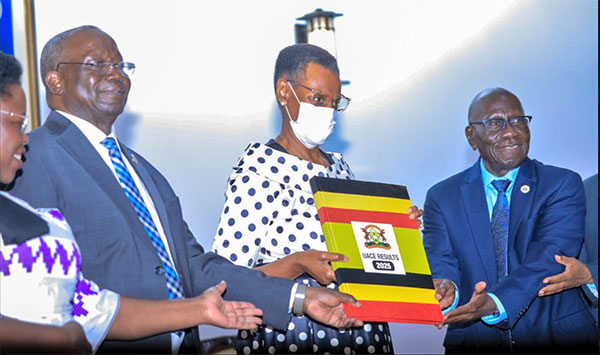
Kampala, Uganda | THE INDEPENDENT | Makerere University has stepped forward to claim credit for the recent increased performance in Biology performance in national examinations, pointing to its research-driven interventions as a key driver behind gains at the Advanced level.
Recently released UNEB data confirm a marked improvement in Biology, with the proportion of candidates achieving principal passes (grades A to E) rising to 64.4 percent from 57.7 percent in 2024. Top-tier A grades jumped sharply to around 5.6–5.9 percent from just 1.1 percent the previous year, reflecting stronger overall outcomes in the subject alongside gains in other sciences like Mathematics and Chemistry.
Now, Researchers under the Uganda National Biology Society at Makerere say this was all due to their study that examined long standing poor performance in biology in national examinations and proposed changes in teaching methods, school support systems, and curriculum alignment.
Fredrick Muyodi, a professor involved in the study, said the research set out to identify the root causes behind weak biology results in the Uganda National Examinations Board assessments at both Uganda Certificate of Education and Uganda Advanced Certificate of Education levels.
“For several years their was learners in Uganda were performing poorly in biology during the National exams which triggered Makerere to carry out a study of the problem and come up with lasting solutions,” he noted.
Prof. Muyodi made the remarks at the event where Makerere university presented its strategic plan for the 2025/2026–2029/2030 period.
He mentioned that during their study they found out that biology teaching was predominantly theoretical with limited practical and field based learning. The study also showed several schools face inadequate laboratory facilities and teaching materials and low digital access in many regions.
But, this was no new finding as it has been listed in UNEB reports for years. The study also indicated that digital access remains limited in many regions and schools with low student engagement with real life time application of biology as well as coordination gaps between the curriculum design and the assessment.
Prof. Muyodi mentioned the recent improvement in the biology performance in the just released UACE exams and a year before is due to the engagements with stakeholders adding that there is a need for sustainable improvement.
Prof. Muyodi said findings from the study guided targeted engagements with teachers, schools, and education stakeholders. These collaborations, he noted, helped shape interventions linked to the recent improvement in biology results, visible in the 2025 Uganda Advanced Certificate of Education outcomes and the previous year’s performance.
He further urged sustained investment in laboratory resources, teacher training, and school infrastructure to secure consistent progress rather than temporary shifts in results.
According to Prof. Muyodi the study on performance in biology was conducted in four regions which include the Central, Northern, Western, Eastern regions covering 100 districts and engaging over 5000 stakeholders.
The university’s claim of direct influence, though, still invites scrutiny due to limited evidence linking specific interventions to changes in examination outcomes.
Dr. Godfrey Kawooya Kubiriza the head of Zoology, Entomology and fisheries at the college of Natural sciences said that the most affected regions in regard to biology performance is the Northern and the Eastern regions but saying that the challenge exists nationally.
Kawooya also said that the study showed that there is a student based challenge where students inconsistently attend school mostly in the Karamoja the north eastern Uganda.
He also noted that interacting with teachers, many of them emphasized the need for skilling in regard to practice training and also understand the innovative ways of teaching.
Biology performance at Uganda Advanced Certificate of Education level shows clear improvement, with stronger gains recorded among higher grades. Results at Uganda Certificate of Education level didn’t paint a rosy picture since performance at higher scores declined slightly.
According to UNEB data, the share of candidates scoring grade A at O level fell from 1.9 percent in 2024 to 1.3 percent this year, while grade B dropped from 16.7 percent to 14.6 percent.
However, failure rates, improved with candidates scoring grade E reducing from 2.3 percent to 0.6 percent.
The shift points to fewer cases of complete non mastery even though growth in top grades still lags.
Whether the interventions led by Makerere University stand as the main driver of improvement or one factor among several influences in the education system remains open to debate.
The recent biology gains signal gradual progress, yet sustained monitoring and broader reforms remain essential to ensure improved learning outcomes across schools and regions.
***
URN