The Independent Uganda: You get the Truth we Pay the Price


The controversy and promise of Uganda’s new health pact with the United States
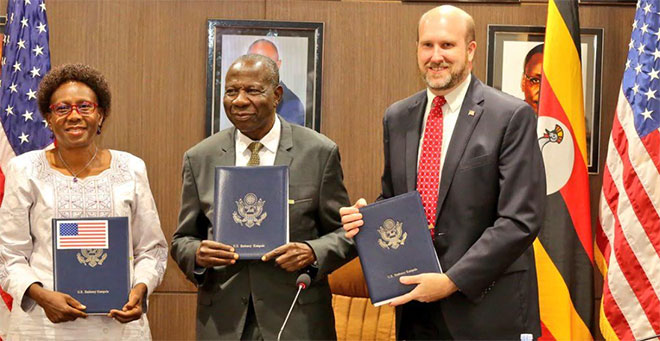
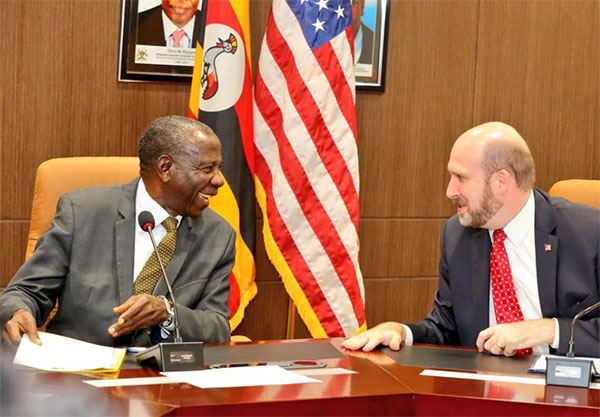
Kampala, Uganda | RONALD MUSOKE | On Dec. 10, 2025, Uganda entered into one of the most consequential health partnerships in its recent history. At the Ministry of Finance headquarters in Kampala, senior officials from Uganda and the United States signed a five-year bilateral health cooperation Memorandum of Understanding (MoU) worth an estimated US$2.3 billion (UShs 8.09 trillion) under Washington’s “America First Global Health Strategy.”
The agreement commits US$1.7 billion from the United States government, while Uganda pledged to increase its own health spending by US$577 million over the same period. Finance Minister Matia Kasaija, signing on behalf of Uganda, described the arrangement as an opportunity to strengthen the country’s public health systems.
“This collaboration will yield not only disease-specific outcomes but also significant improvements in national systems, institutions, and workforce capacity,” Kasaija said at the signing ceremony. “This is highly commendable.”
The partnership focuses on critical areas including HIV/AIDS, tuberculosis, malaria, maternal and child health, disease surveillance and emergency preparedness. It also promises expanded laboratory networks, stronger pharmaceutical supply chains and increased training for health workers. For Washington, the agreement represents part of a sweeping overhaul of how the United States organizes global health assistance. U.S. Ambassador to Uganda, William W. Popp, framed the agreement as a strategic evolution rather than simply another aid package.
“We are building on prior successes and making a significant shift towards promoting self-reliance in the health sector through strong community health systems, clear performance metrics, and a foundational commitment to data systems and global health security that will prevent and stop outbreaks from threatening Uganda, the United States and the world,” he said.
Ugandan officials were equally keen to emphasise that the deal represents a partnership between sovereign states rather than the traditional donor-recipient relationship that has defined decades of development assistance.
Health Minister, Dr. Jane Ruth Aceng, stressed that Uganda’s authority over its biological resources and health information would remain intact. “Uganda’s sovereignty over its biological resources and health data is invaluable and non-negotiable,” Aceng said.
“We are leaving behind outdated, extractive models. Every aspect of data sharing must adhere to three non-negotiable principles: mutual benefit, prior sovereign consent and full transparency in compliance with Ugandan law.”
She added that the partnership signals a shift in Uganda’s development trajectory. “Today we elevate that relationship from traditional aid to a strategic, sovereign-driven partnership that fully aligns with and accelerates Uganda’s health sector development plan.”
Yet even as officials celebrated the agreement, a deeper conversation was beginning to unfold across Africa — not about the billions of dollars promised, but about the finer details embedded within such partnerships.
Washington’s new approach to global health
Uganda’s agreement forms part of a broader policy shift in Washington. The America First Global Health Strategy, first outlined in September 2025, aims to re-organise U.S. health assistance around direct, multi-year bilateral agreements with partner governments.
The model represents a departure from earlier approaches where American funding flowed largely through multilateral institutions and large global programmes. Under the new system, countries sign individual agreements with Washington that include co-financing commitments, performance targets and integrated data reporting systems. The U.S. State Department says the objective is to make health programmes more sustainable while reducing inefficiencies.
Since 2001, Washington says it has invested more than US$204 billion globally in health programmes ranging from HIV/AIDS treatment to malaria control and vaccine campaigns. But officials in the Trump Administration argue that many programmes built over the past two decades relied heavily on foreign financing and parallel administrative systems. The new strategy aims to gradually transfer responsibility, and costs, to national governments.
Uganda’s agreement illustrates this approach. While the United States provides the majority of the funding, the Ugandan government will increase its own health spending by about US$50 million annually over five years.
Another major shift involves the integration of American-funded local health workers into national payrolls and the consolidation of health data systems. The agreement also emphasises digital transformation: electronic medical records, integrated surveillance systems and centralised health data warehouses. From Washington’s perspective, these investments are not merely administrative reforms; they are part of a broader national security strategy.
In an era shaped by pandemics, the United States increasingly views disease surveillance abroad as essential to protecting its own population. But the same systems that promise earlier outbreak detection are also the source of growing concern across Africa.
Data at the centre of the debate
At the heart of the controversy surrounding the Uganda MoU lies a fundamental question: who controls the vast quantities of health data produced by modern digital health systems? The agreement includes major investments in electronic medical records, integrated laboratory networks and real-time disease surveillance platforms. According to Ugandan officials, these systems are designed to improve accountability and monitor progress toward public health targets.
Dr. Aceng sought to reassure the public, noting that data sovereignty would remain protected. “The aggregate data is for supporting the U.S Congress in taking its decisions on the progress we are making at every step,” she said, shortly after the signing ceremony. “The raw data remains with the government of Uganda as a sovereign country and whatever form of data that is required will be agreed to according to all the laws of Uganda.”
Yet some analysts argue that the structure of the agreement raises deeper questions. Legal researcher David Waboga has warned that the most significant provisions may lie not in the MoU itself but in related agreements governing long-term data access.
“I am particularly concerned about how this agreement handles the privacy, security, and sovereignty of Ugandans’ health data,” Waboga who works with LawPoint Uganda, a Kampala-based non-profit, wrote in a legal analysis, shortly after the MOU was made public.
He notes that digital health systems are transforming how information about diseases and patients is collected. “Modern health systems increasingly rely on digital technologies, raising serious questions about data governance, accountability, and compliance with Uganda’s Data Protection and Privacy Act,” he said.
According to his analysis, the types of information involved could include highly sensitive data such as HIV status, tuberculosis results, pregnancy records and maternal health indicators. Critics worry that even anonymized data could potentially be re-identified through sophisticated data-matching techniques.
“Major investments, especially those tied to digital health, must come with strong safeguards,” Waboga warned. Another issue involves the sharing of biological specimens and pathogen genetic sequences.
Under international health regulations, countries detecting outbreaks are expected to share information promptly to ensure rapid response from partners. But critics argue that this system sometimes allows private pharmaceutical companies or foreign laboratories to develop profitable innovations without guaranteeing benefits for the countries that supplied the original samples.
Parliament begins asking questions
Legislators in Uganda are raising questions about the MoU’s implications. On Dec. 17, Deputy Speaker Thomas Tayebwa directed Parliament’s Committee on Health to review the MoU and report on its implications.
The directive followed concerns among legislators about whether the agreement required parliamentary ratification and what provisions governed data sharing. Opposition leader, Joel Ssenyonyi, also demanded scrutiny of the MoU.
But 12 weeks later, several lawmakers told The Independent that they have not seen the agreement. When contacted by The Independent on March 5, Dr. Joseph Ruyonga, the chairperson of Health Committee in the 11th Parliament, said the committee had neither seen nor examined the MoU.
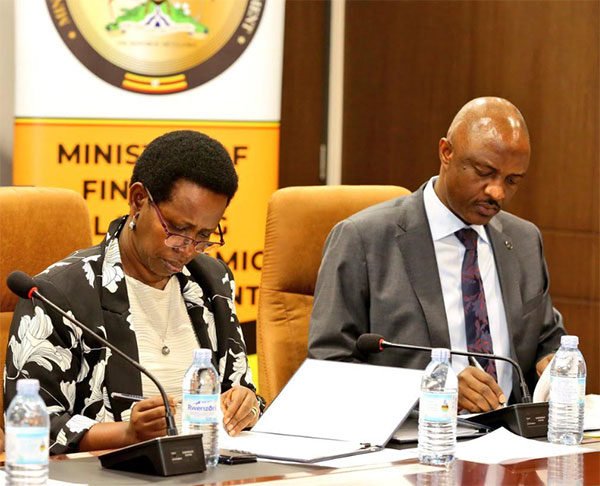
Another committee member, Dr. Lulume Bayigga, said he too had not seen the document. However, he said his initial reaction raised concerns about how the agreement might affect Uganda’s control over health information.
“I thought it would impair the ability of local researchers to carry out their research using local data,” Bayigga told The Independent on March 5. “This is something our policy analysts should pursue.”
The uncertainty surrounding the MoU has also been reflected in responses from civil society. When The Independent contacted several organisations working in the health and human rights space, many said they were unfamiliar with the details of the agreement.
Even officials from scientific institutions declined to comment. The head of the Uganda Virus Research Institute (UVRI) referred questions to the Ministry of Health, whose spokesperson Emmanuel Ainebyoona said only the minister or the permanent secretary could speak about the matter. The Independent reached out to the Permanent Secretary at the Ministry of Health, Dr. Diana Atwiine, but she neither picked nor returned our calls on March 5. The limited access to information has further fuelled concerns about transparency.
Kenya’s legal battle
Uganda’s debate on the MOU has not emerged in isolation. Across the border in Kenya, a nearly identical agreement triggered an immediate legal challenge. On Dec. 11, 2025, just one day after Uganda signed its MoU, Kenya’s High Court suspended a similar US$1.6 billion health cooperation pact with the United States. The case was filed by the Consumers Federation of Kenya (COFEK) and Senator Okiya Omtatah, who argued that the agreement risked violating Kenya’s Data Protection Act of 2019.
The court issued conservatory orders blocking any transfer or sharing of sensitive health data until the case is fully heard. The petitioners warned that insufficient safeguards could expose citizens to privacy violations or misuse of personal information. The case quickly became a focal point for regional debates about the new U.S. strategy.
For Ugandan analysts, it demonstrated that courts could intervene in international agreements if they appear to conflict with domestic data protection laws. Waboga argued that the Kenyan case underscores the importance of strong legal oversight.
Zambia’s hesitation
Further south, Zambia has also expressed reservations. On Feb. 25, the Zambian government said it had delayed signing a US$1 billion health aid agreement with the United States after reviewing revised provisions. The programme includes major investments in HIV treatment, malaria control and maternal health, alongside a US$340 million co-financing commitment from Zambia. But negotiations stalled after officials flagged a problematic clause.
A spokesperson from the Zambian Ministry of Health explained to Reuters the government’s position. “That section did not align with the position and interests of the government of Zambia. We have therefore requested further revisions to the content in question.”
Although the specific clause was not publicly disclosed, activists in Zambia suggested that data-sharing provisions were part of the concern. Owen Mulenga of the Treatment Advocacy and Literacy Campaign argued that the arrangement appeared unequal.
“The data sharing will be one way from Zambia to the U.S and the information will benefit the U.S,” Mulenga told Reuters. He added that transparency must accompany any health partnership.
“We need support from the U.S. but there should be transparency,” Mulenga said. The Zambian case illustrates how global health agreements are increasingly intersecting with broader geopolitical considerations, including economic cooperation and resource governance.
Zimbabwe’s rejection
Zimbabwe went further. On the same day the Zambian government said it had vacillated signing the MOU, the government in Harare withdrew entirely from a US$367 million health cooperation agreement with Washington. Government spokesperson, Nick Mangwana, said the arrangement lacked reciprocity.
“At its core, the arrangement was asymmetrical,” Mangwana said. “Zimbabwe was being asked to share its biological resources and data over an extended period, with no corresponding guarantee of access to any medical innovations… such as vaccines, diagnostics, or treatments… that might result from that shared data.”
He also pointed out that the United States was not offering reciprocal access to its own epidemiological data. “The U.S was not offering reciprocal sharing of its own epidemiological data,” he said. Despite the rejection, Mangwana emphasised that Zimbabwe’s decision was not motivated by hostility toward Washington.
“This growing continental reflection should not be misconstrued as an anti-American sentiment,” he said. “It is a sign of Africa’s maturation as a geopolitical actor, one that seeks partnerships based on equality rather than patronage.”
Africa CDC enters the conversation
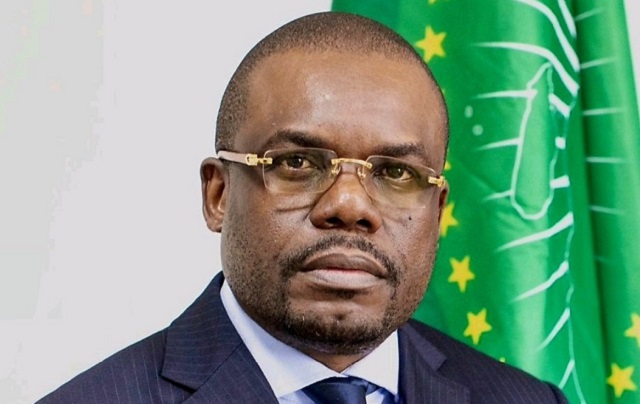
The debate has also drawn attention from continental institutions. Dr. Jean Kaseya, who is the Director-General of the Addis Ababa-based Africa Centres for Disease Control and Prevention, an institution that is mandated by the African Union to strengthen the capacity of Africa’s public health institutions to detect and respond quickly and effectively to disease threats and outbreaks based on data-driven interventions and programmes, has since come out to defend the right of African governments to renegotiate such agreements.
“It’s not a joke, it’s a serious issue,” Dr. Kaseya said during his monthly virtual press briefing on Feb. 26. Dr. Kaseya said Africa CDC, had long sought clarity from Washington regarding claims that the United States provides US$18 billion annually in health assistance to Africa. When data was shared with African health ministers, he said, it did not match their records. “None of them — I say none of them — recognised this amount of money that the U.S. was saying it was providing to African countries,” he said
Dr. Kaseya added that Africa CDC had initially welcomed aspects of Washington’s strategy but grew concerned when negotiations on bilateral agreements began without full continental participation.
Apparently, Washington had wanted Africa CDC to participate as “observers.” “We cannot be an observer when a partner is coming to talk to our countries,” he said. “We are talking about sovereignty. We are talking about global health security.”
“There are huge concerns regarding data and pathogen sharing,” he continued. “We want to hold our data in Africa. We want to hold our future.” At the same time, he emphasised that Africa CDC would respect the decisions of individual governments. “I’m supporting Zimbabwe if they want further negotiation. I’m supporting Zambia and other countries,” he said. “But for countries who decided to sign, we will also support them for implementation.”
Accountability and global health security
American officials insist the concerns are misplaced. At a policy briefing at the American Centre in Kampala on Feb. 17, senior officials from the U.S. Embassy and the Centres for Disease Control and Prevention (CDC) defended the agreement between the U.S and Uganda.
Dr. Mary Boyd, the Director of CDC in Uganda, described the MoU between the U.S and Uganda as the next stage in a partnership that has lasted over 60 years.
“The CDC has been engaged in Uganda for several decades,” Dr. Boyd said. “We work closely with the Ministry of Health to strengthen Uganda’s public health systems to address the big diseases — HIV, TB, malaria — and to expand life-saving vaccines and other interventions.” She stressed that U.S. interests revolve around accountability for taxpayer funds rather than control over national data.
Officials at the embassy say financial accountability is a major motivation behind the agreement. The Trump administration has emphasized stricter oversight of foreign assistance spending, a policy championed by U.S. Secretary of State Marco Rubio.
“Accountability is a huge part of how we spend U.S. taxpayer money,” said Mary Borgman, the Director, Global Diplomacy at the US Embassy in Uganda. “We need to demonstrate that the investments we make achieve real results.”
“Our interests are in the outcome metrics—HIV, TB, malaria, measles, polio—the things we agreed to,” Dr. Boyd said. “And our interest is in aggregated data that proves or disproves that we met those metrics that we signed up to.”
According to the officials, data verification systems built into the agreement are meant to guard against fraud, waste and misuse of funds. “It’s not enough to say we treated 30 people,” Boyd said. “We need to know those people are actually recorded in the system.”
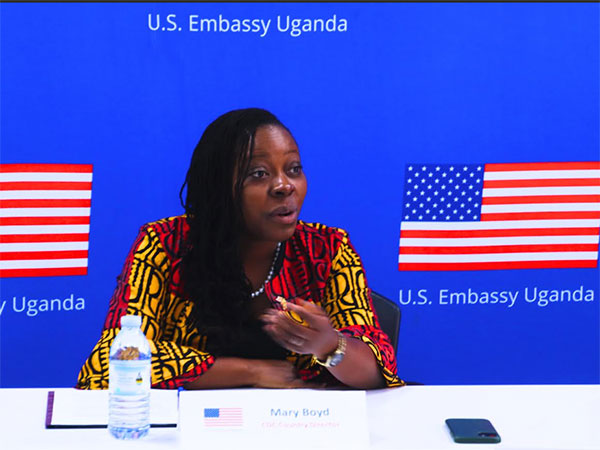
Dr. Boyd said the information involved is anonymized and already similar to national health statistics shared annually with global institutions such as UNAIDS. “The data agreement is around aggregated data; that is non-personally identifiable information,” she said.
She said the agreement also focuses heavily on global health security. One central goal is achieving the “7-1-7” outbreak response benchmark, which aims to detect a disease within seven days, report it within one day and respond effectively within seven days.
“If we do that, Uganda will be safer, the countries around Uganda will be safer, and of course the United States will be safer,” Dr. Boyd said. She argued that the approach reflects lessons learned from recent outbreaks such as Ebola.
“When we stop outbreaks at their source, we make everyone safer,” Boyd said. She noted that preventing epidemics abroad can also save enormous costs worldwide. “The cost of a disease like Ebola spreading internationally is enormous,” she said. “Every time we stop an outbreak early, we save lives and resources globally.”
The rise of the pathogen economy
Yet some researchers say the debate goes beyond data privacy. Prof. Peter Waiswa, an associate professor at Makerere University School of Public Health, believes the real issue is the economic value of biological samples.
“The Zimbabwe concerns should be the same concerns for Uganda,” he told The Independent. “I think the major concern is that we share biological samples which are of huge economic value. This is what they call the pathogen economy.” The term refers to the growing global market around pathogen genetic sequences, which can be used to develop vaccines, diagnostics and treatments.
In recent years, pharmaceutical companies and biotechnology firms have relied heavily on such data to develop new products. Critics argue that countries providing the original samples often receive limited benefits from resulting innovations.
Still, not everyone sees the issue in purely adversarial terms. Moses Talibita, a legal officer at the Uganda National Health Consumers Organization, argues that international cooperation remains essential for global disease control. “Data sovereignty, integrity and protection is a health security concern that is best guarded by governments,” Talibita told The Independent. But he cautioned that overly restrictive policies could undermine international health collaboration.
“While health is increasingly becoming a global solidarity issue, there is a seemingly global shift in practice where countries are more inward looking rather than outward looking,” he said. “In the solidarity of international health regulations and disease surveillance, response and mitigation, personal data should not be segregated for it becomes isolationist and not good for patient rights practice.”
A continental moment of reflection
Across Africa, the debate over Washington’s new health agreements reflects a deeper shift. Many countries remain heavily dependent on external financing for public health programmes. Yet governments are increasingly aware of the strategic value of their data and biological resources. Digital health systems now collect vast quantities of information; from genetic sequences of pathogens to detailed demographic health patterns. That data has immense scientific and economic value. The challenge facing African governments is determining how to share such information in ways that protect national interests while enabling global health cooperation.
When The Independent asked the U.S. Embassy in Kampala if indeed the health cooperation agreement requires Uganda to share health data long before the MOU elapses in 2030, the Spokesperson, Amy Petersen, said via email: “The United States and Uganda have longstanding, well-established data-sharing practices that focus on aggregated, de-identified programmatic data governed by Uganda’s policies, laws, and approval mechanisms, which continue under this health MOU.”
She added: “This data is required for planning, monitoring progress, and reporting to the U.S. Congress on the use of U.S. taxpayer funds and impact of these health investments. We refer you to the Ugandan Ministry of Health for additional details.”
Uganda’s delicate balancing act
For Uganda, the stakes are particularly high. American-funded programmes, especially the U.S. President’s Emergency Plan for AIDS Relief (PEPFAR), have played a central role in the country’s fight against HIV/AIDS and other diseases.
This assistance has also helped build laboratory systems, epidemiology training programmes and outbreak response networks. The new MoU promises billions of dollars more in investment and expanded digital infrastructure. If implemented effectively, those investments could significantly strengthen Uganda’s health system. But they also force policymakers to confront complex questions about sovereignty, governance and the value of health data in a rapidly digitalizing world.
Waboga summarizes the dilemma succinctly. “The U.S.–Uganda MoU could significantly improve Uganda’s health care… but that promise will only be realized if its implementation is paired with tight safeguards for privacy, data protection, and national sovereignty.”
As parliamentary reviews, legal debates and regional discussions continue, Uganda’s experience may shape how African countries negotiate global health partnerships in the years ahead because in the modern world of interconnected diseases and digital surveillance, the most valuable resource in global health may no longer be funding or medicines. It may be data.