The Independent Uganda: You get the Truth we Pay the Price


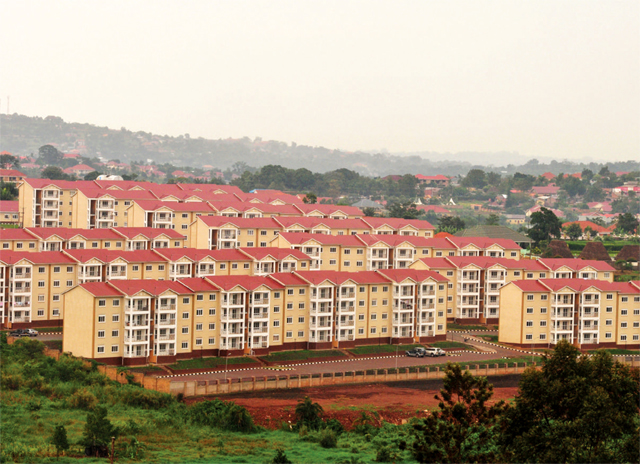
COMMENT | ANDREW MUSANJE | Uganda’s ambition to grow its economy tenfold, from US$50 billion to US$500 billion by 2040, is one of the biggest economic targets ever set. However, achieving it will require more than increased agricultural production, industrialisation, tourism, mineral development and technological innovation. We need stronger financial systems that enable households and businesses to invest in productive assets. Mortgage financing is one such mechanism and deserves greater attention.
According to the World Bank, successful economies like Denmark, Switzerland and the Netherlands have leveraged mortgage financing to mobilise domestic capital across construction, manufacturing, banking and consumer spending. While Denmark’s mortgage debt is above 80 percent of GDP, Uganda’s stands at only about 1 percent, highlighting the underdevelopment of housing finance.
Uganda’s housing sector contributes about 11 percent of GDP, yet rapid population growth has caused demand to consistently outpace supply. The Ministry of Finance estimates the housing deficit at 2.4 million units, while only about 60,000 units are constructed annually against an estimated demand of 200,000.
The gap is not merely a housing problem but also a constraint on economic growth.
Housing has a strong multiplier effect in the economy because it connects financial services with manufacturing, trade and employment. Every house constructed creates demand for building materials, paint, transport, architects, engineers, surveyors, electricians, plumbers and construction workers.
The National Development Plan IV recognises affordable housing and sustainable urbanisation as important components of Uganda’s transformation agenda. However, mortgage loans account for less than 1 percent of GDP, significantly below many emerging economies.
As a result, many Ugandans finance home construction through personal savings. With only about 3 in 10 able to afford decent housing, many households build with limited resources, often compromising on construction materials and moving into incomplete structures.
I have seen housing units without windows, poor ventilation, partial plastering and unfinished painting, among other defects. These compromises leave homeowners with substandard housing, tie up household savings for years and slow economic activity.
Mortgage financing can change this equation. Beyond improving access to home ownership, it allows households to convert future income into productive investment today. A doctor, engineer, entrepreneur or civil servant with a stable income can acquire a home and repay over time. This accelerates construction and creates jobs across several sectors.
A mortgage is, therefore, not simply a loan but a mechanism for asset accumulation, financial security and intergenerational wealth transfer. This is particularly important given Uganda’s young population and rapid urbanisation, which are increasing demand for housing, transport, utilities and financial services.
As the African Development Bank notes, “Housing finance increases the availability and affordability of housing, creates jobs in the construction sector and drives economic activity.”
If housing is not made more affordable now, Uganda risks larger informal settlements, greater inequality in asset ownership and missed opportunities for domestic investment.
To unlock the potential of mortgage financing, we must address barriers like high interest rates, short-term funding structures, limited access to long-term capital, land titling constraints and the high cost of formal housing. Many potential borrowers also operate in the informal sector, where income documentation can be challenging.
DTB Managing Director Godfrey Ssebaana put it clearly: “We need patient capital if we are to enhance affordable housing for all Ugandans.”
Land reforms, faster registration processes, improved property valuation systems and greater certainty around land ownership can reduce transaction costs and improve access to mortgage credit. Financial institutions must also innovate mortgage products that reflect the realities of Ugandan households, including incremental construction, mixed income sources and the needs of first-time home buyers.
Uganda already has the foundations for a stronger mortgage market. The banking sector is well capitalised, customer deposits have grown beyond UGX 40 trillion, according to the Deposit Protection Fund, while digital financial services continue to expand and demand for quality housing remains strong. What is needed now is a deliberate effort to connect long-term savings with long-term housing investment.
The conversation around the tenfold growth strategy should therefore give housing finance greater prominence. Home ownership supports financial inclusion, deepens capital markets and creates demand across the wider economy.
If Uganda is to achieve its tenfold growth ambition, we should not look at mortgage financing as merely a banking product but as a national development priority. Making long-term housing finance more affordable and accessible can help bridge the housing deficit while stimulating construction, employment, investment and household wealth, ultimately contributing to the broader economic transformation Uganda seeks by 2040.
****
 The author is the Head of Retail Banking at Diamond Trust Bank, Uganda