 The Independent Uganda: You get the Truth we Pay the Price


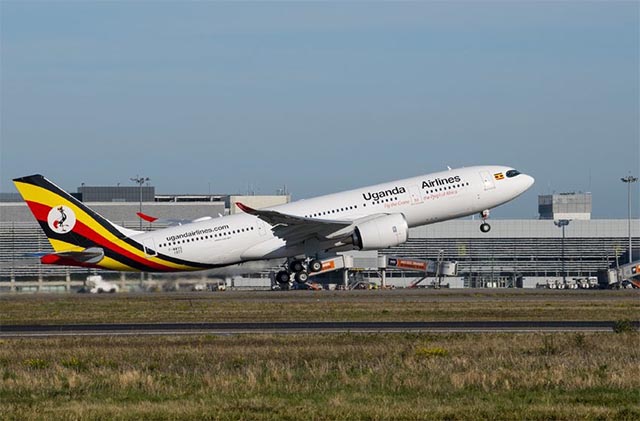
Carriers buoyed by unprecedented efficiency, but African operators lag amid high costs, older fleets
London, UK | THE INDEPENDENT | Global airlines are on track to achieve a record net profit of $41 billion in 2026, the International Air Transport Association said in its latest outlook, as carriers squeeze historic efficiency from constrained fleets. The forecast, up from an expected $39.5 billion this year, underscores an industry navigating persistent supply shocks and shifting trade flows to protect thin margins.
The resilience, however, is unevenly distributed. While Middle Eastern airlines boast profit margins nearing 10%, their African counterparts are grappling with unit costs nearly double the global average, leaving the continent with a projected net margin of just 1%.
Industry analysis suggests the sector is mastering the art of doing more with less, but the machinery is stretched. Aircraft shortages are forcing older, less efficient planes to fly longer, increasing operational costs and complicating sustainability goals.
Regional fractures widen
The projected global net profit margin will hold steady at 3.9% for 2025 and 2026. Beneath the surface, regional fortunes are diverging sharply.
Europe is set to deliver the highest absolute net profit at $14.0 billion, buoyed by disciplined capacity management. The Middle East remains the profitability leader, forecast to achieve a net margin of 9.3%—more than double the global average—on the back of its strategic hub networks.
Asia Pacific continues as the growth engine, with passenger traffic expected to expand 7.3%, led by China and India. It is projected to post a $6.6 billion net profit. North America, facing stagnant domestic demand and operational snarls, will see profits of $11.3 billion but cedes its top spot in absolute terms to Europe.
Latin America shows signs of structural improvement, forecast to generate a $2.0 billion profit. Africa, however, remains the laggard. Despite passenger traffic growth of 6.0%, it is expected to scrape a net profit of just $0.2 billion. The continent’s narrative is one of potential shackled by structural inefficiency, where systemic headwinds—from elevated fuel costs and aging fleets to market fragmentation—consistently erode financial performance.
A primary driver of global profitability is an acute aircraft shortage. The report notes a delivery gap exceeding 5,000 aircraft, with the order backlog ballooning to 17,000, equivalent to almost 60% of the active fleet. This scarcity is pushing passenger load factors to a record 83.8%, allowing airlines to maintain pricing power despite softer yields.
The shortage is viewed as structural, unlikely to be resolved before the early 2030s. The bottleneck is exacerbated by engine supply issues, with manufacturers sometimes storing completed airframes awaiting powerplants. This constraint has a dark side: it delays fleet renewal, forcing airlines to operate older, less fuel-efficient aircraft. The average wide–body age has risen to 14.5 years from under 12 years in 2019, undermining fuel burn improvements and inflating maintenance costs.
While jet fuel prices are easing—forecast at $88 per barrel in 2026, down from $90 in 2025—a new cost champion has emerged. Labour is now the largest expense category, accounting for 28% of operating costs, as wage inflation and acute shortages of pilots and technicians bite. The pendulum has swung, with fuel cost relief being offset dollar-for-dollar by rising labour and ownership expenses.
The path to the industry’s 2050 net-zero target is proving costly and slow. Sustainable Aviation Fuel (SAF) is projected to cover less than 1% of total fuel consumption in 2026, with prices 2-4 times higher than conventional jet fuel.
Meanwhile, compliance with carbon pricing schemes is becoming a material line item. The EU’s Emissions Trading System (ETS) could cost airlines over €4.7 billion ($5.1 billion) in 2026 as free allowances end. The global CORSIA offsetting scheme may add a further $1.7 billion in costs for that year. IATA concludes that the policy environment for decarbonisation remains ineffective and fragmented, criticising a patchwork of regional mandates that raise costs without accelerating emissions reductions.
Outlook: discipline over growth
The 2026 forecast hinges on continued demand resilience and strict capacity discipline. While cargo demand growth is expected to slow to 2.6%, it will remain supported by e-commerce and high-value, time-sensitive goods like semiconductors.
The industry’s ability to sustain profits will be tested by its success in managing an aging fleet, volatile energy markets, and the mounting financial burden of the energy transition. For now, record load factors are providing a buffer, but the margin for error remains thin. A key finding notes that airlines, while profitable, are still not generating their cost of capital. The weighted average cost of capital (WACC) of 8.2% continues to exceed the projected return on invested capital (ROIC) of 6.8%, highlighting the perennial challenge of a high-fixed-cost, low-margin business navigating an endless series of global shocks.



Uganda Airlines work up