The Independent Uganda: You get the Truth we Pay the Price


Nabilatuk, Uganda | URN | For Lina Angesa, seeking justice in Nabilatuk has become a question of whether she can afford the journey. The resident of Nabilatuk Town Council says complainants often have to travel more than 50 kilometres to Nakapiripirit to attend court, while also meeting the cost of transporting suspects and facilitating witnesses.
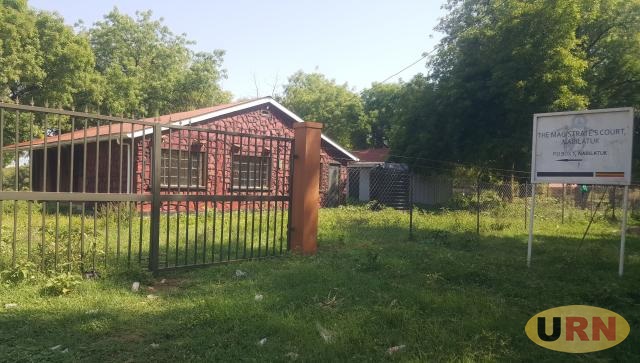
“Only those with money can access justice because they can facilitate the process, while the poor lose their cases at the police,” Angesa said. Her experience reflects the frustration of residents in Nabilatuk, where a fully equipped magistrate’s court sits largely idle despite being renovated and handed over in 2025.
Residents say the last court session held in the district was in 2024. Since then, cases have been handled at the Nakapiripirit Grade One Magistrate’s Court. Angesa said the cost and difficulty of pursuing cases have forced some residents to abandon formal justice and instead settle disputes at LC1 level.
Mike Lodou, another resident, said the absence of a functioning court has had particularly serious consequences for victims of violence. “Cases such as defilement are resolved through marriage, while murders are traditionally handled through compensation using cows. Other cases are just left to die,” Lodou said.
He said gender-based violence has also been normalised because victims struggle to pursue cases through the formal justice system. “It’s very unfair for us to move long distances to access justice, yet we have our own court premises. Why did government invest money to renovate the court structures and then abandon it?” Lodou asked.
Charles Ejamu, Officer in Charge of the Child, Family and Protection Unit at Nabilatuk Police Station, said the lack of a local court is undermining efforts to deal with gender-based violence. He said some cases reported to police are eventually settled at LC1 level because complainants cannot afford the costs involved in taking the matters to court.
“Although cases are reported to police, sometimes the community settles them at LC1 level because they can’t afford to facilitate the process to court,” Ejamu said. “If the court were here, it would have been easy for perpetrators of GBV to receive punishment to deter others. Now perpetrators walk freely because they know victims can’t manage the court process.”
The unused court complex includes an archive container and residential quarters for a judicial officer. Despite the renovation, it has remained largely inactive with limited maintenance. Nabilatuk LC5 Chairperson Benedict Lokiru said the district has repeatedly written to the Judiciary seeking the reopening of the court.
“The Judiciary acknowledged the gaps and said they would address the matter within a short time. We would love to see people who commit crimes being convicted where the crime is committed so that others learn lessons,” Lokiru said. Lokiru said the district had even considered renting out the premises because they had remained unused for so long.
Joseph Sabiti Omara, the Nakapiripirit Grade One Magistrate, confirmed that Nabilatuk has a fully furnished court. He said the court had been authorised for operation but remains inactive because of administrative challenges, including shortages of manpower and facilitation.
“I am currently the nearest magistrate. Cases from Nabilatuk have to follow me. I receive more than three files of cases from Nabilatuk weekly,” Omara said. He said even when cases reach his court, complainants and witnesses often fail to appear because they cannot afford transport. Nabilatuk has no public transport to Nakapiripirit, he added.
Omara said although the court was renovated in 2025 and its keys were handed over to him for caretaking, he has no fuel, vehicle or other resources to make regular visits to the facility. “Sometimes I am forced to use my own money to facilitate cleaning of the court premises,” he said. Omara said that with basic logistical support, the Nabilatuk court could sit at least twice a week and bring justice closer to residents.
For three days, however, residents had a chance to experience what a functioning court could mean for them. The International Justice Mission (IJM) facilitated an open court session at the Nabilatuk court premises from September 15 to 17, temporarily bringing proceedings closer to the community.
Andrew Lolem welcomed the temporary sittings but said residents are anxious about what happens after the exercise. “We want court sittings at least once or twice a week so that we can get justice in time. After this 3-day session, we are not sure when we will have another sitting,” Lolem said.
For Judith Naduk, the temporary court session was also a first. “I personally have never been in court; this is my first time witnessing it. Although the questions look scary, I am also learning how to respond,” Naduk said. She appealed to the government to reactivate the court, particularly to help women facing violence in their homes.
Ruth Teko, the Nabilatuk District Head of Community Based Services, said the temporary sittings had demonstrated the value of bringing justice closer to residents, while urging witnesses to overcome fear and participate in proceedings. Paul Lokut, the district Probation and Social Welfare Officer, said Nabilatuk also lacks detention facilities for juvenile offenders, forcing some children to share cells with adults.
He also raised concerns about transporting suspects to Nakapiripirit on motorcycles and the 20,000-shilling cost of medical examinations in defilement cases, which he said can discourage victims from pursuing justice.
For residents like Angesa, the problem is ultimately simple: a court exists in their community, yet justice remains more than 50 kilometres away. They are now calling for the Nabilatuk court to be fully operationalised so that distance, transport costs and lack of facilitation no longer determine who can afford to pursue justice.