The Independent Uganda: You get the Truth we Pay the Price


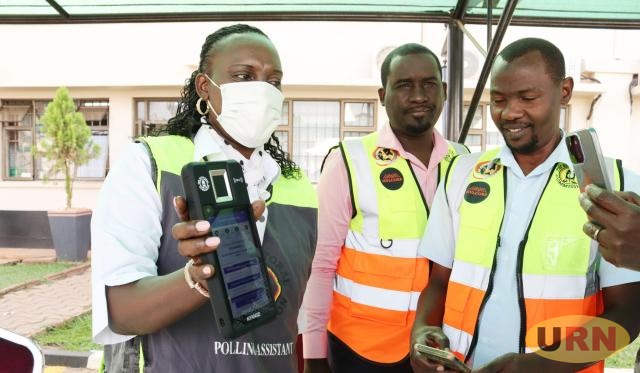
Kampala, Uganda | THE INDEPENDENT | Uganda prepares for District and City Local Government elections on Thursday, January 22, 2026, amid lingering doubts over the Electoral Commission’s (EC) controversial Biometric Voter Verification Kits (BVVKs).
The technology, which faltered spectacularly during the January 15 presidential and parliamentary elections, remains under scrutiny after glitches that disrupted voter authentication and cast doubt on electoral integrity. In an interview with Uganda Radio Network (URN) on Wednesday, EC Spokesperson Julius Mucunguzi gave a non-committal response when asked whether the kits would be redeployed.
“The EC shall deploy all tools and means available to ensure smooth casting of the ballot by citizens during tomorrow’s District and City Local Government polls,” he said, emphasizing the commission’s commitment to a seamless process—without addressing the BVVKs directly.
The BVVKs were procured as part of an additional EC funding request of UGX 268.38 billion (about USD 80 million) for the 2025/2026 fiscal year.
A total of 109,142 kits were acquired and distributed across 50,739 polling stations nationwide for the recent elections. Each unit, costing roughly UGX 2.46 million (USD 733), was designed to verify voters through fingerprint and facial recognition technology, enforcing the “one person, one vote” principle enshrined in Article 59 of Uganda’s 1995 Constitution.
Mandatory use of the kits was formalized on December 24, 2025, when Justice and Constitutional Affairs Minister Norbert Mao issued Statutory Instrument No. 45, requiring biometric verification at all polling stations to improve transparency and prevent fraud.
Despite these measures, the system collapsed during the January 15 polls, forcing polling officials to revert to manual voter registers.
EC Chairperson Justice Simon Byabakama Mugenyi defended the fallback, saying, “Our priority was to ensure that Ugandans voted. Where technology failed, the law allows us to fall back on the voters’ register.”
The kits, supplied by Ugandan firm Simi Valley Technologies, experienced widespread technical issues, including connectivity problems and authentication errors, according to industry publication BiometricUpdate.com.
Critics argue the EC’s handling of the situation violated the law. Mubarrack Munyagwa Sserunga, former presidential candidate and leader of the Common Man’s Party, told URN.
“The Electoral Commission has no power to suspend a statutory instrument issued by the Minister. By reverting to manual voting, the EC usurped the authority of the Constitutional Court.” Minister Mao has demanded a forensic audit of the procurement and performance, saying, “Where public resources are expended at this scale, and the outcome is failure, there must be accountability.”
Biometric systems introduced in Uganda during the 2016 elections and expanded in 2021 had similarly inconsistent results.
While functional in some areas, they often faltered due to poor internet connectivity, insufficient technical support, and a lack of backups, problems observers say were not addressed for 2026.
As the country heads to local polls, questions linger over whether technology that failed the nation once can be trusted again, and whether Uganda’s voters will be willing to take that risk.
***
URN