The Independent Uganda: You get the Truth we Pay the Price


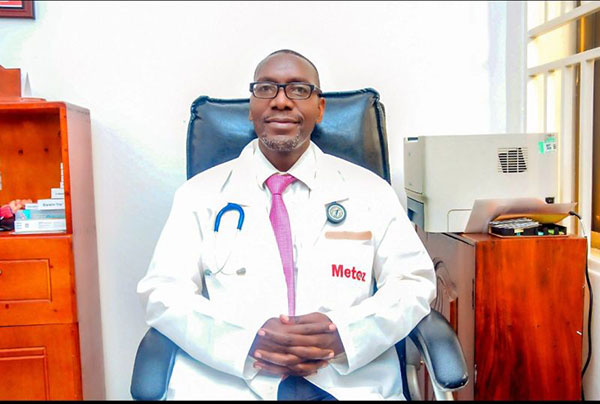
COMMENT | DR ROBERT KALYESUBULA | Being a doctor in a low-income country can be one of the most trying journeys anyone can take.
And today, I was reminded – again – why I became a doctor and why, despite every challenge, I continue to practise nephrology here in Uganda.
When we are in medical school, we all dream – to heal, to serve, to be the best doctors we can be. And with hard work, sleepless nights, and a little luck, few of us make it through. The celebrations are loud – especially for those of us who become the first doctors in our families, clans, or even our villages. The pride is unmatched.
But soon, reality strikes. You realize that being a doctor in a low-income country doesn’t come with the prestige or comfort. It is a service of sacrifice – often underappreciated, under-resourced, and full of improvisation.
With luck, you arrive at your district hospital, bright-eyed and hopeful, only to find that the lab tests, imaging, and medications you were taught to rely on simply don’t exist. You must depend on your clinical instincts, your hands, your eyes, and your heart – and then wait.
Sometimes the patients get better, and that brings relief. But soon, the monotony and limitations wear you down.
If you’re fortunate, you return for postgraduate training. You specialise – and realize how little you truly know. If you want to super-specialise. You study abroad, in systems that work – where medicine feels like art supported by technology.
When I trained in nephrology at Yale University, I thought I had found the peak of what medicine could be. But coming back home was humbling. I discovered I had to do the work of five specialists combined.
I had to learn most things because there was no one else. I sought additional training in Iran and South Africa just to meet the needs of my patients.
Imagine knowing exactly what to do to save a life – but not having the tools to do it.
That is the heartbreak many of us face daily. Only about 5% of Ugandans who need dialysis can access it, and an even smaller number can afford a kidney transplant.
So why do we stay? Why do we continue to serve when the system seems to give so little back?
Because amidst all the struggle, there are moments that make it all worthwhile.
Today, I got a call from my patient—now 14 years on haemodialysis.
At first, I feared the worst: a fistula malfunction, an infection, maybe hyperkalaemia again. But no – he called simply to say thank you. He told me how, through the years, we’ve kept him alive. How he’s built businesses that employ thousands of Ugandans. And then he said, “Doctor, I want to invite you for dinner – goat ribs and muchomo on me!” I laughed and reminded him to watch his diet — but in that moment, my heart was full. That one call reminded me why I stay. Why I wake up every day to do this work.
Our work as doctors may not always make headlines. But the impact we create ripples beyond the hospital walls.
*****
ADAPTED FROM LINKEDIN.
Robert Kalyesubula MD, PhD, FRCP | Chair, Dept of Physiology Makerere University; Adjunct Ass. Clinical Prof. Yale School of Medicine, USA. Consultant Nephrologist; CKD/NCD Principal Investigator and Senior Scientist at MRC/UVRI and LSHTM Research Uni