The Independent Uganda: You get the Truth we Pay the Price


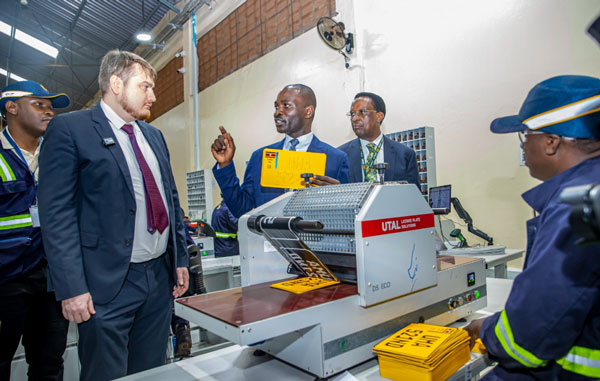
Kampala, Uganda | NEWS CORRESPONDENT | As Parliament’s Committee on Physical Infrastructure continues its scrutiny of Uganda’s Digital Number Plate Programme, the latest operational records show a significant turnaround in service delivery, with the production backlog cleared and average fitment time reduced.
During earlier hearings, the Committee on Physical Infrastructure, led by Mwine Mpaka, pressed stakeholders to provide concrete evidence of supply failures and said Parliament had a duty to seek answers and solutions where implementation problems were affecting legitimate businesses.
The parliamentary scrutiny follows measures initiated by Minister of Works and Transport Fred Byamukama, who intervened when delays in digital number plate issuance affected motorists, vehicle dealers and other stakeholders in early July.
Speaking before Parliament, Winston Katushabe, Commissioner for Transport Regulation and Safety at the Ministry of Works and Transport, said the situation surrounding the availability of digital number plates had improved significantly following efforts to reduce the backlog.
“Going by the current trends, I would think there is now some sanity. Of course, challenges notwithstanding, there could be other challenges, system-related and the rest. But in terms of customers now getting these number plates in real time, if you go through the process, they now have the installation kits,” Katushabe told Parliament.
His remarks are consistent with the Ministry’s latest implementation report, which states that the shortage of digital registration plate components had fully recovered by August 2026, with steady supplies restored and the backlog cleared during the same month.
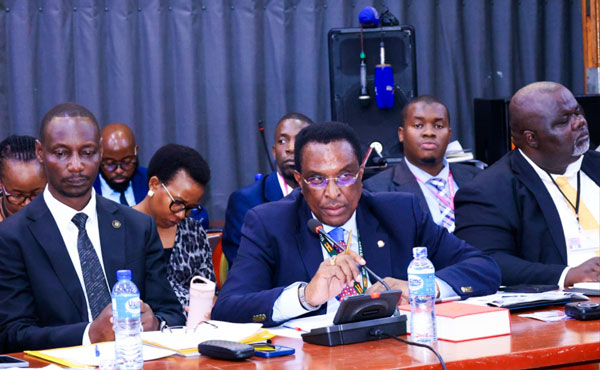
In a report presented to Parliament, Winston Katushabe also highlighted measurable improvements reflected in service delivery times. The average time required to fit digital registration plates at Kampala bonds fell from 19 days in December 2025 to two days in September 2026, while vehicles arriving through the Malaba and Mutukula One Stop Border Posts are fitted in approximately three hours.
Performance at bonds has also improved significantly. Compared with July, when the average registration time was six days and only 33% of cases were completed within two calendar days, September 2026 saw a sharp improvement, with the average registration time, including fitment, falling to two days and 72% of cases completed within two calendar days.
According to the Ministry’s report, in the first financial year in which digital registration plates were implemented, taxes collected increased by 17%, while overall Government revenue rose by 16.4%. The Ministry attributed the increase to stronger enforcement of compliance following the implementation of digital registration plates for motor vehicle declarations made by clearing agents.
Documented Security Outcomes of the Digital Framework
During the parliamentary proceedings, the Committee was also presented with documented security results demonstrating the role of the Digital Number Plate System beyond vehicle registration and number plate issuance. Police reports included individual cases in which digital tracing supported investigations involving stolen motorcycles and boda-boda riders.
The security results provided the Committee with additional context as it examined the implementation and public value of the Digital Number Plate Programme. They demonstrate that, alongside the operational issues under parliamentary review, the infrastructure is already being used by Police to support vehicle tracing, theft investigations and the recovery of stolen property.
At the same time, digital monitoring tools now give vehicle owners greater visibility over their registration status, while the expansion of digital plate installation services beyond Kampala is improving access for motorists in upcountry Uganda.
From Parliamentary Scrutiny to Measurable Performance
The improvements come as the Committee chaired by Mpaka continues to hear evidence from stakeholders on the implementation of the programme. He confirmed that the Committee will continue to closely follow the implementation of the Digital Number Plate Project and engage with the programme as part of its ongoing parliamentary oversight.