 The Independent Uganda: You get the Truth we Pay the Price


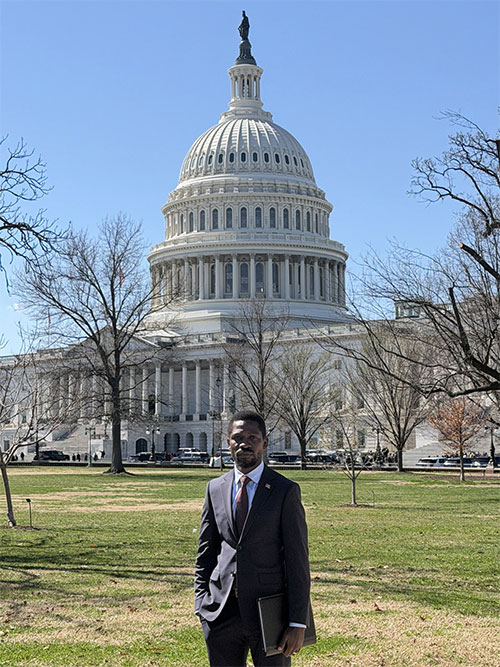
COMMENT | OBED K KATUREEBE | Imitating a political idol can offer several perceived gains, ranging from personal psychological benefits to enhanced social or political engagement. However, these benefits often come with significant risks of compromising personal autonomy, as identified in literature on idolization and social learning. This clearly plays out so perfectly in the case of National Unity Platform (NUP) party supremo Robert Kyagulanyi, a.k.a. Bobi Wine. Kyagulanyi recently ran out of Uganda, alleging that security forces were hunting for him. Apparently, the man from Kamwokya seems to be reading the same political script as that of his idol Kizza Besigye.
Robert Kyagulanyi has finally declared that he left Uganda to begin life in exile. In his own words, he will return to Uganda at his convenience. This is much similar to 2001 when Uganda’s veteran opposition politician Kizza Besigye fled to exile in South Africa after a crushing defeat in the 2001 presidential elections to Yoweri Museveni.
Besigye, like Bob Wine now, declared that he would return to Uganda at the time of his convenience. Indeed, in 2005 he returned to Uganda and got a hero’s welcome. It turned out that this was a political move to rebrand himself and indeed it worked. The exile stint rebranded him, and the closest he ever came to winning the presidential election was in 2006 when he reduced President Museveni’s votes to 59%. Kizza Besigye got 37%.
As it stands, Kyagulanyi has taken a sabbatical leave to cool off in those western capitals and then begin the plot on how to return to Uganda. He wants to come back rebranded and cause a storm in his activism as he prepares to try his luck at the presidency in 2031.
Ever since Kyagulanyi metamorphosed from a musician to a politician, he has cut his political activism along the lines of his political idol Kizza Besigye. From militant political activism to defying the incumbent leadership, these are all that Besigye did when he was at the helm of activism. Kyagulanyi has imitated him to the letter and also chose to imitate his political gestures and mannerisms.
Dr Kizza Besigye chose militant political activism against Museveni and, to some extent, took defiance and militancy to another level. In their wisdom, they want to demonstrate militancy to endear themselves to Ugandans who tend to think that for one to lead, you must have a military background or military knowledge. They think that decent political activism is for quislings. To them, to effectively oppose and probably throw him out of power, their followers need assurances that someone must be able to challenge Museveni using militancy and defiant activism.
Unknown to the two, they didn’t know that they were playing into the territory where nemesis Yoweri Museveni excels most. Yoweri Museveni’s 40-year tenure as president of Uganda is widely analyzed through his strategic use of political manoeuvring to secure power. He combines tactical political manoeuvring to blindside his rivals. His ability to maintain power is often attributed to his background as a guerrilla leader and his skill in neutralizing political opponents, often through sudden, high-stakes moves.
Bobi Wine’s sabbatical leave could be seen as running away from many questions that come out of the last elections; he was not about to find answers. First, having performed so dismally despite the claims that he was rigged by the ruling NRM. Most of his supporters felt that he gave them a low deal and believed him when he actually failed to sell himself across the whole country. They feel they fell for his lies and ended up risking it for a man who was not doing enough to secure victory.
Kyagulanyi’s fallout with his former leader of opposition, Mathias Mpuuga, Medard Seggona, Abed Bwanika and others did not help matters. NUP supporters felt that Kyagulanyi as a leader of the party, mishandled these members of parliament, and as a result, Buganda support shrunk badly in the last elections.
In such circumstances, Kyagulanyi had to first get out of Uganda to first cool off such that, by the time he returns back, his supporters will have forgotten all these hard questions that were being lined up.
Kyagulanyi and his idol Kizza Besigye must now rethink their approach to political activism, especially against their nemesis Yoweri Museveni. The militancy and defiance seem not to have worked. After all, political violence is inherently detrimental to democracy, directly countering the foundational principle of resolving conflicts through nonviolent means. It acts as a destabilizing force that triggers democratic backsliding, weakens institutions, and hampers long-term democratic consolidation. Instead of solving issues, violence normalizes further aggression.
***
 The writer is the acting executive director of the Uganda Media Centre.


Yes, Mr Obed Katureebe, the Actinng Executive Director of the Uganda Media Centre, Dr Kizza Besigye Warren Kifefe is Robert Kyagulanyi’s or, Bobi Wine’s political idol. Granted! Who’s your political idol Mr Ag. ED Uganda Media Centre? At least Mr Bobi Wine’s choice is basically to learn from Dr KB’s political lessons. How about your choice of Idolizing Tibuhaburwa? Is it not just for the sake of lining your pockets like many others before and after you?
But, since you’re without any doubt, among Tibuhaburwa’s elite clients, I beg to refer you to the book authored recently by one of Uganda’s, and by extension Africa’s most respected political science academics Professor Mahmood Mamdani’s book titled, “IDI AMIN, YOWERI MUSEVENI and the MAKING of the UGANDAN STATE, SLOW POISON” 2025. After reading that wonderful book then you’re free to continue feeding us on your crap! I submit